
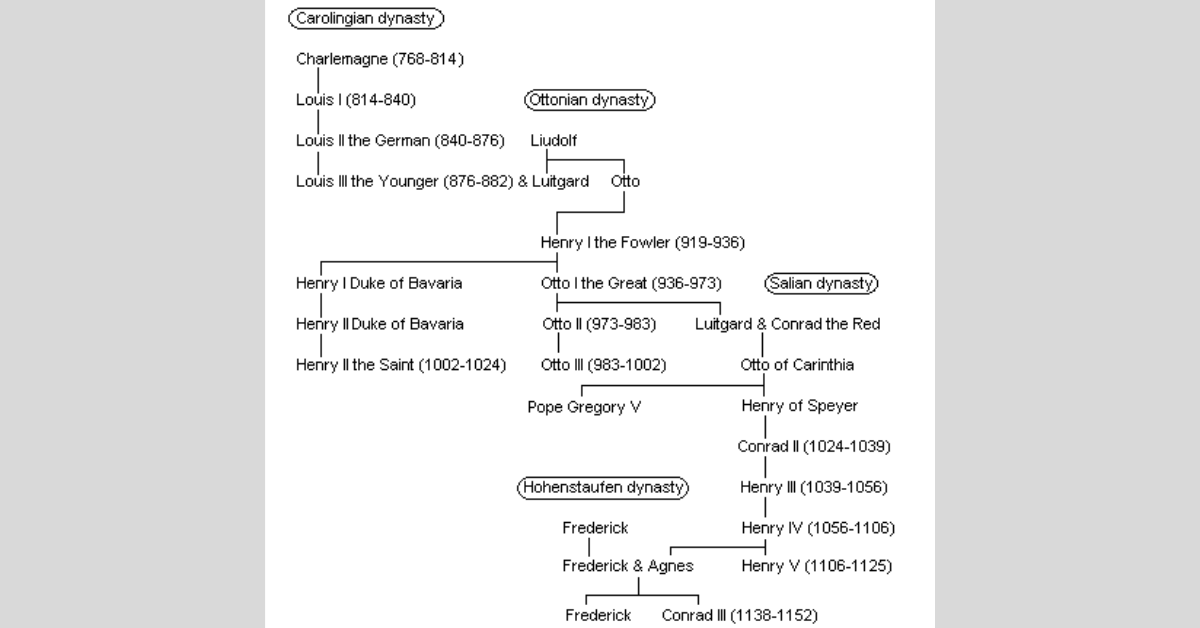
With the end of the Salian dynasty in 1125, the Holy Roman Empire once again enters a period of uncertainty. There is no automatic successor, and the imperial throne becomes the focus of competition between powerful noble families.
The Rise of the Hohenstaufen
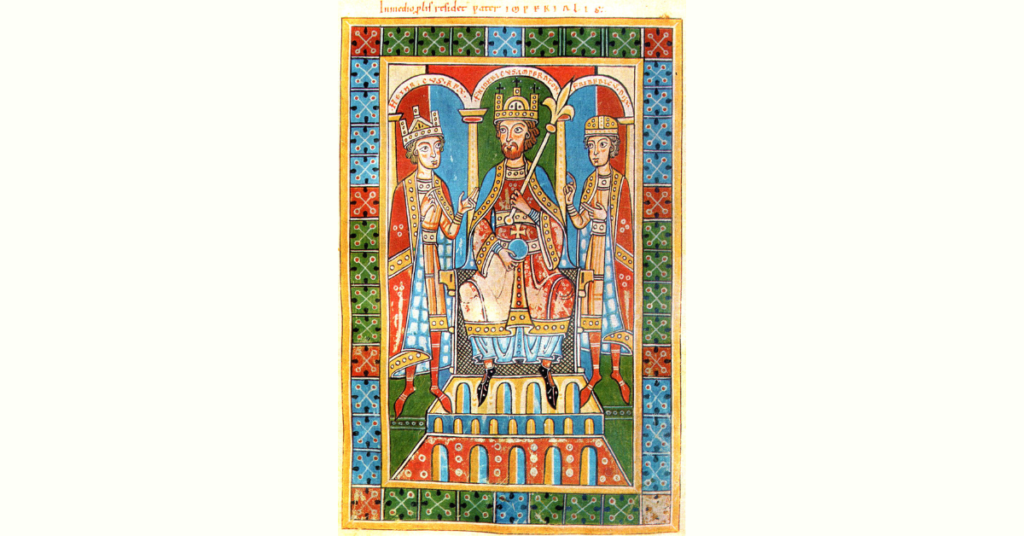

Unlike hereditary monarchies, the Holy Roman Empire does not pass cleanly from father to son. Instead:
- Kings are elected by leading nobles
- Rival families compete for influence
- Political alliances determine who rises to power
This creates instability, but also opportunity: power can shift between dynasties depending on who can secure support.
Out of this competition, the Hohenstaufen dynasty emerges as a dominant force. They come from the region of Swabia in southwestern Germany and rise through:
- Military strength
- Strategic alliances
- Support from key nobles within the empire
This leads to the election of Frederick I Barbarossa in 1152.
Frederick I Barbarossa and Imperial Ambition
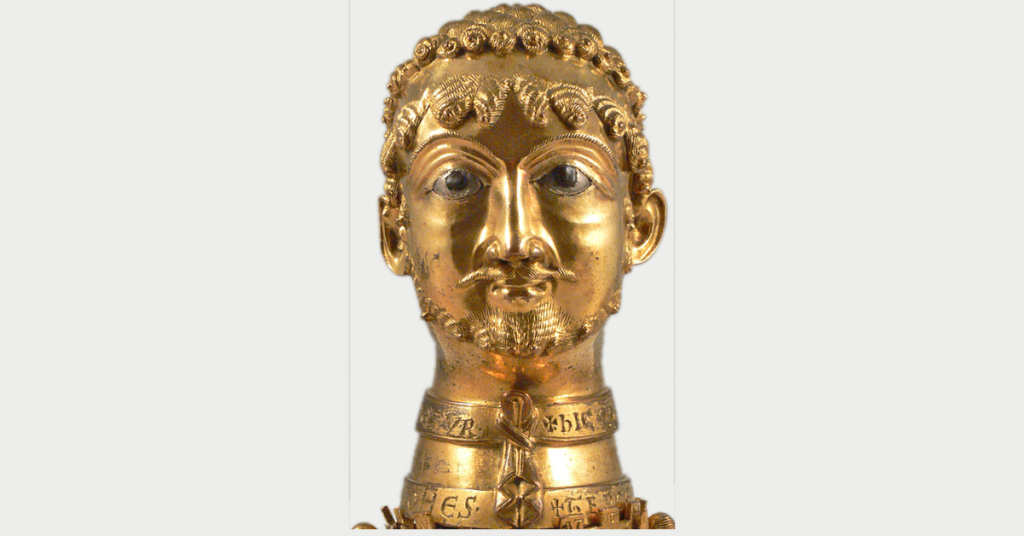

Frederick I attempts to restore strong imperial authority across the empire. He:
- Reasserts control over rival nobles
- Strengthens imperial institutions
- Campaigns in Italy to reinforce his authority
His goal is clear: to rebuild the power of the emperor across both German and Italian lands. But he faces the same structural limits as earlier rulers:
- The empire remains decentralized
- Regional rulers retain significant power
- The Church remains a competing authority
The Hohenstaufen to Wittelsbach Transition
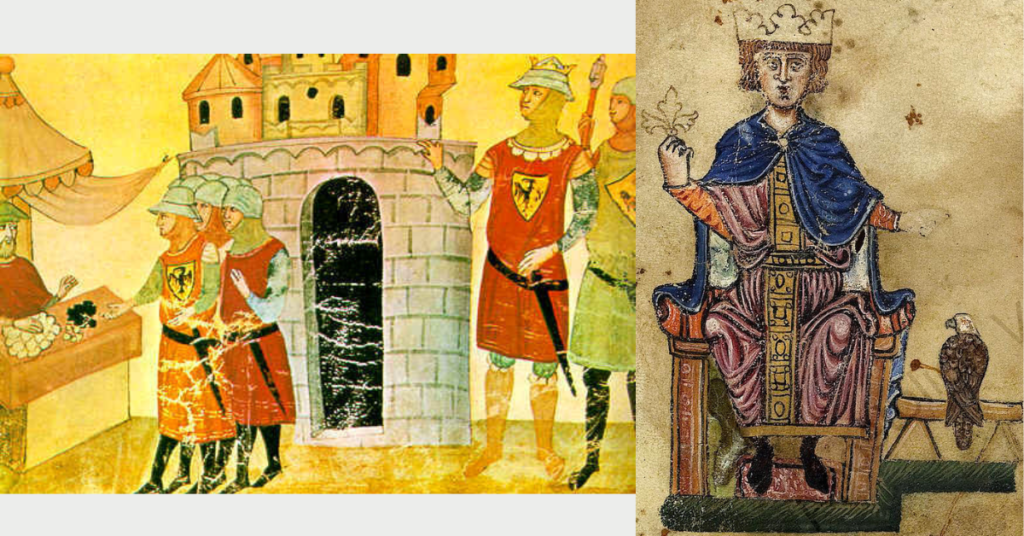


Frederick I is followed by his son Henry VI. When Henry VI dies, the empire falls into Civil War. Otto IV becomes emperor, but the papacy turns against him when he takes control of Sicily. From there, his son Frederick II becomes one of the most powerful and complex rulers of the medieval empire. He:
- Controls both German and Italian territories
- Spends much of his time outside Germany
- Relies heavily on local rulers to maintain control
Under the Hohenstaufen rulers, especially Frederick I and Frederick II, the empire reaches a new phase. They attempt to strengthen imperial authority, but in doing so, they rely more and more on powerful regional rulers to govern key territories.
This creates a contradiction: the emperor grows in ambition—but depends on local power to function. In regions like the Rhine:
- The Count Palatine becomes more than an administrator
- Authority becomes tied to land and influence
- The Palatinate emerges as one of the most important territories in the empire
By the early 1200s, imperial authority is stretched, control over regions becomes less direct, and loyalty must be maintained through grants and alliances. Territories like the Palatinate are no longer temporary offices—they are becoming permanent centers of power.
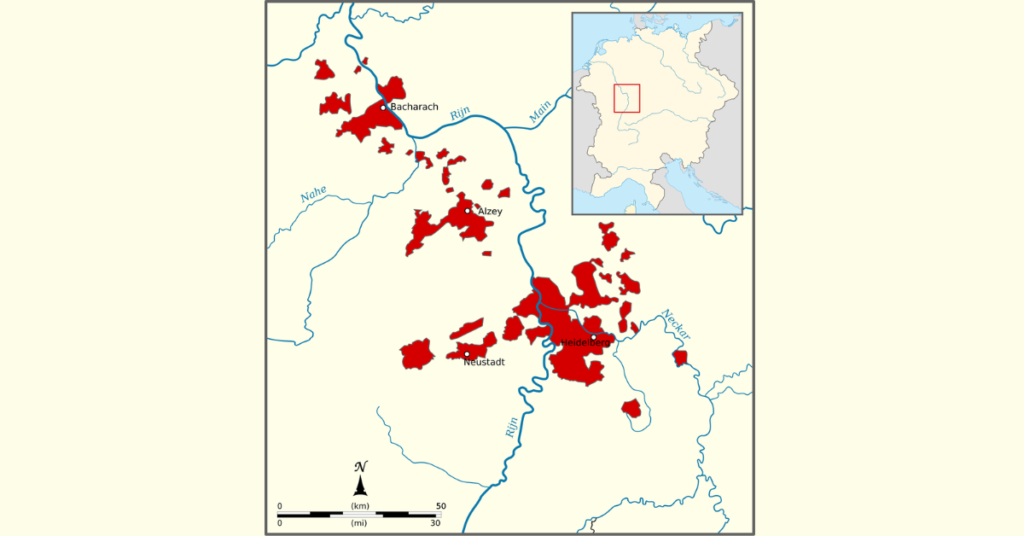
The Granting of the Palatinate (1214)
.svg)
In this context, the Palatinate becomes a strategic political asset. In 1214 CE, control of the region is granted to the Wittelsbach dynasty. This is not simply an appointment—it is a transformation:
- The role becomes hereditary
- The territory becomes stable under one family
- The Palatinate emerges as a defined political state
This marks the turning point: the system built under the Hohenstaufen is now controlled by regional dynasties.
- Before 1214: The Palatinate is an imperial office, and its authority depends on the emperor.
- After 1214: The Palatinate is a dynastic territory, authority is held by a ruling family, and power is rooted locally.
The emperor remains important, but real power is increasingly decentralized. Regional states begin to define the structure of the empire.