
On the eastern edge of Kutztown’s Main Street corridor, three commercial properties sit within walking distance of one another.
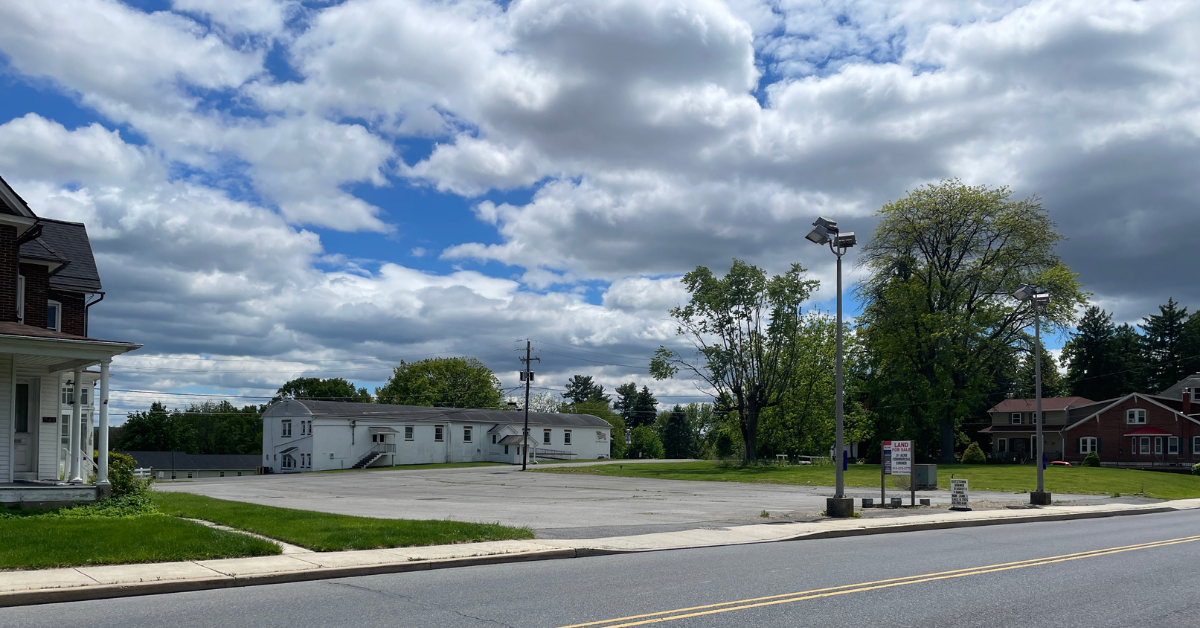
One is a vacant parcel next to Kutztown Park, listed for $325,000.
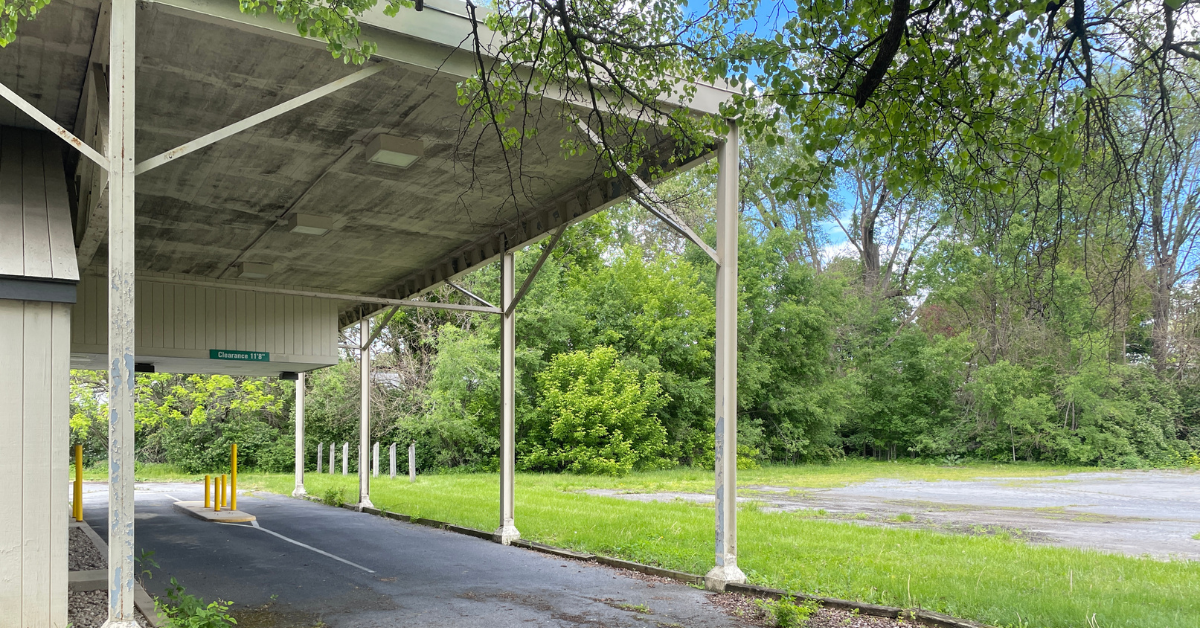
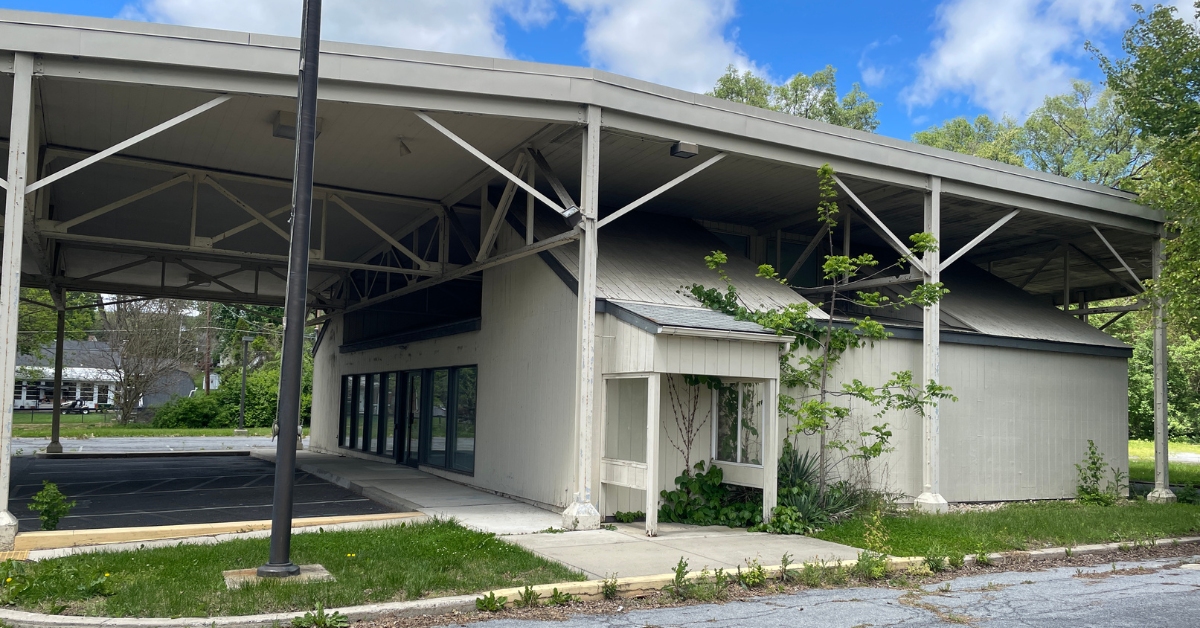
Across the intersection sits the former Rite Aid/Eckerd, marketed as a $4.5 million retail box.
Nearby, the former Citizens Bank at 601–605 E Main Street is listed for $1.6 million.
Taken separately, each property looks like an ordinary commercial listing. Taken together, they reveal something larger: a key civic/commercial gateway into Kutztown is sitting in limbo, with land priced according to redevelopment potential, former national-chain leases, and speculative real estate logic rather than immediate local usefulness.
This is not just a story about empty buildings. It is a story about what kind of town Kutztown wants to become.
The Three Properties
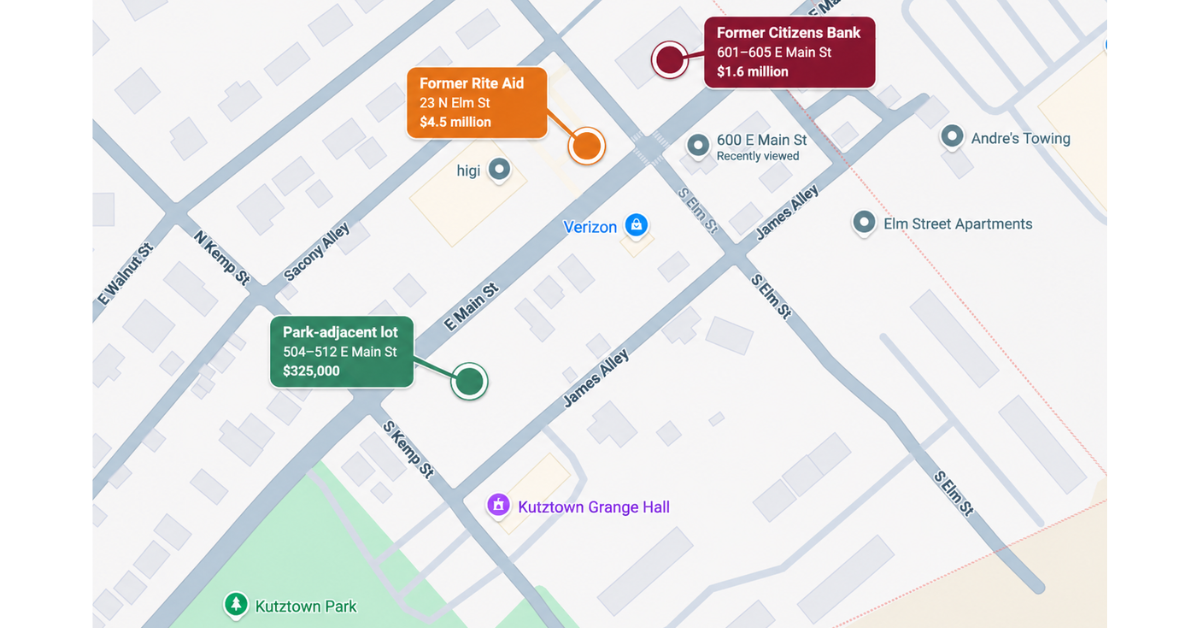
| Property | Address | Asking price | Current condition |
| Park-adjacent commercial land | 504–512 E Main Street | $325,000 | Vacant/development land |
| Former Rite Aid/Eckerd | 23 N Elm Street | $4.5 million | Vacant former pharmacy box |
| Former Citizens Bank | 601–605 E Main Street | $1.6 million | Former bank building + adjacent lot |
These parcels sit near the same important intersection: East Main Street, North Elm Street, and the entrance corridor near Kutztown Park, Route 222, Weis, Planet Fitness, the former Rite Aid, and surrounding apartments.
The question is not simply whether they will sell.
The question is whether these spaces will become productive parts of Kutztown’s civic life — or remain high-priced commercial shells waiting for the right national chain, developer, or speculative buyer.
1. The Park-Adjacent Parcel: 504–512 E Main Street
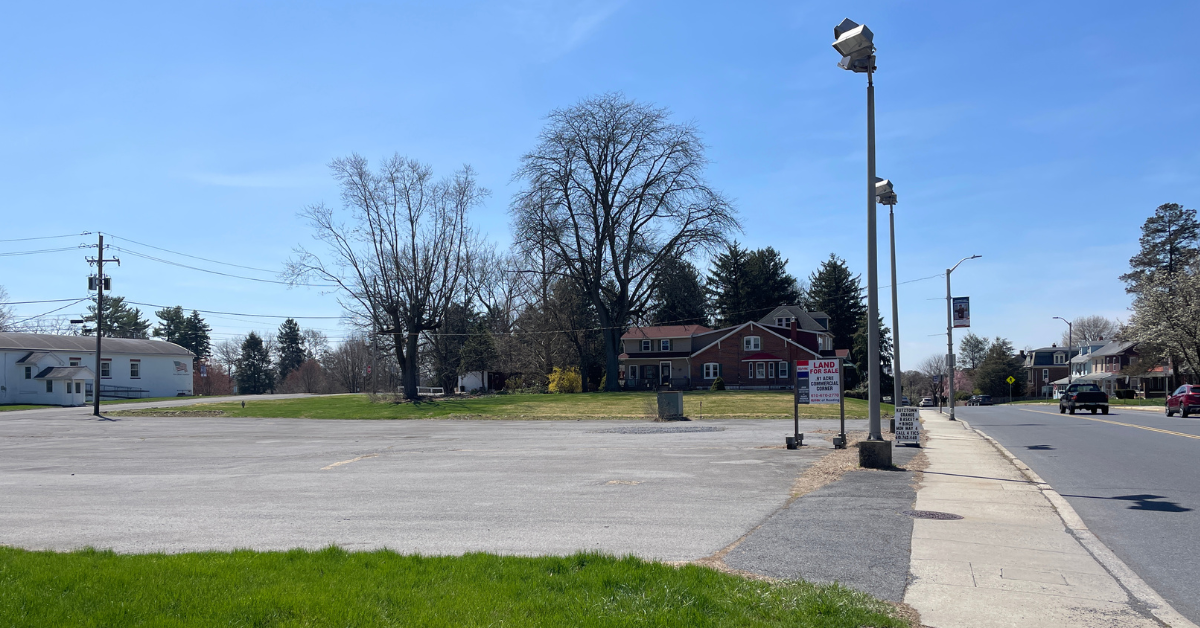
The smallest of the three properties may be the most interesting from a community-planning perspective.
The parcel at 504–512 E Main Street is listed for $325,000. According to the listing information, the property includes:
| Detail | Value |
| Address | 504–512 E Main Street |
| Asking price | $325,000 |
| Lot size | 0.91 acres / 39,639 sq ft |
| Zoning | C-3 Commercial Highway |
| Tax assessed value | $150,200 |
| Annual taxes | $6,431 |
| Listing brokerage | RE/MAX of Reading |
| MLS number | PABK2058428 |
At first glance, the price may seem aggressive. The asking price is more than twice the tax-assessed value.
| Metric | Amount |
| Asking price | $325,000 |
| Tax-assessed value | $150,200 |
| Asking price multiple | ~2.16× assessed value |
That does not automatically mean the property is overpriced. In Pennsylvania, assessed values often lag behind market value, and commercial land is commonly priced based on what it could become rather than what the tax assessment says it is today.
Reimagining Public Space
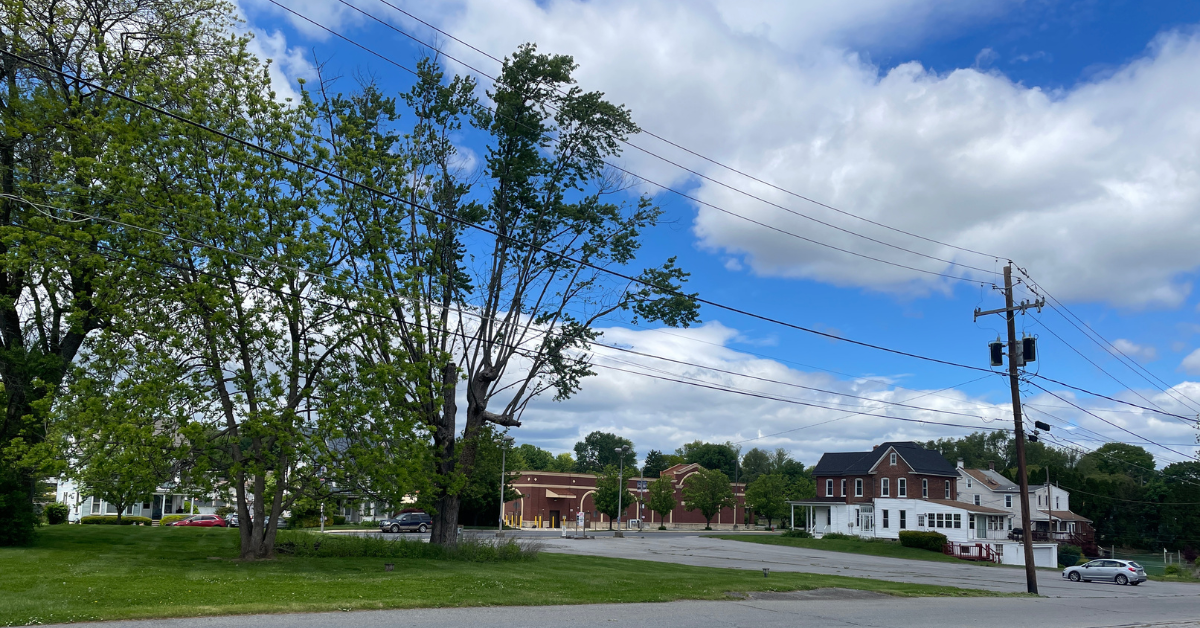
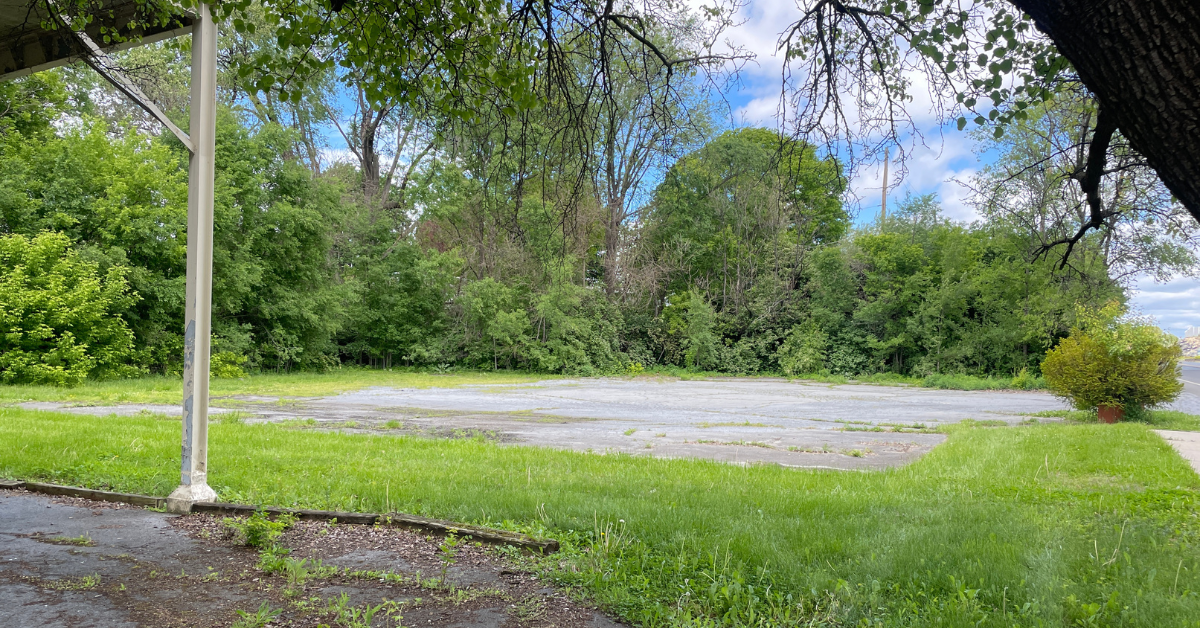
But this parcel is not just any commercial land. It sits right by Kutztown Park.
That makes it a potential civic acquisition target. Instead of becoming another low-intensity commercial pad, the site could extend the park’s usefulness and connect recreation, Main Street, and the east-side commercial corridor.
Possible public or semi-public uses could include:
- a futsal court or small-sided soccer court,
- outdoor basketball or multi-use hardcourt space,
- a market/event plaza,
- food truck/event infrastructure,
- shaded seating and public gathering space,
- or a hybrid recreation/commercial activation area.
The land is already cleared and paved, which means it could be easier to convert into active public space than a heavily built parcel. From a municipal point of view, $325,000 is not cheap — but it is also not absurd for a permanent community asset at a key location.
2. The Former Rite Aid/Eckerd: 23 N Elm Street
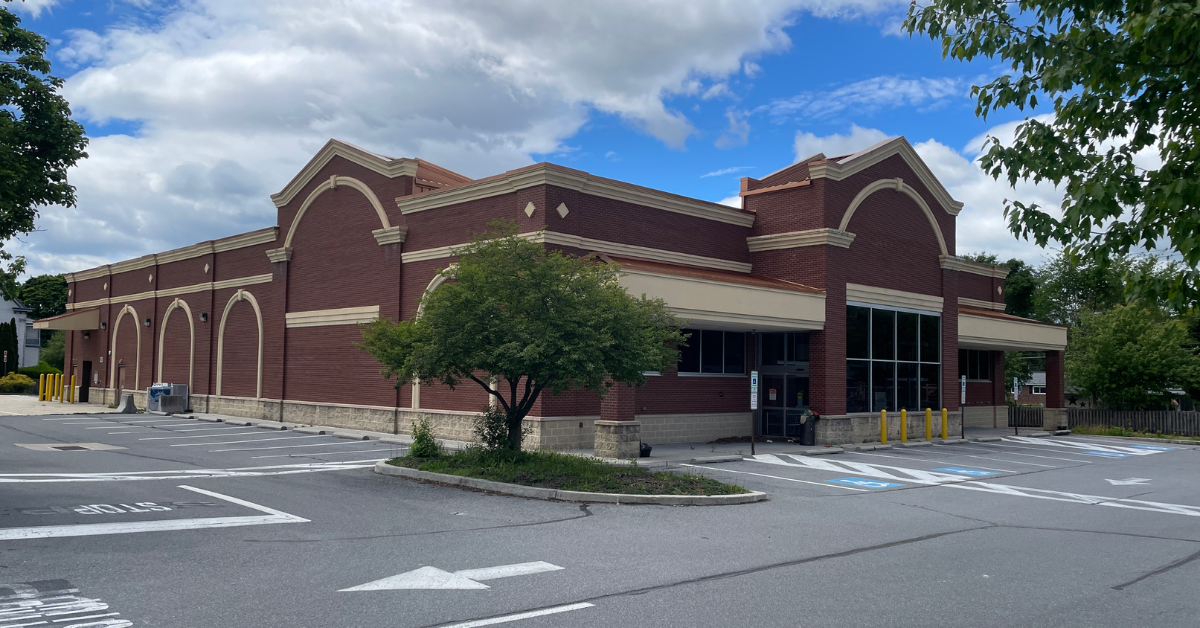
The former Rite Aid at 23 N Elm Street is the clearest example of how a local retail building can become a financialized national-chain real estate asset.
The broker flyer markets the property as a former Rite Aid for sale or lease, with a $4.5 million sale price and $22,000/month NNN lease rate. The flyer lists the building as approximately 14,831 square feet, with a 64,832-square-foot lot, 57 parking spaces, a drive-thru, and a 2005 construction year.
| Detail | Value |
| Address | 23 N Elm Street |
| Former use | Rite Aid / Eckerd-linked pharmacy |
| Asking price | $4.5 million |
| Lease rate | $22,000/month NNN |
| Building size | ~14,831 SF |
| Lot size | 64,832 SF / ~1.49 acres |
| Year built | 2005 |
| Parking | 57 spaces |
| Drive-thru | Yes |
Former Rite Aid Transaction and Finance Timeline
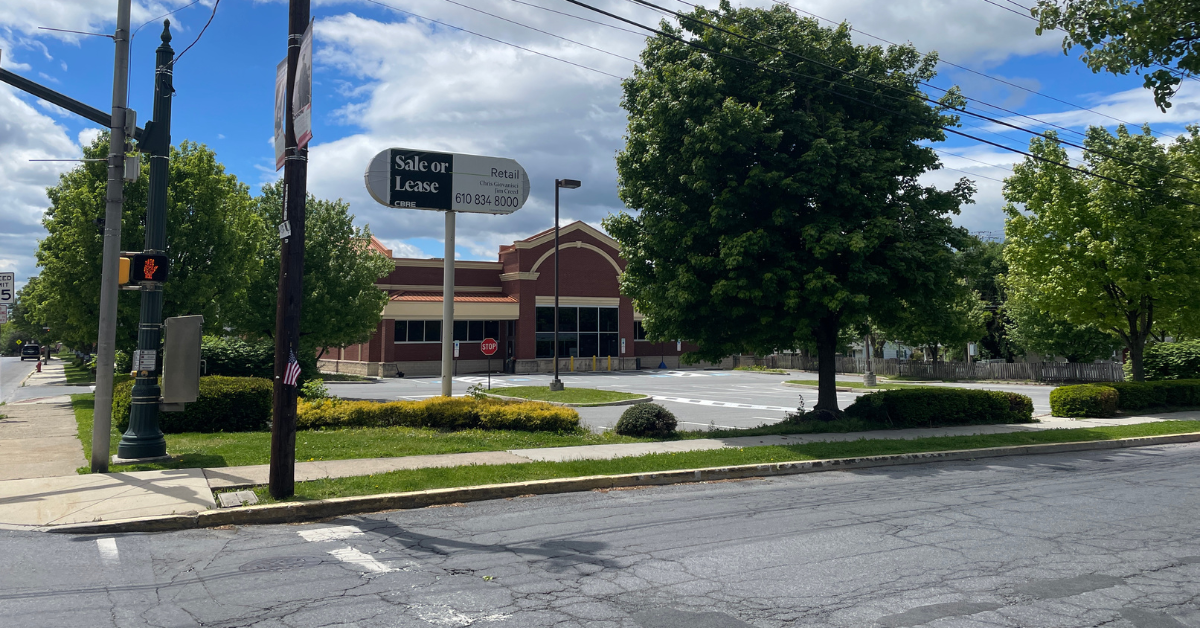
This property is not priced like a dead drugstore. It is priced like a former national-chain retail asset. The Berks County deed records show why.
| Date | Record / event | Parties | Amount | Meaning |
| 2005-ish | Retail-box development | Rite Aid / Eckerd-linked pharmacy operation | — | The building appears to have been developed as a modern chain-pharmacy box. |
| Pre-2016 | Finance structure already in place | Barrington-Kutztown Limited Partnership, Barrington Group-South Sixth LLC, Bank of America, Citigroup Commercial Mortgage Trust, LaSalle Bank, U.S. Bank | — | The property was already inside a commercial mortgage/trust structure. |
| 12/27/2016 | Assignment of mortgage | Bank/trust/Barrington parties → Sutherland Grantor Trust Series V | — | Mortgage interest was assigned/transferred. |
| 12/27/2016 | Assignment of rents & leases | Bank/trust/Barrington parties → Sutherland Grantor Trust Series V | — | The rent stream was important collateral. |
| 05/12/2017 | Deed transfer | Barrington-Kutztown Limited Partnership → Daniel G. Ellenberger | $5,150,000 | Major confirmed sale. |
| 05/12/2017 | Agreement | Eckerd Corporation → American Bank | — | Pharmacy tenant structure appears tied into financing. |
| 05/12/2017 | Mortgage | Daniel G. Ellenberger → American Bank | — | Buyer financed the purchase. |
| 05/12/2017 | Assignment of rents & leases | Daniel G. Ellenberger → American Bank | — | Lease income was pledged to the lender. |
| 05/12/2017 | UCC financing statement | Daniel G. Ellenberger → American Bank | — | Additional secured-financing filing. |
| 05/16/2017 | Termination | Sutherland Grantor Trust Series V → Barrington entities | — | Prior trust/financing structure terminated. |
| 05/19/2017 | Satisfaction | Barrington Group-South Sixth LLC / Barrington-Kutztown LP → Sutherland Grantor Trust Series V | — | Prior obligation satisfied. |
| 2025–2026 | Sale/lease marketing | Former Rite Aid property | $4.5M ask | Property marketed as a vacant retail/redevelopment box. |
The repeated phrase “assignment of rents and leases” is the giveaway. In commercial real estate, this usually means the property’s rent stream is being pledged as collateral to a lender or transferred through a mortgage/trust structure.
In plain English: the building’s value was not just the building. The value was the lease.
When Rite Aid or an Eckerd-related entity was operating there, the property functioned almost like a bond: a national chain paid rent, and that rent supported mortgages, assignments, trusts, and a multi-million-dollar valuation.
Then the operating use collapsed.
The Rite Aid Price Story
This is not simply a case of someone buying low and trying to flip high. It looks more like someone bought a rent-producing Rite Aid asset at a very high valuation, and now the former pharmacy is being marketed below that prior sale price — but still at a price that only makes sense if a buyer sees national-tenant or redevelopment potential.
That is the central contradiction. To Kutztown, the building is a vacant box near the park. To commercial real estate finance, it is the remains of a former chain-pharmacy income asset.
| Moment | Value |
| 2017 deed sale | $5,150,000 |
| Current flyer asking price | $4,500,000 |
| Difference | -$650,000 |
| Approximate change | -12.6% |
3. The former Citizens Bank: 601–605 E Main Street
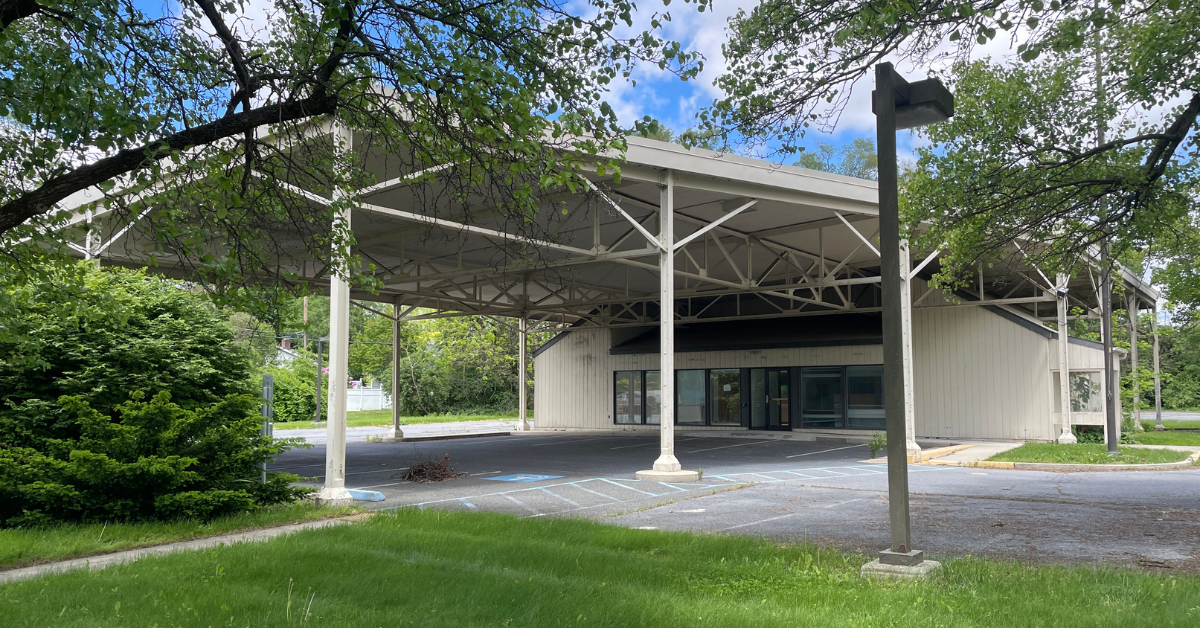
Across the same commercial gateway sits the former Citizens Bank property at 601–605 E Main Street.
The current SVN flyer describes it as a 2,730-square-foot former Citizens Bank site on 1.37 acres, located at a lighted intersection on the main thoroughfare into Kutztown. The flyer emphasizes its drive-through, parking, Route 222 access, high visibility, and investment value.
| Detail | Value |
| Address | 601–605 E Main Street |
| Asking price | $1,600,000 |
| Building size | 2,730 SF |
| Total site size | 1.37 acres |
| 2026 taxes | $16,415 |
| Use | Former Citizens Bank |
| Drive-thru | Yes |
| Broker | SVN Imperial Realty |
LoopNet lists the property at $1.6 million, with a building size of 2,730 SF, lot size of 1.37 acres, and the two-parcel zoning breakdown; it also lists the assessment for parcel 55-5454-17-01-9232 as $113,100 land, $179,900 improvements, and $293,000 total.
| Metric | Amount |
| Asking price | $1,600,000 |
| Total assessment | $293,000 |
| Asking price multiple | ~5.46× assessed value |
Again, assessment is not market value. But a $1.6 million asking price on a property assessed at $293,000 shows how much the listing depends on location, drive-through infrastructure, redevelopment potential, and the Route 222 gateway.
Citizens Bank Ownership and Finance Timeline
The former Citizens Bank property has its own financialized history. Lehigh Valley Business reported that SPP Citizens Net Lease Real Estate Fund III LLC bought 601 E Main Street in Kutztown and 605 E Main Street in Maxatawny Township from ARC CBKZNPA001 for $680,388.
That aligns with the Berks Deeds records, which show the 2018 deed and related mortgage/agreement documents.
| Phase | Interpretation |
| 2007-ish | Kutztown Citizens branch appears to have been part of a larger Citizens/CFG banking-property portfolio. |
| 2012 | Inland sells the Kutztown parcels to ARC CBKZNPA001 LLC, a property-specific real estate LLC tied to American Realty Capital / VEREIT-style entities. |
| 2013 | ARC records mortgage, assignment of rents and leases, UCC filing, and an agreement involving Citizens Bank of Pennsylvania and Oritani Bank. |
| 2018 | ARC sells the two-parcel package to SPP Citizens Net Lease Real Estate Fund III LLC for $680,388. |
| 2018 | SPP records mortgage and agreement documents involving Academy Bank and Citizens Bank of Pennsylvania. |
| 2024–2025 | Site becomes part of a redevelopment fight, including a McDonald’s proposal. |
| 2026 | SVN markets the site as a $1.6 million commercial redevelopment parcel. |
The Berks Deeds records are important because Citizens Bank appears in the financing/legal documents, even though the deeded owners appear to be real estate investment entities. That suggests Citizens was likely the operating tenant whose lease made the property financeable.
That does not mean Citizens secretly owned the building. The cleaner reading is:
Citizens likely functioned as the creditworthy tenant. The real estate was owned by investment entities. The rent stream helped support the property’s financing. Once the branch no longer functioned, the site became a redevelopment asset.
The Citizens Price Story
| Reference point | Amount |
| 2018 sale price | $680,388 |
| 2026 asking price | $1,600,000 |
| Increase over 2018 sale price | +$919,612 |
| Asking price multiple | ~2.35× |
That does not mean the property will sell for $1.6 million. But it does show the owner/broker is pricing the parcel based on redevelopment upside, not simply the building’s current productive use.
Why the McDonald’s Proposal Matters
The former Citizens Bank site has already been treated as a redevelopment parcel.
Kutztown Planning Commission minutes from October 2024 say McDonald’s submitted a second Zoning Hearing Board application for 601 E Main Street, using both the Kutztown and Maxatawny lots and requesting relief for variances related to impervious coverage, parking, and signage.
By June 2025, Planning Commission minutes noted that the Zoning Hearing Board had denied the McDonald’s at 601 E Main Street.
That fight reveals the stakes. The question is not whether this corner will attract redevelopment pressure. It already has.
The question is what kind of redevelopment Kutztown wants.
Three Properties, One Gateway
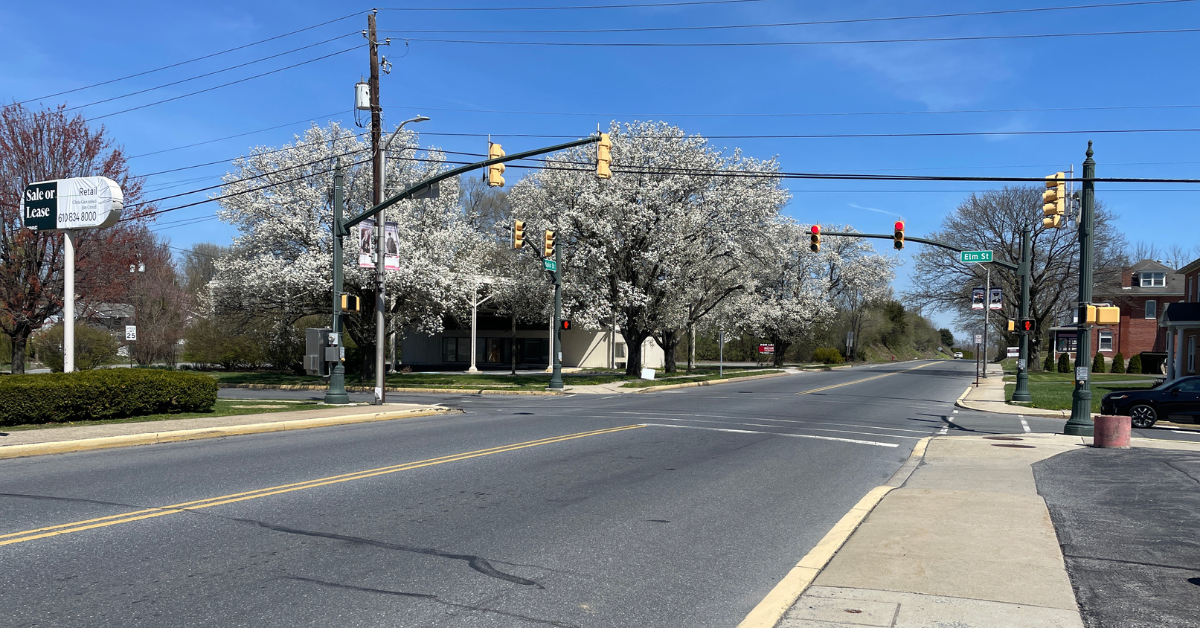
The former Rite Aid, former Citizens Bank, and park-adjacent parcel are not isolated sites. They form a cluster.
Together, they sit at one of Kutztown’s most important edge conditions: where Main Street, Route 222 access, park infrastructure, apartments, national retailers, and local civic life collide.
| Property | Real estate logic | Local/civic logic |
| 504–512 E Main | Commercial development land | Potential park expansion / recreation space |
| 23 N Elm / Rite Aid | Former NNN chain-pharmacy asset | Vacant box beside a key civic/commercial node |
| 601–605 E Main / Citizens | Former bank net-lease/redevelopment asset | Gateway parcel with drive-through and public-impact questions |
The pattern is clear.
The former Rite Aid was valued through the logic of a national pharmacy lease.
The former Citizens Bank was valued through the logic of a bank tenant and redevelopment upside.
The park-adjacent land is being valued as commercial development land, even though its public value may be greater as an extension of the park.
Financial Value Vs. Civic Value
In each case, the property’s asking price is shaped by a future buyer’s imagined use:
- a national chain,
- a drive-through restaurant,
- a redevelopment pad,
- a commercial tenant,
- or an investor willing to wait.
But the town experiences these parcels differently. Residents do not experience a vacant Rite Aid as a “former net-lease asset.” They experience it as a dead box.
They do not experience the former Citizens Bank as a “1.37-acre retail opportunity.” They experience it as another empty commercial building at a major intersection.
They do not experience the park-adjacent land as a tax parcel. They experience it as a missing piece of public space.
That gap between financial value and civic value is the heart of Kutztown’s empty-property problem. Commercial real estate can afford to wait. Towns cannot.
What Could Kutztown Do?
Kutztown does not need to buy every vacant commercial parcel. But it should treat this cluster as a strategic planning area, not just a series of private listings. The borough, Kutztown University, local businesses, county officials, and residents could ask:
- Should the park-adjacent parcel become public recreation space?
- Could the former Rite Aid be reused as an indoor market, recreation center, medical office, community hub, or mixed-use civic anchor?
- Could the former Citizens Bank be repurposed as a small transit hub linking Kutztown to Reading, Allentown, and nearby towns? Could its existing drive-through infrastructure be reused creatively rather than defaulting to another fast-food chain?
- Can public grants, county redevelopment funds, or partnerships make civic reuse financially realistic?
The worst outcome would be drift: one parcel becomes a low-value drive-through, another sits vacant for years, and the park-adjacent land disappears into another commercial use that adds little to community life (I imagine an AT&T store going in that empty lot next to Verizon and it makes me shudder).
The better outcome would be intentionality. This intersection could become an active edge of Kutztown Park and Main Street — a place where recreation, small business, students, families, and local events overlap.
How Does Kutztown Afford These Ideas?
Of course, what good is an idea if we don’t have the money to afford it (without increasing tax burden).
The better question might be: How does Kutztown not afford it?
Vacancy has a cost, too. A vacant building can still hold financial value for its owner while becoming economically and socially unproductive for the town.
To understand that cost, it helps to separate the direct tax impact from the broader civic impact.
Kutztown does not appear to collect a local corporate-profits tax from a business like Rite Aid or Citizens Bank. The borough’s direct revenue from operating businesses is more likely to come from real estate taxes, earned income taxes, local services taxes, and municipal utility or service charges.
Kutztown’s earned income tax is 1% on resident earned income and net profits, plus a 1% municipal nonresident tax on income earned from work performed inside the borough. The borough also has a $52 local services tax on people working in the borough, with an exemption for people earning less than $12,000 from that occupation.
So the immediate fiscal question is not, “How much profit did Rite Aid make?” It is: how much taxable payroll and worker activity disappeared when these properties stopped operating?
Estimating the direct loss
The exact store-level payroll, sales, and staffing numbers are not public. But public companywide numbers give us a reasonable scale.
For Rite Aid, the company expected its fiscal 2023 retail pharmacy segment revenue to be roughly $17.4 billion to $17.6 billion, and later reported 2,309 stores at the end of the fourth quarter. That suggests an average retail revenue of roughly $7.5 million per store.
A small-town Kutztown store may have been below that chain average. Even so, a cautious estimate might place the former Rite Aid somewhere in the range of $3 million to $7.5 million in annual retail/pharmacy transactions, depending on prescription volume, front-end sales, insurance reimbursements, and customer traffic.
That does not mean Kutztown lost $3 million to $7.5 million in local tax revenue. Most of that sales volume would flow through corporate systems, wholesalers, insurers, suppliers, and state-level sales-tax structures. But it does show that the site was once handling a meaningful amount of routine economic activity.
The payroll impact is easier to connect to local taxation. Rite Aid was reported around the bankruptcy period as having more than 2,000 stores and about 47,000 employees, or roughly 20–23 employees per store on average. A smaller location could be lower, so a reasonable working range for the Kutztown Rite Aid might be 12–25 direct jobs.
Those jobs likely included pharmacists, pharmacy technicians, managers, supervisors, and front-end retail staff. Using rough wage assumptions, the lost payroll might look something like this:
| Role | Possible count | Rough annual pay assumption | Rough annual payroll |
| Pharmacists | 1–2 | $120k–$140k | $120k–$280k |
| Pharmacy technicians | 3–6 | $35k–$40k | $105k–$240k |
| Retail/front-end staff | 8–15 | $25k–$35k | $200k–$525k |
| Managers/supervisors | 1–3 | $40k–$60k | $40k–$180k |
| Estimated Rite Aid total | 13–26 jobs | — | ~$465k–$1.2M/year |
The former Citizens Bank likely supported fewer jobs, but still mattered. Citizens’ 2019 annual report described about 5,700 branch colleagues across approximately 1,100 branches, or about five branch employees per branch on average. A realistic range for the Kutztown branch might be 4–8 direct jobs.
Using rough assumptions for tellers, personal bankers, and a branch manager:
| Role | Possible count | Rough annual pay assumption | Rough annual payroll |
| Tellers / service reps | 2–4 | $30k–$40k | $60k–$160k |
| Personal bankers | 1–2 | $45k–$65k | $45k–$130k |
| Branch manager | 1 | $65k–$90k | $65k–$90k |
| Estimated Citizens total | 4–7 jobs | — | ~$170k–$380k/year |
Put together, the former Rite Aid and Citizens Bank may have represented something like:
| Category | Conservative estimate |
| Direct jobs formerly tied to the two sites | ~17–33 jobs |
| Annual payroll formerly tied to the two sites | ~$635k–$1.58M/year |
| 1% earned-income-tax equivalent | ~$6,350–$15,800/year |
| Local services tax equivalent, if 17–33 workers qualified | ~$884–$1,716/year |
| Total direct lost local tax revenue estimate | ~$7,234–$17,516/year |
These are estimates, not audited numbers. Some workers may have lived outside Kutztown. Some may have transferred. Some may have been part-time. Some earned income tax may be shared or routed according to Pennsylvania’s local tax rules.
Putting the Numbers in Perspective
The portion of the Kutztown Borough’s revenues generated by municipal taxes is only about $1.93M, or about 27.5% of the total $6.9M budget.
$644k of that $1.93M is attributed to earned income taxes. This means the loss of Rite Aid and Citizens Bank jobs, valued at $6,350-$15,800/year, is the equivalent of .9% to 2.5% of the current earned income tax base.
Likewise, the total lost revenue on local services tax is about $884–$1,716/year. This equates to about 1.1% to 2.2% of the 2026 total local services tax revenue of $79,000. The local services tax represents roughly 4.1% of all the Borough’s municipal governmental revenues.
Still, in raw numbers, the direct tax loss of $7,000 to $18,000 still looks modest on paper.
But a few thousand dollars in earned income tax does not explain the full civic cost of losing an operating Rite Aid or Citizens Bank.
The Knock-On Cost of Vacancy
A worker is not just a line of payroll. A worker may become a resident, renter, homeowner, spouse, parent, customer, volunteer, or long-term member of the community. A resident worker may pay earned income tax, support a household, rent an apartment, buy a home, pay property taxes directly or indirectly, and spend money at nearby businesses.
Even nonresident workers can strengthen the borough’s finances. Someone who lives outside Kutztown but works inside the borough may pay local earned income tax on wages earned here, while placing less demand on residential infrastructure than a full-time resident household.
Vacant properties reduce jobs, customer traffic, wage-tax activity, service access, and the chance that more people build their lives around the town.
In that sense, East Kutztown’s vacant properties represent suspended economic life. The buildings may still have financial value on paper, but they are no longer producing the jobs, services, routines, and secondary effects that make a commercial corridor useful to the community.
Financially Valuable, Socially Unproductive
The problem is not only that these properties are empty. The problem is that they remain financially valuable while becoming socially unproductive.
That is the hidden cost of vacancy: not only the jobs that disappear, but the future households, errands, tax base, public investment, and civic life that never form around them.
In other words, more operating businesses can support more workers. More workers can support more residents and households. More households can create more taxable earnings, more local spending, more housing stability, and more demand for public investment.
Over time, that circulation can give local government more room to maintain services, improve infrastructure, and strengthen community life.
That does not mean growth is automatically “good.” A town can grow badly. It can add traffic, low-quality development, chain-store sameness, and infrastructure strain. But productive, civic-oriented activity is different from growth for growth’s sake.
The goal is not simply “more.” The goal is productive, civic-oriented activity that strengthens the local tax base while improving everyday life. A town does not become stronger simply by collecting taxes from land. It becomes stronger when land is used well.