In the prelude to a 2010 Kutztown Folk Festival performance, Bill Meck explains how words in Pennsylvania Dutch can carry multiple meanings depending on context and inflection:
“In our dialect [Pennsylvania Dutch], some words actually mean two or three different things. The word ‘sigh’ can mean a farmer’s name, or it can mean pigs in the dialect.”
In their first joke, Meck and Leroy Brown play on this ambiguity with a line that sounds like:
“…belong to sigh sigh sigh”
It translates to:
“I wonder if these pigs are Sigh’s pigs.”
Meck follows it up by noting:
“See, it doesn’t sound right in English.”
The point is not just the joke. Nothing about the word itself changes, but its meaning shifts depending on how it is heard—its context, its inflection, its use. The same phrase can carry different meanings without changing form. But this is not unique to Pennsylvania Dutch.
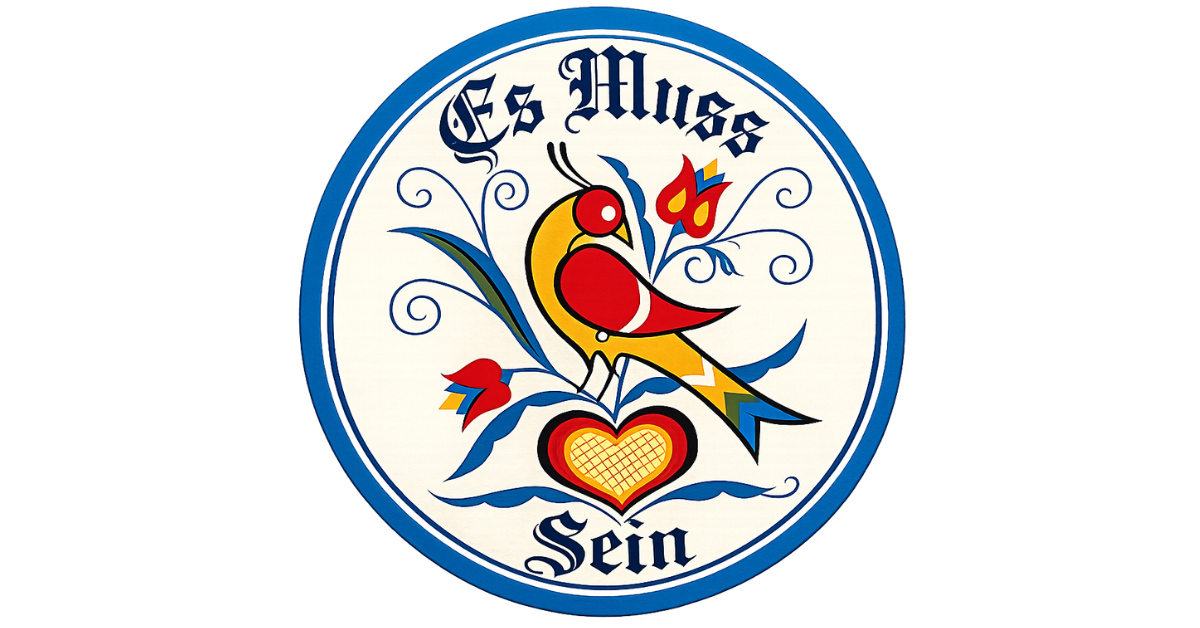
The Phrase: “Es Muss Sein”
“Es muss sein” translates to “it must be.” On its surface, it’s straightforward. It describes necessity—something that has to happen. But the phrase carries two fundamentally different meanings depending on how it’s understood.
Interpretation 1: Law / Obligation
In the work of Ludwig van Beethoven, “Es muss sein” can be read as a statement of obligation. It functions as:
- a command
- a duty
- an inevitability imposed from outside
Under this reading, action is framed as a “difficult decision.” There are multiple possible choices, but one must choose correctly. The phrase carries:
- burden
- pressure
- moral weight
“Es muss sein” becomes something imposed on the individual. The result is a view of life structured by necessity—where action is constrained, and freedom is limited.
Interpretation 2: Grace / Desire
Through Martin Luther, the idea of decision changes. There is no real process of choosing between alternatives. Action unfolds through grace rather than deliberate selection. Under this framework:
- the idea of a “decision” collapses
- there are no meaningful alternatives to weigh
“Es muss sein” is no longer a command. It becomes a recognition. The key shift is that one does not act because they are required to obey, but because they cannot want otherwise.
Case Study: The Unbearable Lightness of Being
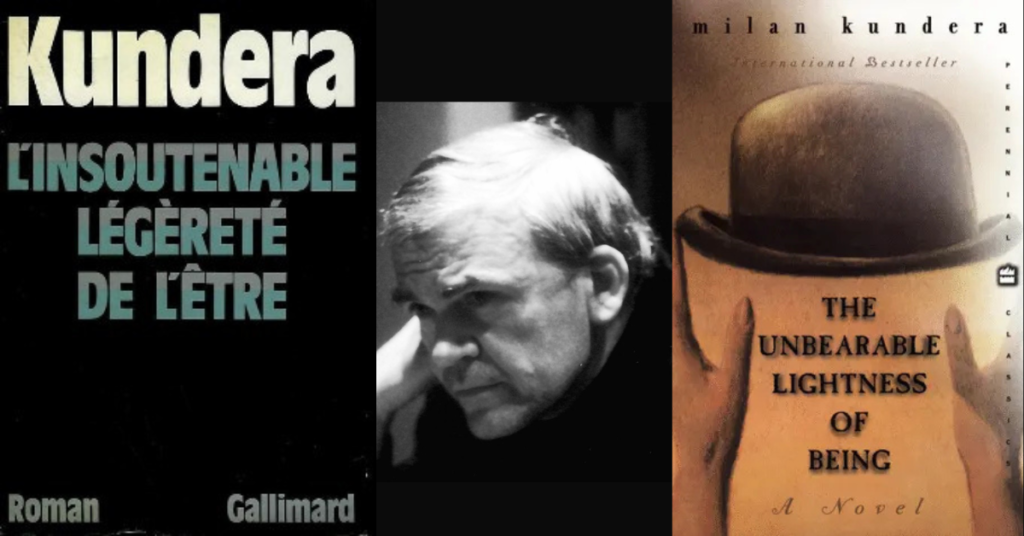
My mom gave me her copy of The Unbearable Lightness of Being back in Fall 2018 and I read the entire thing in one sitting. In the book, Tomas’s return to Eastern Europe is often read as an act of duty. Under this standard reading, his decision reflects:
- weight
- constraint
- submission to circumstance
He gives up the relative freedom of the West and returns to a more restrictive environment. The move appears as a kind of obligation—something he must do despite the cost.
But this can be read differently. Tomas does not return because he is forced to. He returns because of Tereza. His decision is not driven by duty, but by desire. He cannot imagine a life without her, and that fact overrides all other considerations.
Tereza also rejects Western “freedom,” but not because she is constrained. For her, that freedom is empty. It lacks meaning, structure, and emotional grounding.
Both characters move toward something that, from the outside, looks like limitation—but from their perspective, is the only viable way to live.
Language Parallel: “Have To” vs “Must”
English reflects the same dual structure. Phrases like “I have to” and “I must” can be read in two ways:
- as external obligation (law)
- as internal inevitability (desire or history)
In the first sense, they imply force—something imposed from outside. In the second, they describe a situation where no real alternative exists.
“I have to” does not necessarily mean being forced. It can also mean that no other outcome was imaginable.
This returns to the earlier point about meaning. The phrase itself does not determine the interpretation. The meaning depends on how it is understood—its context, its inflection, its use. The same words can describe entirely different realities.
It Must Be Folkedelic
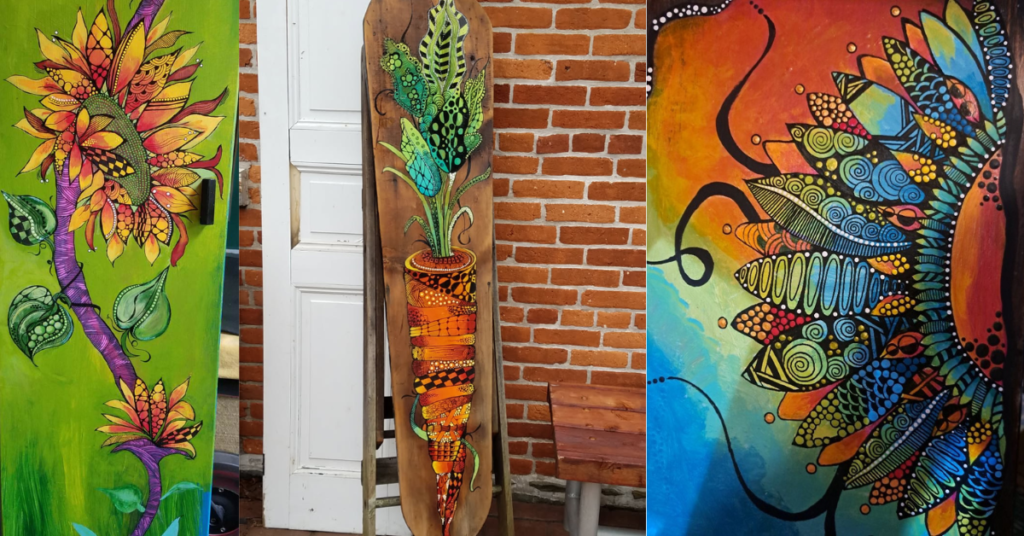
Shawn Brown’s “folkedelic” artwork is a clear example of “es muss sein” art that is not rooted in obligation. She explains that folkedelic is:
“a style derived from a need for an artist to put paint down on a surface—any surface.”
From wooden chairs and shutters to cabinets, boxes, and cutting boards, each piece is given a second life through color and pattern. She is not creating for fame, money, or status—but simply to bring beauty to otherwise discarded objects.
That same pattern extends beyond the objects themselves. In my Kutztown partying days, she gave me work and had faith in me to handle it. She even picked me up in the wee hours of the morning after a public drunkenness arrest.
But really she’s brought beauty, art, and love into my life from the day I was born. From days at Jackie & Daughter Flower Shop to archiving family dinners, my aunt Shawn is the epitome of the modern PA Dutch way of seeing.
Her work, in whatever form it takes, is something that has to be done. This is graceful “es muss sein” in practice.