When most people think of Pennsylvania Dutch, they picture Amish buggies, plain dress, and a “simple” way of life.
That image is familiar and easy to recognize. But it only represents a small, highly visible part of a much broader culture. Pennsylvania Dutch identity includes language, history, migration, religion, and everyday life that doesn’t look unusual or dramatic. Most of that disappears in the common image.
It’s a pattern in how culture gets represented: the most visually distinct or emotionally striking version of something tends to become the version people remember. Over time, that version stands in for everything else.
In this case, Amish and Mennonite communities become “Pennsylvania Dutch,” even though they are only one part of it.
This is the “conservative spectacle”: a process where culture is reduced to its most legible image, and that image replaces the whole. The goal isn’t accuracy—it’s clarity and reaction. The simpler and more recognizable the image, the more it spreads.
The result is not just a misrepresentation. It changes how people understand culture in the first place. History gets flattened into a few images. Complexity gets replaced by recognition. What doesn’t fit the image is ignored.
The spectacle doesn’t just distort reality—it stabilizes it. By reducing culture to simple, repeatable images, it prevents deeper understanding, fragments identity, and weakens the ability to form meaningful perspectives or desires beyond what is already visible.
PA Dutch as Spectacle
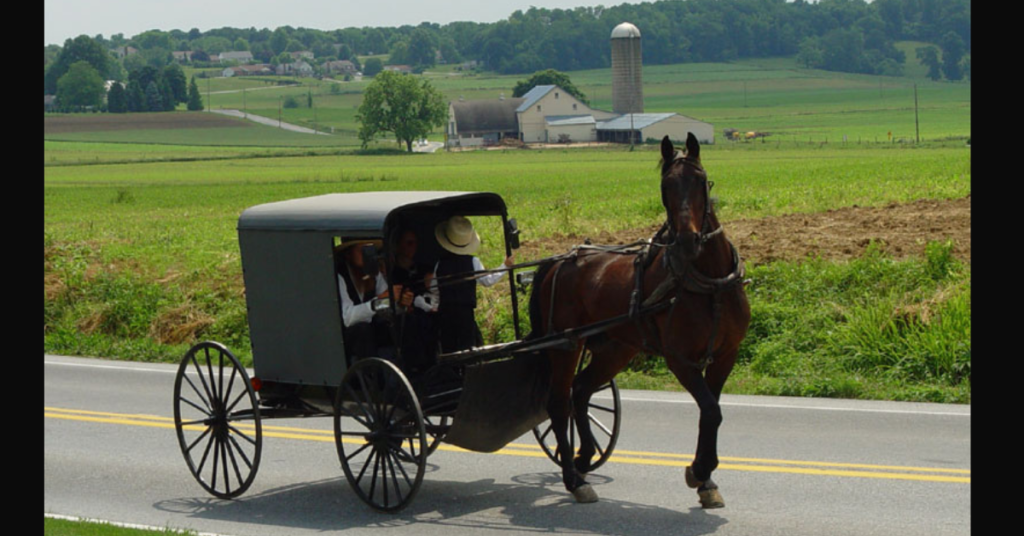
In most media and everyday conversation, “Pennsylvania Dutch” is treated as interchangeable with Amish or Mennonite communities.
These communities are presented as the defining version of Pennsylvania Dutch identity—closed, resistant to change, and visibly distinct from modern life. An article about the Kutztown Folk Festival from the Allentown Morning Call in 1999 used the headline:
“DUELING KUTZTOWN FESTIVALS ARE STEREOTYPICALLY ‘STUBBORN DUTCH’”
That framing works because it is easy to recognize. The clothing, the buggies, the separation from technology—all of it makes for a clear and repeatable image. But that clarity comes from narrowing the field, not accurately representing it.
The underlying mechanism is simple: the most visually distinct or sectarian group becomes the dominant symbol of the whole. Once that happens, everything else fades out of view.
- The Pennsylvania Dutch dialect, which still exists in partial or evolving forms, is rarely part of the image.
- Non-sectarian PA Dutch families—who are integrated into modern life—are almost never included.
- Industrial, working-class, and hybrid identities that developed over generations are ignored entirely.
What remains is a single, simplified version of the culture that is easy to circulate and consume. The spectacle does not choose what is most representative—it chooses what is most noticeable. The more unusual or visually striking something is, the more likely it is to stand in for everything else.
Over time, that substitution becomes accepted as reality. Pennsylvania Dutch culture is no longer understood as a complex historical and social formation. It becomes an image: one that is familiar, repeatable, and incomplete.
The Logic of the Spectacle
The pattern described above follows a simple and repeatable structure. It’s not unique to Pennsylvania Dutch culture—it shows up across media, politics, and everyday perception. It works in three steps:
- Selection: The most emotionally charged or visually distinct image is chosen. This could be something unusual, controversial, or easy to recognize at a glance.
- Amplification: That image is repeated across media—news, social platforms, tourism, and everyday conversation—until it becomes familiar.
- Substitution: Over time, the image stands in for the full reality. What was once a narrow example becomes the default understanding.
The result is that people relate to images, not to underlying conditions. Instead of engaging with history, language, economics, or social structure, they engage with what is easiest to see and remember.
This idea is close to what Guy Debord described as the “spectacle”: a situation where social relations are mediated by images. People don’t just consume representations—they begin to understand reality through them.
Morrissey as Spectacle
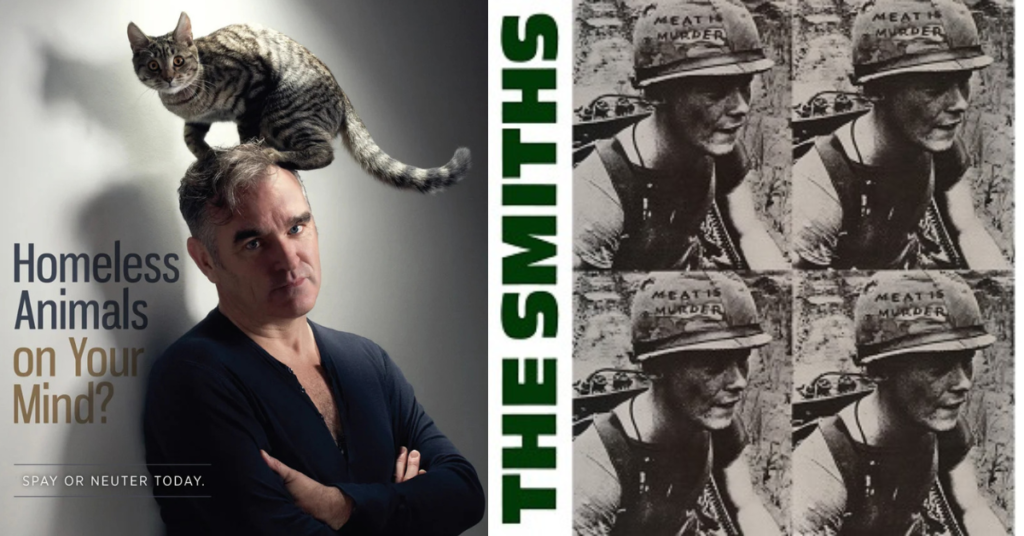
The same pattern shows up in how artists are covered in the media. Take Morrissey as an example.
Most coverage focuses on controversy—canceled shows, political statements, or accusations that generate outrage. Those elements are easy to frame, easy to circulate, and easy to react to. They produce a clear emotional response.
What’s largely missing is sustained engagement with the work itself: the music, the lyrics, or the range of possible interpretations. That material is more complex and less immediately legible, so it doesn’t travel as easily. The mechanism is the same:
- The most inflammatory or emotionally charged interpretation is selected
- It is repeated across coverage and discussion
- It becomes the dominant way the artist is understood
Over time, that interpretation replaces everything else. It doesn’t just sit alongside other readings—it crowds them out. The interpretation that produces the strongest emotional reaction becomes the most visible. And once it becomes the most visible, it becomes the default. This mirrors the earlier example:
- Amish communities become the spectacle of Pennsylvania Dutch culture
- Controversy becomes the spectacle of the artist
In both cases, a narrow and highly visible element stands in for a much broader reality.
Counterculture as Spectacle
This pattern doesn’t just apply to traditional culture or media coverage. It also applies to counterculture.
Take punk as a starting point. At its origin, punk functioned more as an ethos than a fixed identity—a general stance of disruption. To quote James Baldwin, “artists are here to disturb the peace.”
It was less about what you looked like and more about how you approached existing norms. Over time, that ethos shifts:
- Ethos to Aesthetic: Disruption becomes associated with specific styles: clothing, music, visual markers.
- Aesthetic to Rules: Those styles become criteria for what “counts” as punk.
- Rules to Moral Order: Adherence to those criteria becomes a form of judgment—what is authentic, what is not.
At that point, something changes. What began as a rejection of external norms becomes another system that imposes them. Instead of disrupting order, it creates a new one.
This aligns with a broader idea associated with Slavoj Žižek: forms of transgression can be absorbed into the system they oppose. What looks like resistance becomes predictable and repeatable, and therefore manageable.
The result is that counterculture starts to function like the structures it originally rejected. It becomes something that can be recognized, categorized, and consumed. Even rebellion becomes a spectacle once it is codified and circulated.
Why the Spectacle Persists
The persistence of the spectacle can be explained using a broader reading of Karl Marx.
“Relations of production” are often understood narrowly as workplace or economic relations. But they can be understood more broadly as the total set of social relations that organize life—family structures, cultural norms, institutions, language, and the expectations that shape behavior.
These relations don’t just produce goods; they produce the conditions that make those goods necessary in the first place. They also produce identity, history, and the way people understand themselves.
Marx’s core point still holds in this broader sense: these relations reproduce themselves.
They do this not only through formal systems, but through everyday practices and perception. Media, culture, and identity are all part of this process. They don’t sit outside these relations—they help maintain them.
This is where the spectacle fits in. It serves a function within this system:
- It simplifies complex realities into recognizable images
- It directs attention toward what is immediate and reactive
- It reduces the need to engage with underlying conditions
By doing this, it shapes how reality is perceived. And because perception is part of how social relations are maintained, the spectacle contributes to their reproduction.
The result is that existing conditions persist—not because they are constantly defended in an explicit way, but because they are continuously reinforced through how people see and interpret the world.
Nostalgia as Conservative Desire
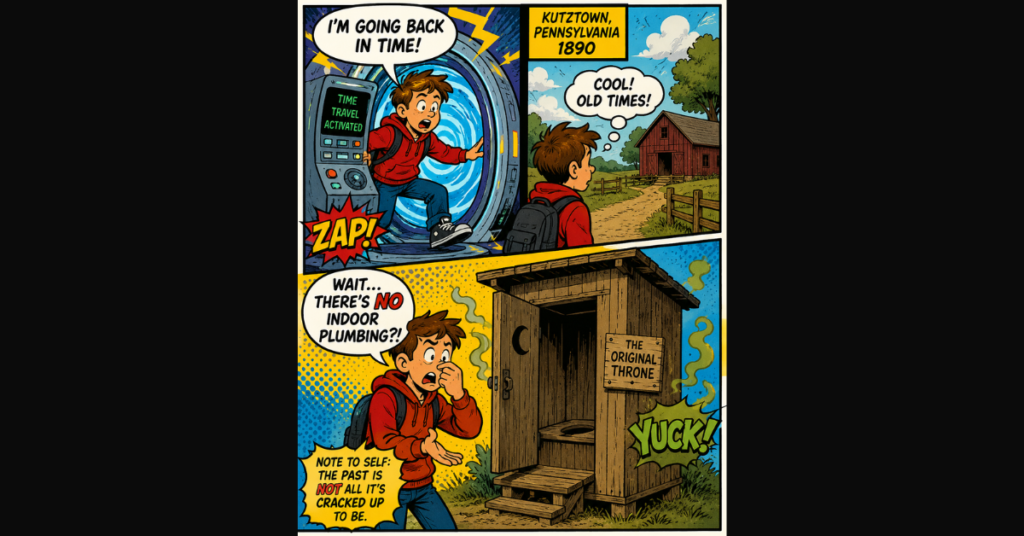
Pop nostalgia is always conservative in structure. It does not engage with the past as it was lived. It focuses on selected images of the past—styles, moods, and symbols that are easy to recognize and reuse.
What gets reproduced is not the reality of a period, but a simplified version of how it looks. One imagines anyone born after 2000 traveling back to the 1980s and not having the Internet. Or even going back a century to times with no running water or plumbing. No thanks!
What is being desired in pop nostalgia is not the historical reality. It is an image. The distinction is important:
- Nostalgia ≠ history
- Nostalgia = aesthetic longing
- History = material conditions
Nostalgia selects what is visually or emotionally appealing and removes what is limiting, difficult, or contradictory. As a result, it creates a version of the past that never fully existed in the way it is imagined.
This matters because identity depends on a relationship to real history. When history is replaced by simplified images, that relationship weakens. The result is not just a misunderstanding of the past. It leads to something more fundamental: a loss of grounding in how identity is formed.
History, Ego, and the Collapse of Desire
Writer Milan Kundera describes a contrast between weight and lightness.
Weight comes from continuity—being grounded in history and conditions that give actions consequence. Lightness is the absence of that grounding, where things feel interchangeable and without lasting significance.
A related point appears in Martin Luther’s claim that “the will is bound.” The idea is that action is shaped by existing conditions. People do not choose freely from nothing; their desires are formed within the structures they inhabit.
Taken together, identity is formed through real historical conditions. It is not constructed independently of them. When those conditions are replaced by images:
- History is fragmented into isolated, consumable pieces
- Continuity is lost
- Identity becomes shallow, unstable, or outsourced
One needs their real, material history to understand who they are. If there is no coherent “self,” there is nothing that can truly want anything.
Beyond the Spectacle
Returning to Pennsylvania Dutch culture makes the point clear. If it is understood only through images—Amish buggies, plain dress, “simple life”—then most of what actually defines it disappears. What remains is easy to recognize but incomplete.
Pennsylvania Dutch identity is shaped by migration, language, religion, labor, and ongoing adaptation. It includes sectarian and non-sectarian communities, rural and industrial life, continuity and change. None of that can be captured in a single image.
Culture cannot be understood only through what is visible. It has to be understood through the conditions that produce it—material, historical, and social.
Real change requires breaking the cycle of representation and reconnecting with the conditions that produce identity, desire, and action.