
The 1970s pushed Kutztown outward—physically, culturally, and historically—while also exposing the limits of that expansion.
Infrastructure like the Kutztown Bypass tied the town more tightly into regional and national systems, even as it subtly redirected life away from Main Street. At the same time, events like Hurricane Agnes revealed how fragile those systems could be, as natural forces cut through decades of development.
This was also a decade of cultural explosion. Kutztown briefly became a node in national music and artistic networks, hosting major performers and even staging a festival that rivaled larger events—before its collapse showed the risks of scaling too quickly.
Figures like Keith Haring and Gary Mark Smith emerged from the town, carrying its influence far beyond Berks County into global cultural spaces.
1971: Construction of Kutztown Bypass
_from_the_overpass_for_North_Elm_Street_in_Kutztown,_Berks_County,_Pennsylvania.jpg)
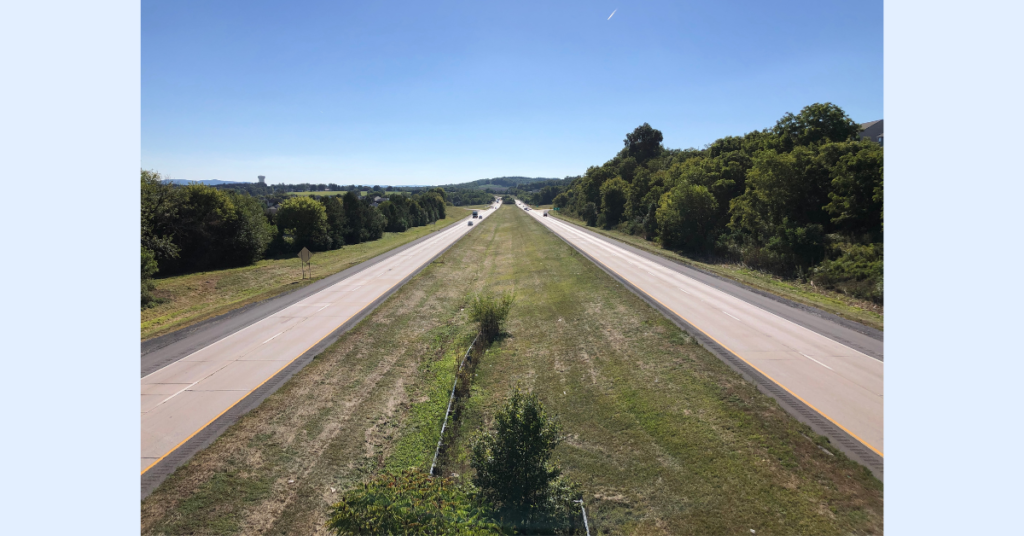
In 1971, construction began on the Kutztown Bypass, a new section of U.S. Route 222 designed to reroute traffic around the borough rather than through its Main Street corridor.
For decades, Route 222 had run directly through Kutztown, tying the town into a regional network stretching between Reading, Allentown, and Lancaster. As traffic increased in the postwar years, that central route became more congested, bringing a steady flow of through-traffic into the town’s core.
The bypass represented a shift in how movement through the region was organized. Instead of passing directly through local streets, traffic was redirected to the edges—separating long-distance travel from everyday life in the borough.
The new roadway opened in 1973, forming part of a broader transition toward expressway-style infrastructure across eastern Pennsylvania.
For Kutztown, the change was subtle but significant. Main Street became less defined by regional traffic, while the town itself became more connected to a larger system of high-speed movement—where people and goods increasingly passed by, rather than through, the center of local life.
1972: Hurricane Agnes Floods the Saucony
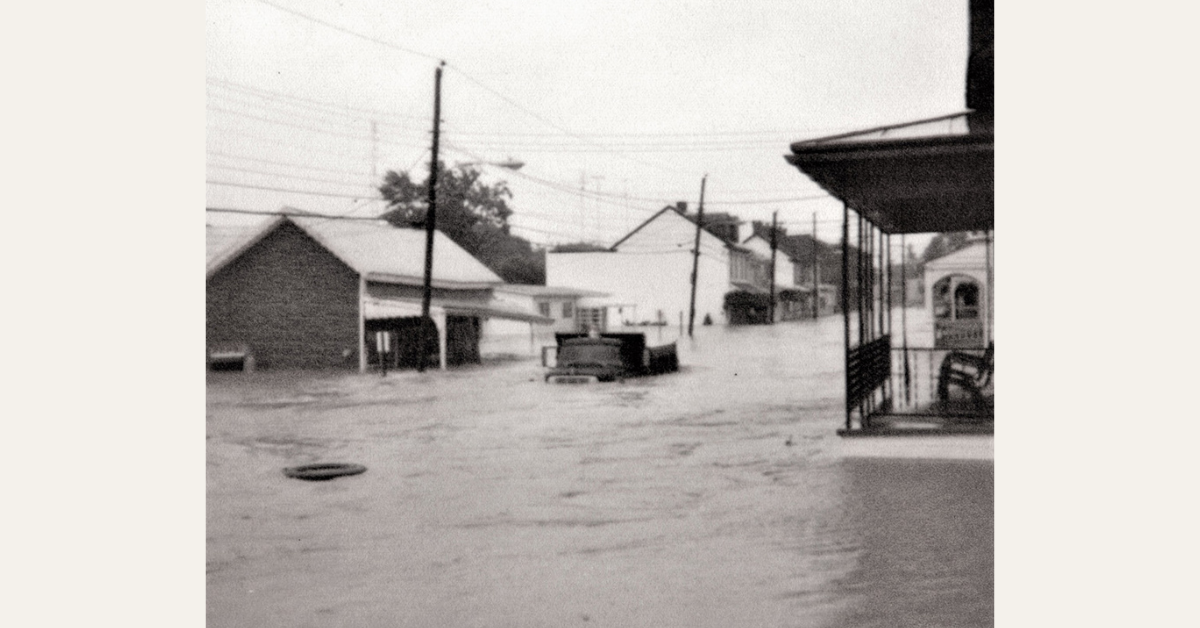
In June 1972, Hurricane Agnes brought severe flooding across Pennsylvania, becoming the worst natural disaster in the state’s history, with more than $2 billion in damage.
In Kutztown, the Saucony Creek rose rapidly after days of heavy rain, flooding low-lying areas and overtopping bridges. Water levels surged through the town’s natural corridors, disrupting roads, damaging property, and isolating parts of the borough.
The impact in Kutztown was part of a much larger regional crisis. Rivers across eastern and central Pennsylvania overflowed, towns were submerged, and residents were forced to evacuate as water moved through homes, streets, and infrastructure. Cleanup stretched on for weeks, as mud, debris, and water damage reshaped both the physical landscape and daily life.
The flooding served as a reminder of the region’s underlying geography. Despite decades of development—roads, industry, and expanding infrastructure—the town remained tied to the rhythms of its waterways.
In that sense, Agnes exposed a tension that had been building throughout the 20th century: even as systems of control and organization expanded, natural forces could still overwhelm them, reshaping the landscape in ways that no planning fully contained.
1972: Friend Inc. Is Founded
In September 1972, Friend, Inc. was established on Main Street in Kutztown, initially focused on providing drug and alcohol counseling for individuals and families. The organization was partially funded through public mental health programs and regional support networks.
Although the agency closed in 1980 as funding shifted toward more urban areas like Reading, the needs it addressed remained present in the surrounding rural communities. In response, local churches organized new efforts, eventually leading to the reactivation of Friend, Inc. in 1987 as part of a broader, community-based support system.
From that point forward, the organization expanded its role. What began as a counseling service evolved into a wider network of assistance, including food access, emergency support, and connections to housing, medical, and financial resources. The opening of the Northeastern Berks Food Pantry in 1988 marked a key step in this shift.
The founding of Friend, Inc. reflects another dimension of change in Kutztown during this period. As economic and social pressures became more visible, support systems increasingly moved beyond informal networks and into coordinated, institutional forms—often rooted in a combination of public funding, local initiative, and community organizations.
1975-76: Stevie Wonder, Bruce Springsteen, and “Kutztown Woodstock”
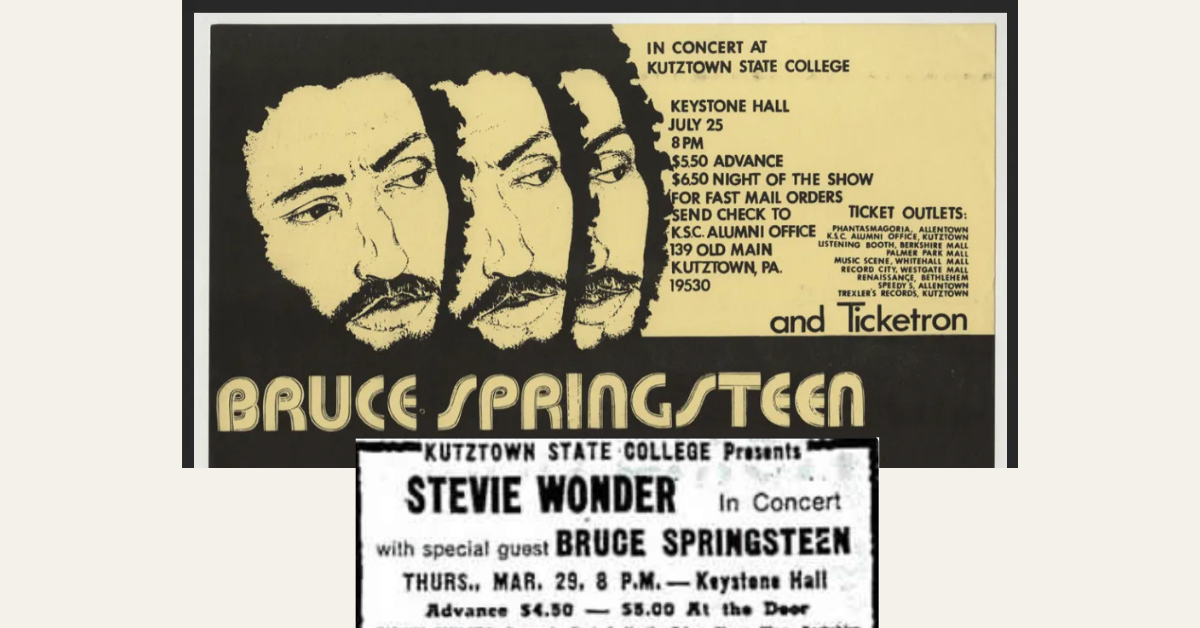
By the mid-1970s, Kutztown—particularly Kutztown State College—had quietly become a stop on the touring circuit for major and emerging musical acts.
In July 1975, a then-rising artist named Bruce Springsteen played a two-night stand at Keystone Hall. During that visit, he reportedly listened to an early version of Born to Run—the album that would define his career—and, dissatisfied, threw the recording into a hotel pool in a moment of frustration before ultimately deciding to release it anyway. The album would go on to become one of the most important in American rock history.
Springsteen was not alone. In the early 1970s, the college and surrounding venues hosted a steady stream of well-known performers, including The Allman Brothers Band, Peter Frampton, The J. Geils Band, and Chicago. These shows were often organized through the university’s alumni association, raising funds for scholarships while bringing in nationally recognized acts.
That momentum culminated in 1976 with the Kutztown Good-Time Arts & Music Festival, a massive three-day event at the fairgrounds that drew an estimated 20,000+ attendees per day. It featured dozens of country, folk, and bluegrass performers—including Emmylou Harris, Tammy Wynette, and Earl Scruggs.
The scale rivaled major national festivals, and musically, it was widely seen as a success. But gate-crashing, unpaid taxes, noise complaints, and financial losses—estimated in the hundreds of thousands—led borough officials to effectively ban future large-scale music festivals. The fallout forced the alumni association into bankruptcy.
1976: Kutztown Area Historical Society Incorporates
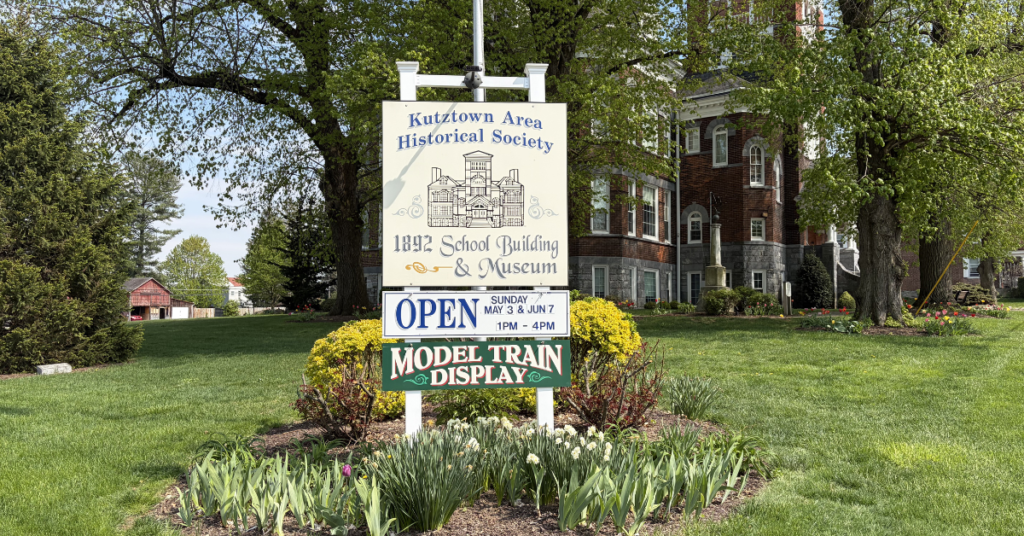
The Kutztown Area Historical Society (KAHS) was founded in 1974–75 in response to the American Bicentennial and a growing need for a dedicated local history resource beyond the Historical Society of Berks County.
Serving Kutztown and the surrounding northeastern districts—including Brandywine Heights and Fleetwood—the organization became one of the earliest regional historical societies in the county. In February 1976, KAHS was officially incorporated, formalizing its mission to preserve and document the area’s history.
A few years later, on February 27, 1979, the society acquired the former 1892 Public School Building from the Kutztown Area School District. This late Victorian structure—now listed on the National Register of Historic Places—became the society’s permanent headquarters.
Today, the building houses the society’s museum and administrative offices, along with a collection of artifacts, photographs, and research library for local historians. It also functions as a community space, hosting events throughout the year.
1976: Keith Haring Graduates from Kutztown High School
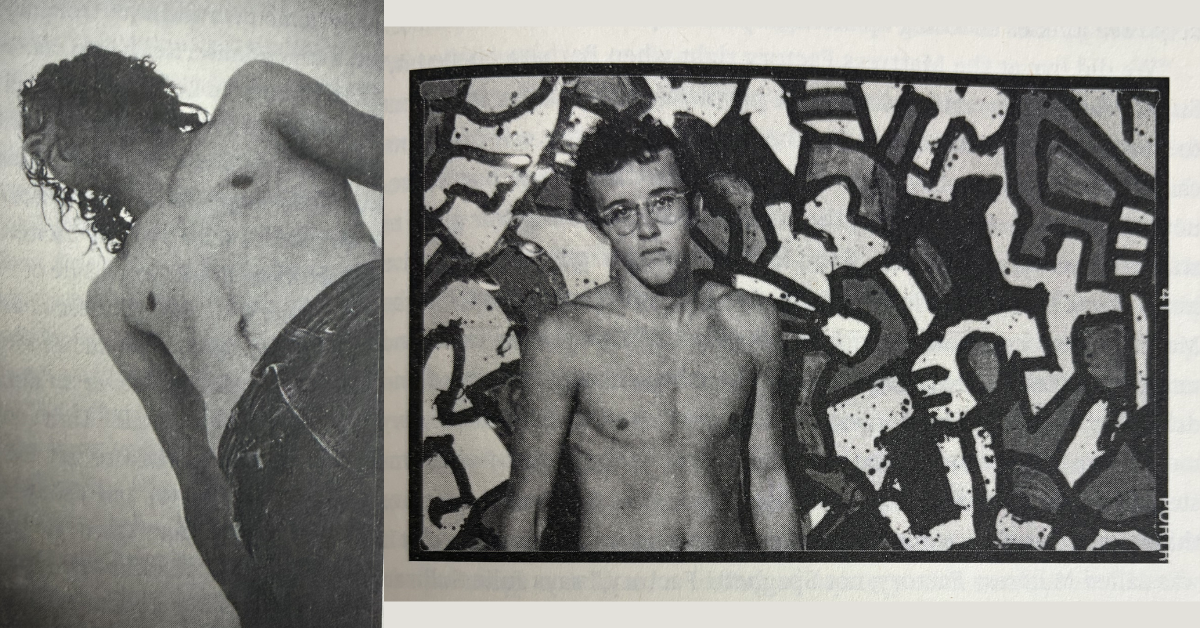
In 1976, Keith Haring graduated from Kutztown Area High School. He grew up in Kutztown in a working-class Pennsylvania Dutch environment, where drawing was a constant from an early age.
His father, an amateur cartoonist, introduced him to sketching, and Haring absorbed influences from popular culture as much as from traditional art. That mix of folk sensibility and mass imagery would later define his work.
After graduating, Haring briefly attended the Ivy School of Professional Art in Pittsburgh but quickly became disillusioned with commercial art. By 1978, he moved to New York City and enrolled at the School of Visual Arts, where he immersed himself in a downtown scene shaped by graffiti, hip-hop, punk, and experimental art.
It was there that Haring developed the style that would make him famous: bold, thick lines; radiant figures; barking dogs; crawling babies; and symbols that felt both ancient and immediate.
He began drawing in subway stations using chalk on unused advertising panels—turning public space into a kind of open gallery. The work was fast, accessible, and intentionally outside traditional institutions.
By the early 1980s, Haring’s art had moved from subway walls to galleries, museums, and international exhibitions. He collaborated with artists like Andy Warhol and became a central figure in the New York art scene.
Even as his fame grew, he maintained a commitment to public art and accessibility, creating murals in cities around the world and opening the Pop Shop in 1986 to make his work available beyond elite collectors.
1978: Gary Mark Smith Launches Career as Street Photographer
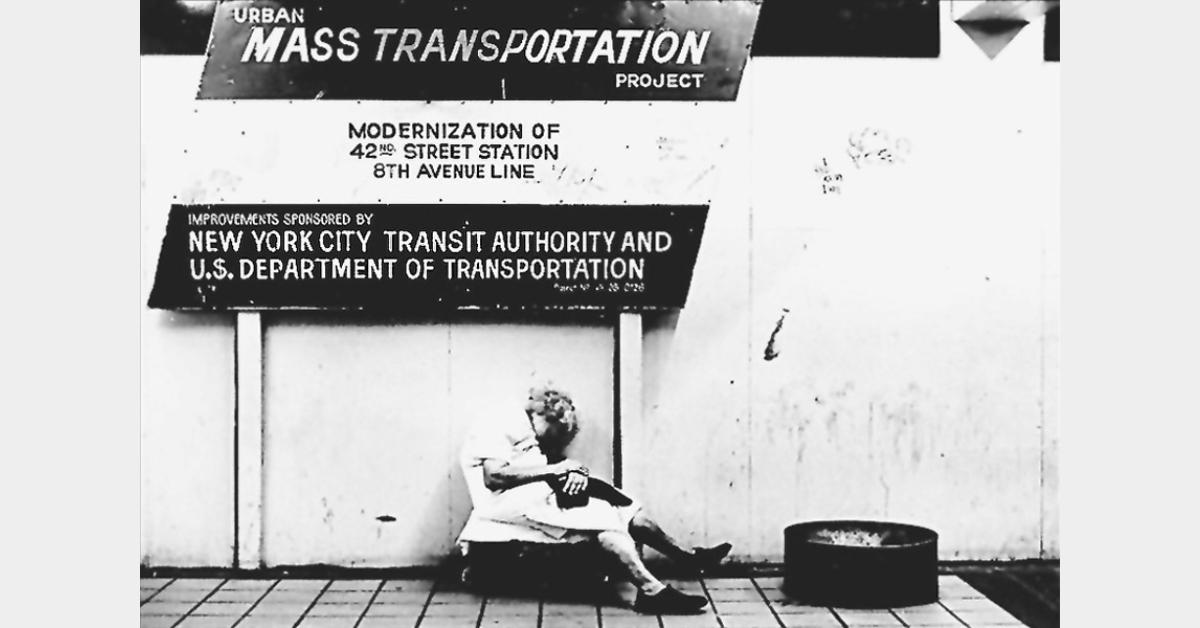

In 1978, Gary Mark Smith set out on a path that would take him from the Saucony Creek valley to more than 80 countries around the world.
While hitchhiking across the United States, he came across news of newly affordable international air travel following airline deregulation—an encounter that, combined with a restless sense of wanderlust, led him to commit to a life in photography.
Smith’s roots, however, were firmly in the Kutztown area. Born in Bethlehem and raised near Virginville, he began taking photographs on his family’s farm in the Saucony River Valley.
As a student at Kutztown Area High School—just two years after Keith Haring graduated—he worked as a photographer and sports editor for the school newspaper, already documenting everyday life with a lens that would define his later work.
Even then, he was drawn beyond the local, traveling to places like Washington Square in New York City to capture candid street scenes.
By 1978, that instinct had evolved into a deliberate artistic mission. Smith described his work as focusing on “the poetry of everyday life” in what he called the world’s “most frightening discomfort zones.”
Over the following decades, he would document street life in conflict zones, disaster areas, and dense urban environments—from Central America during Cold War unrest to volcanic eruptions in the Caribbean, from post-9/11 New York to war-torn regions abroad.
His approach was shaped as much by personal experience as artistic vision. A severe surgical injury in 1976 left him with lifelong chronic pain, pushing him toward a career that allowed independence and total immersion.
Over time, Smith gained recognition in the field of street photography, earning awards, publishing books, and having his work collected by institutions and museums.