
The 1980s marked a period where Kutztown was no longer just a local community, but a place increasingly tied to regional, national, and even global networks.
Kutztown University itself transformed during this period, expanding its academic mission. Athletics, student life, and new programs helped project Kutztown outward, while events like the Taiwanese American Conference brought entirely new cultural perspectives into a historically Pennsylvania Dutch space.
At the same time, that growth created friction. The “town–gown” divide made visible the strain between long-term residents and a rising student population, revealing limits to how quickly the town could absorb change. Elsewhere, the loss of landmarks like the Glockenspiel Restaurant hinted at the fragility of older forms of identity, even as new ones took their place.
Running parallel to all of this was the emergence of Kutztown figures onto the global stage—most notably Keith Haring, whose work carried the visual language of the town into an entirely different cultural register, while also confronting major issues like the AIDS crisis.
1980: Kutztown State College Football Wins First Title
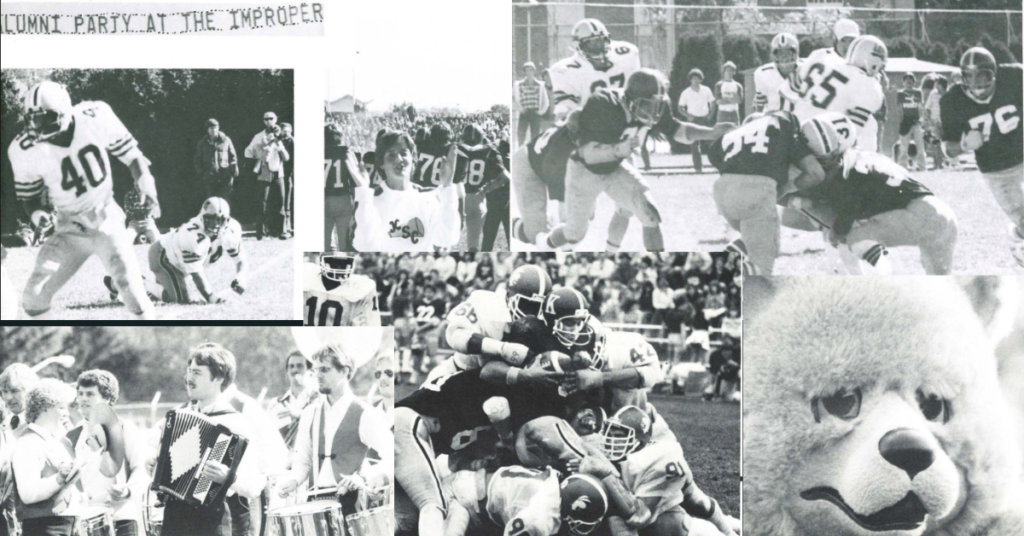
In 1980, Kutztown State College’s football program reached a new level, capturing its first Pennsylvania State Athletic Conference (PSAC) East Division title.
The Golden Bears finished the regular season with a dominant 33–0 win over Mansfield, ending in a three-way tie atop the division with East Stroudsburg and Millersville. A conference committee selected Kutztown to advance to the championship game—marking the program’s first appearance on that stage.
Though Kutztown narrowly lost the title game to Clarion State, 15–14, the season established the program as a serious competitor. Defensive standout Larry Mertz delivered a historic performance in that championship matchup, recording a school-record 31 tackles.
Out of this era emerged one of the most important figures in Kutztown sports history: Andre Reed. A wide receiver at Kutztown in the early 1980s, Reed would go on to be selected in the 1985 NFL Draft by the Buffalo Bills.
Reed spent 15 seasons in the NFL, earning seven Pro Bowl selections and helping lead the Bills to four consecutive Super Bowl appearances from 1991 to 1994. Although the team fell short in each championship, Reed retired as one of the most accomplished wide receivers of his era.
He was inducted into the Pro Football Hall of Fame in 2014, cementing his place among the game’s all-time greats. That same year, Kutztown honored Reed by renaming its football stadium after him.
1983: Kutztown University of Pennsylvania
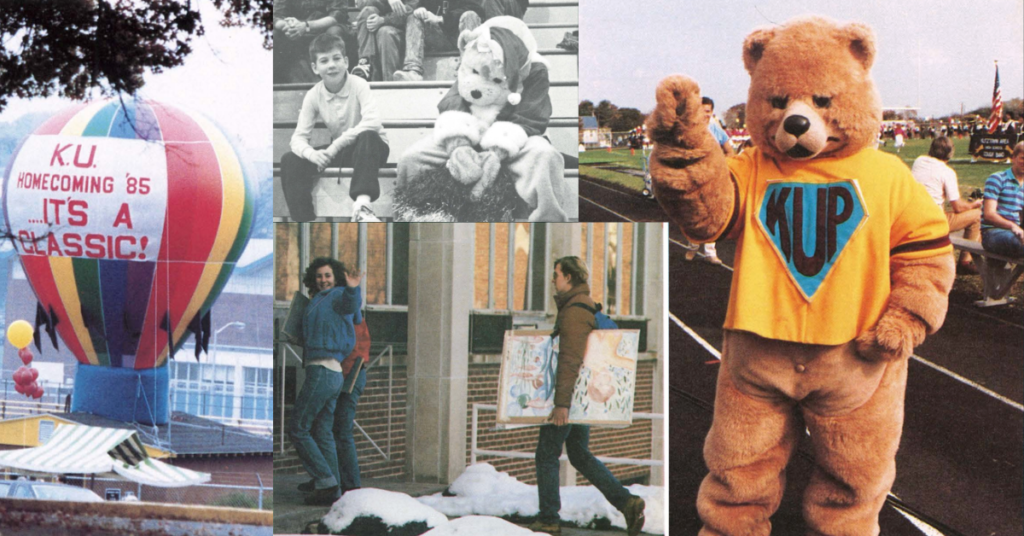
On July 1, 1983, Kutztown State College officially became Kutztown University of Pennsylvania, marking its entry into the newly formed Pennsylvania State System of Higher Education.
While teacher education remained a core part of its identity, Kutztown began to grow its offerings in the arts, sciences, and professional fields, aligning itself with the evolving needs of both students and the regional economy.
Over the following decades, the university would continue to expand its academic programs, facilities, and research capacity.
1984: KU Men’s Rugby Is Founded
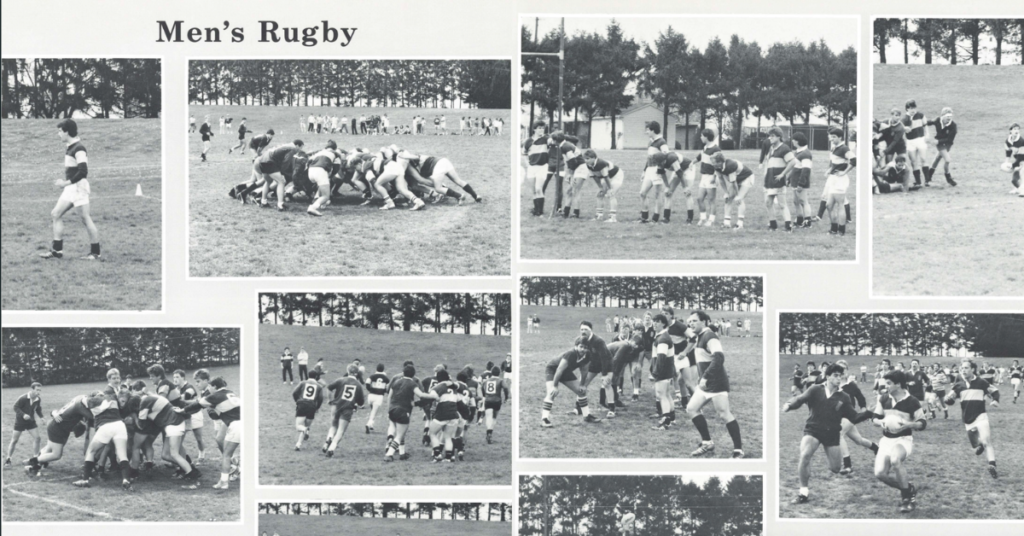
In 1984, Kutztown University Men’s Rugby was established, quickly building a reputation that extended far beyond Berks County. What began as a club sport grew into one of the most consistently successful collegiate rugby programs in the country.
Just two years after its founding, the program came under the leadership of head coach Gregg “Doc” Jones—a turning point that helped define its identity. From 1986 onward, the team has never recorded a losing season, compiling hundreds of victories and multiple undefeated runs.
Over time, Kutztown Rugby developed into a year-round program, fielding multiple teams in both traditional fifteens in the fall and sevens in the spring.
The program’s success has also translated into individual achievement. Dozens of players have earned regional select honors, more than twenty have been named USA Collegiate All-Americans, and several have gone on to represent the United States internationally or compete at the professional level.
A major milestone came when Kutztown captured its first Collegiate Rugby Championship (CRC) National Title in sevens, finishing the tournament undefeated in New Orleans. The victory reinforced what had already become clear over decades: Kutztown Rugby was no longer just a campus club—it was a nationally recognized powerhouse.
1984: Taiwanese Americans Conference
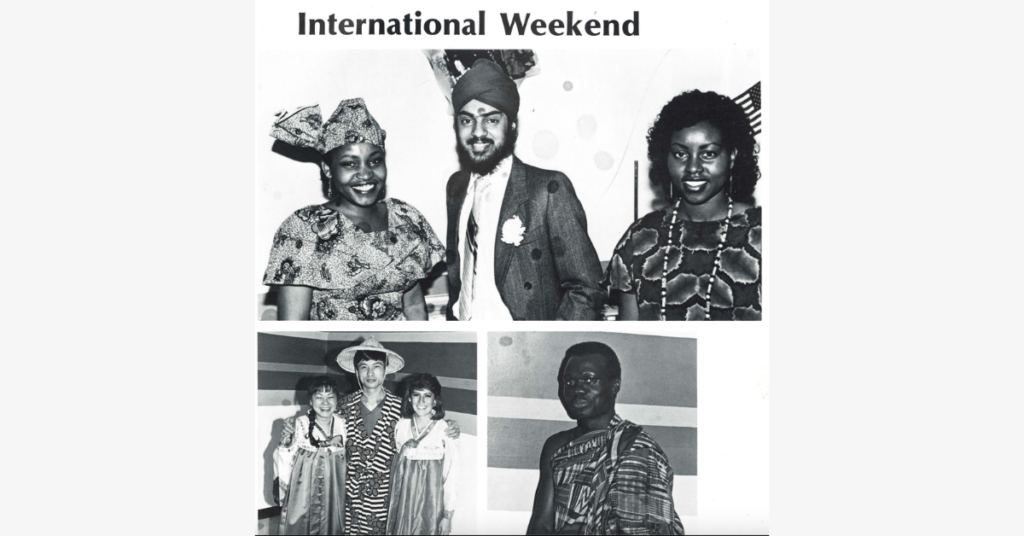
In 1984, Kutztown University hosted the 15th annual East Coast Taiwanese American Conference, bringing roughly 1,500 attendees from across the eastern United States to campus. At a time when Kutztown was still largely defined by its Pennsylvania Dutch heritage, the event introduced a very different cultural and political perspective into the borough.
The multi-day conference featured seminars and discussions on issues central to Taiwanese American life, including the political future of Taiwan, economic concerns, cultural identity, and participation in the American political system.
Speakers included U.S. Representative Robert Edgar and Kutztown University president Dr. Lawrence M. Stratton, reflecting both national and local engagement with the event.
Alongside the formal programming, the conference created a broader cultural space on campus. Activities ranged from youth discussions and children’s programs to a public music recital and competition held at Schaeffer Auditorium. Attendees spanned generations—from infants to older adults.
Visitors also encountered Kutztown’s own traditions, particularly the Kutztown Folk Festival happening nearby. For many attendees, the Pennsylvania Dutch cultural landscape was unfamiliar but intriguing—“very different,” as one organizer described it.
1986: The Glockenspiel Restaurant Burns Down
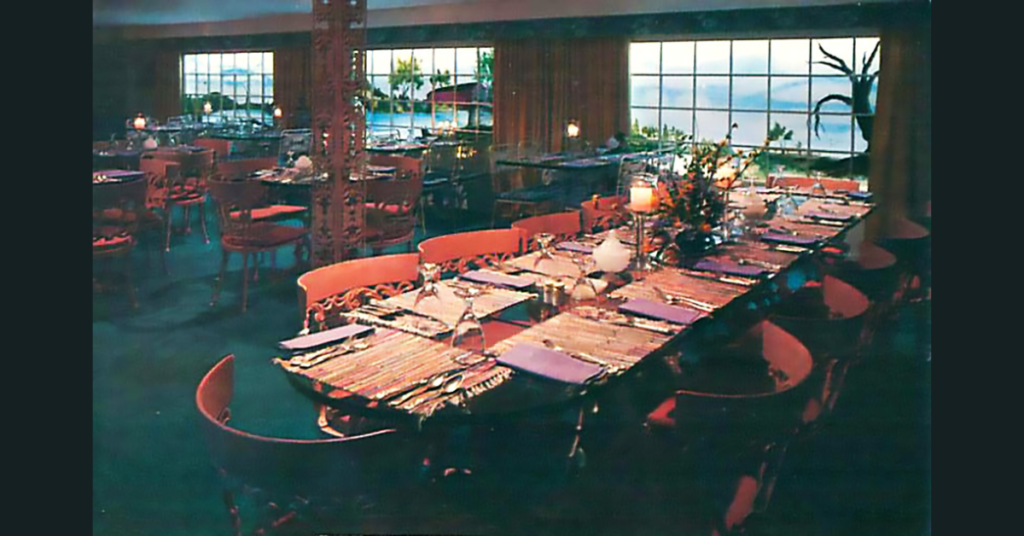
In 1986, one of the region’s most recognizable Pennsylvania Dutch landmarks—the Glockenspiel Restaurant—was destroyed in a massive fire along Route 222 between Kutztown and Fleetwood.
The Glockenspiel traced its origins back to 1751, when it began as a two-story farmhouse before evolving into a full-scale restaurant complex. Over time, it became known for its distinctly Pennsylvania Dutch atmosphere and cuisine.
Inside, diners encountered stone walls, barn wood paneling, open-beamed ceilings, and antique furnishings designed to evoke a colonial past. Meals often began with its signature fruit and cheese tray, and the space included multiple dining rooms, a gift shop, and the “Dutch Tavern” bar area.
By the early 1980s, however, the business had begun to struggle. Financial issues, including tax problems and a period of bankruptcy, led to a temporary closure before the restaurant reopened under new management in 1983. Despite efforts to revive it, stability proved short-lived.
That fragility became permanent in 1986, when a multi-alarm fire tore through the property. More than 150 firefighters responded to the blaze, but the complex—spread across multiple connected structures—was ultimately lost. Damage was estimated at over $2 million, including the destruction of irreplaceable antiques and interior features that had defined the space.
There were initial plans to rebuild, possibly expanding the site with additional facilities, but those plans never materialized. Instead, the remains of the Glockenspiel stood for years, gradually reclaimed by the landscape before the property was eventually redeveloped in the early 2000s.
1988: The “Town-Gown” Conflict
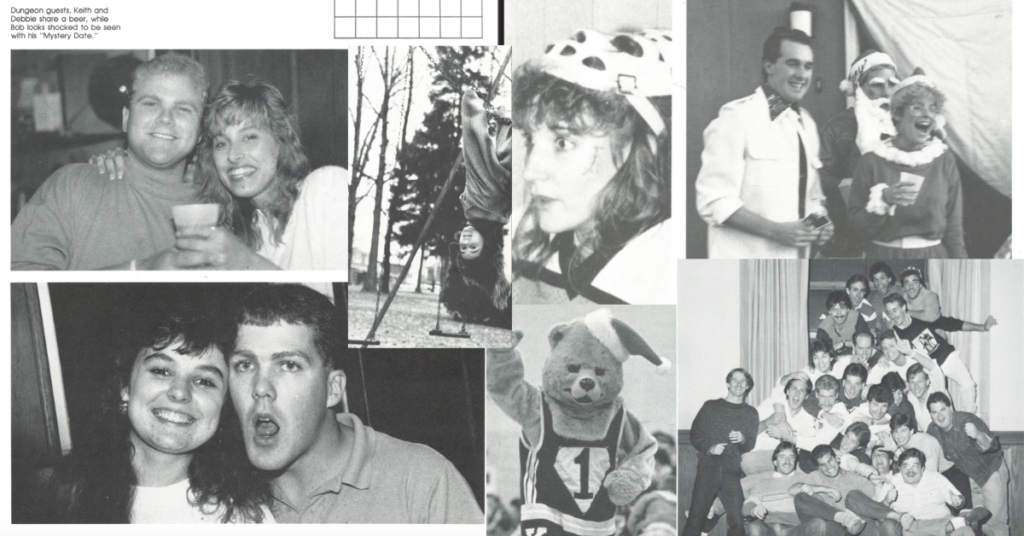
By the late 1980s, Kutztown was confronting a tension common to many college towns: the uneasy balance between long-term residents (“town”) and a rapidly growing student population (“gown”). In 1988, that tension came to a head in what became known locally as the “Town–Gown” Conflict.
The immediate spark was small—parking tickets issued to a resident, Janet Starner, on West Walnut Street. But what followed revealed something much larger. Starner organized neighbors to push for a residential parking program, which Borough Council approved.
Encouraged by that success, the group expanded into the Kutztown Association of Neighborhoods. At the center of the issue was growth. Enrollment at Kutztown University had steadily increased, and with it, the number of students living off campus—rising from around 900 in 1981 to as many as 1,700 by the late 1980s.
As student housing spilled into residential neighborhoods, long-time residents reported a rise in late-night parties, noise complaints, vandalism, overcrowded housing, and general strain on the town’s infrastructure.
The borough had already attempted to respond. In 1985, zoning laws were tightened to regulate boarding houses, limit the number of unrelated tenants in a residence, and require absentee landlords to maintain local oversight.
By 1988, enforcement became the next battleground. A second code enforcement officer was hired, and inspections—often unannounced and sometimes conducted with police presence—began targeting suspected violations.
These actions sparked backlash from property owners and landlords, who argued the inspections were too aggressive and unfair. Meanwhile, residents felt the measures still didn’t go far enough. Students, for their part, were often caught in the middle—dependent on limited housing options in a town struggling to absorb them.
1989: Keith Haring Foundation Is Established
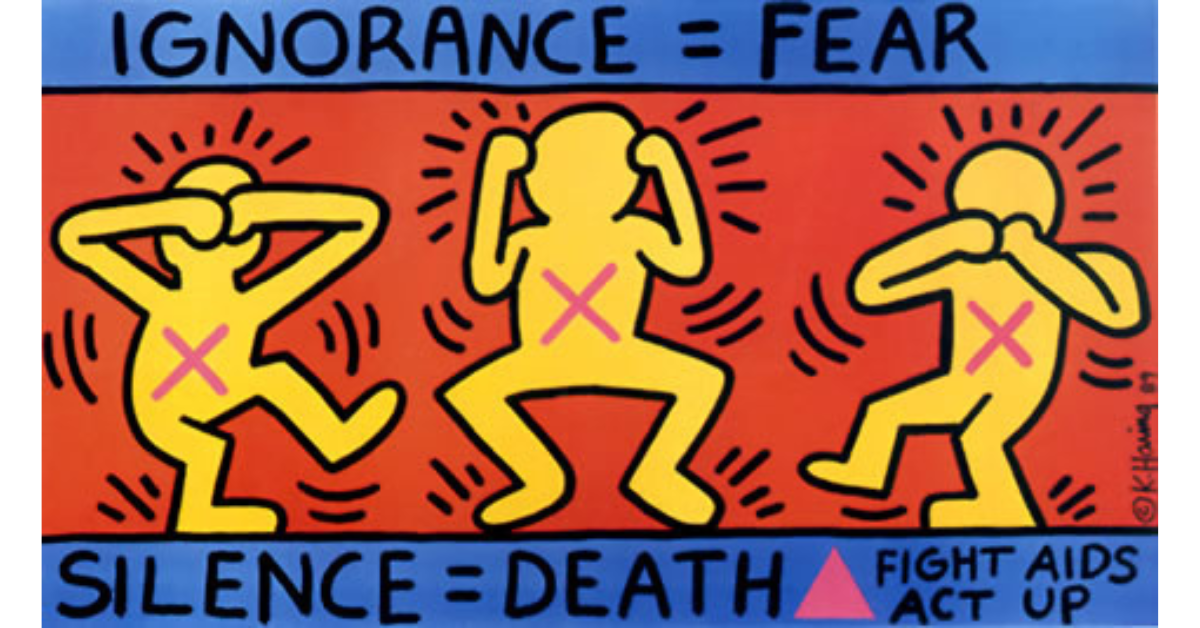
In 1989, at the height of his international fame, Kutztown native Keith Haring established the Keith Haring Foundation—an effort to ensure that his art and values would endure beyond his lifetime.
The foundation formalized what Haring had already been doing throughout his career. He regularly donated his time and artwork to causes he believed in—hosting workshops for children, creating murals in underserved communities, and designing posters and visuals for public health campaigns.
As the AIDS crisis intensified in the 1980s, his work increasingly addressed themes of illness, stigma, and care, using art as both awareness and intervention. The mission of the foundation reflects those priorities:
- Supporting children, particularly those in underserved communities
- Advancing AIDS/HIV education, prevention, and care
Haring had been diagnosed with AIDS in 1988, and the creation of the foundation in 1989 was both practical and deeply personal—a way of taking control of his legacy in the face of a crisis that was devastating artists and communities across the country.
Just one year later, in February 1990, Haring died at the age of 31 from AIDS-related complications. His death marked not only the loss of a major artistic voice, but also a moment in which the global AIDS crisis became impossible to ignore within the cultural mainstream.