By the 1960s, Kutztown was no longer just evolving—it was being reorganized. Institutions expanded, systems became formalized, and everyday life increasingly moved from informal, community-based norms into structured frameworks.
The college broadened its mission beyond teacher training, reflecting a more complex regional economy. The creation of a full-time police department marked a shift toward formal oversight and regulation of public life.
At the same time, recreation and entertainment spaces like Terry Hill pointed to rising expectations around leisure and community amenities.
1960: Kutztown State College
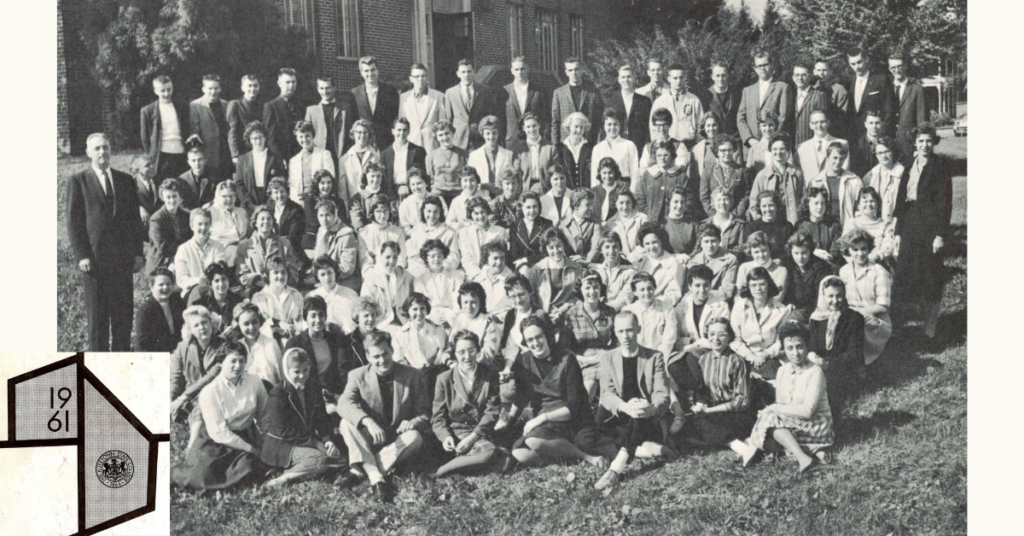
In 1960, Kutztown State Teacher’s College was officially renamed Kutztown State College, marking a shift in both purpose and identity.
For decades, the institution had focused primarily on training teachers. But as the region’s economy expanded—especially with the growth of industry—the demand for a broader, more diversified workforce increased. In response, the college expanded its mission beyond teacher preparation to include education in the arts and sciences.
The change reflected a larger transformation taking place in Kutztown and the surrounding region. The town was no longer defined solely by agriculture or local trade. It was becoming part of a more complex economic system that required new forms of training, knowledge, and specialization.
With its new designation, Kutztown State College positioned itself as “a center for learning” aimed at preparing students for a wider range of roles, while still maintaining its roots in teacher education.
1961: Police Department Officially Established
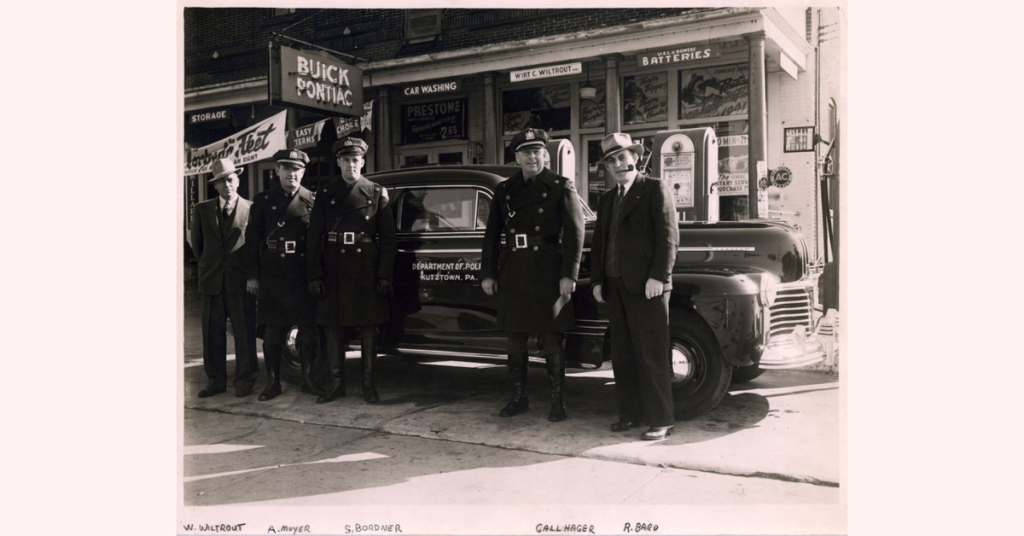
In 1961, Kutztown Borough Council formally established the Kutztown Police Department, creating a structured, full-time force under the supervision of the mayor.
While policing in the town dates back earlier—most notably with the appointment of a single patrolman in 1924—the 1961 decision marked a transition to a more organized system. The new department included a chief, a sergeant, and patrolmen, with an initial force of three officers and one patrol car.
Officers were responsible not only for law enforcement, but also for routine infrastructure checks, including monitoring the sewage plant and reservoir at regular intervals. They also directed traffic, assisted school crossings, and maintained order in public spaces.
Early arrest records show drag racing on College Boulevard, illegal U-turns on Main Street, and misuse of public areas like Lambert Alley.
As the town grew, so did the department. The department moved from the Old Town Hall to a dedicated space on Main Street, later adding a station in Roeller Alley in 1971, and eventually relocating to the Borough Municipal Building in 1989.
Over time, everyday life—once managed through informal norms, community relationships, and limited oversight—became increasingly structured through formal systems, procedures, and institutions.
1964: Freddie Adam Wins the Langhorne (Pa.) National Open
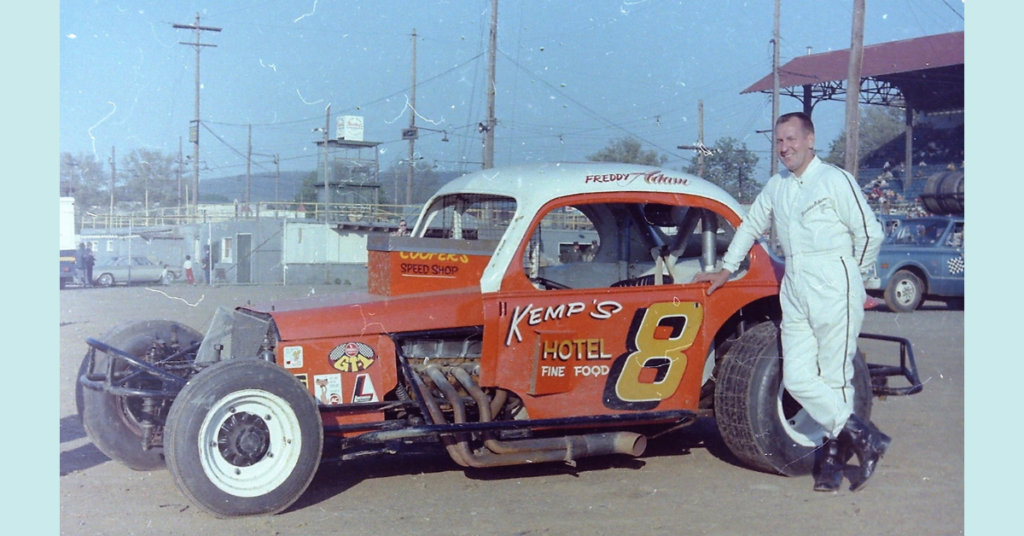
In 1964, Kutztown native Freddie Adam—known widely as the “Kutztown Komet”—won the Langhorne National Open, one of the most prestigious dirt track races in the country.
Adam had been racing since his late teens, building his first car from junkyard parts behind his mother’s restaurant in Kutztown. A carpenter by trade, he spent decades competing across the Mid-Atlantic, driving for dozens of car owners and earning a reputation for an aggressive, all-out driving style.
The Langhorne victory marked the peak of his career. Held on October 11, 1964, the race drew over 200 entries and more than 30,000 spectators. In a chaotic, crash-filled 100-mile event, Adam stayed near the front throughout the day before taking the lead with just two laps remaining, holding off Ken Shoemaker to win by less than a car length.
The win carried added significance—it was the final National Open held on Langhorne’s original one-mile dirt track, closing out an era of American auto racing.
1965: Sesquicentennial Celebration
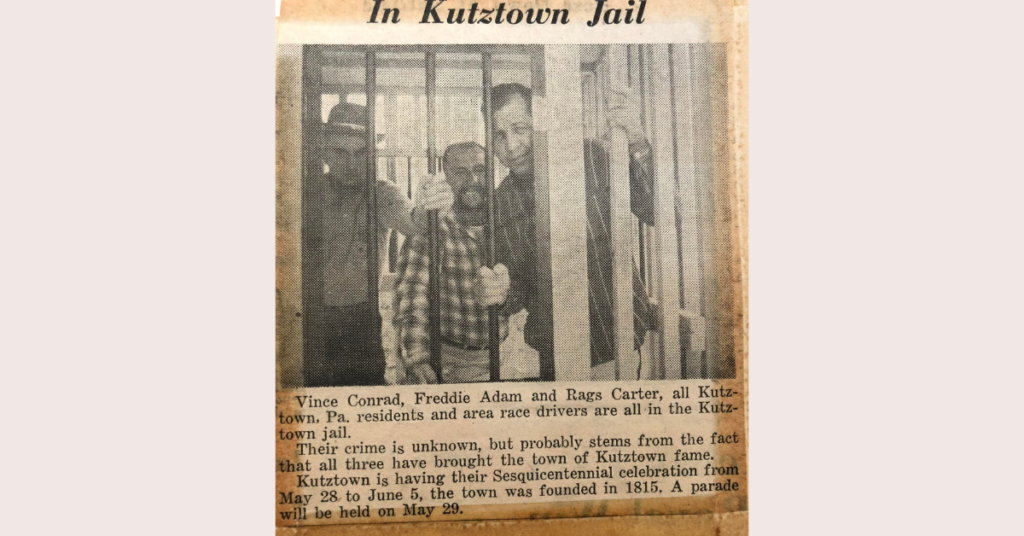
In 1965, Kutztown marked its 150th anniversary with a weeklong sesquicentennial celebration that drew tens of thousands of visitors to the borough.
The town transformed for the occasion. Buildings along Main Street were decorated with banners, flags, and bunting, while events filled the calendar—parades, dances, and community gatherings. More than 35,000 people came to witness the homecoming parade alone, as floats, bands, and local organizations moved through the town’s central corridor.
At the center of the celebration was a revival of Pennsylvania Dutch identity. Residents dressed in traditional attire—bonnets, full skirts, red jackets, and broad-brimmed hats—visually reconstructing an earlier version of the region’s past.
Local groups leaned into the theme, with events branded under the “sesqui” label and organizations like the “Brothers of the Brush,” whose members grew out their beards for the occasion.
The celebration extended across the town’s institutions. The fire company hosted major events, including a formal ball, while Kutztown State College—freshly emptied after graduation—served as a quiet backdrop to the festivities. Even small details, like damaged parade floats being repaired at the firehouse, became part of the shared experience.
1968: Terry Hill Waterpark Opens
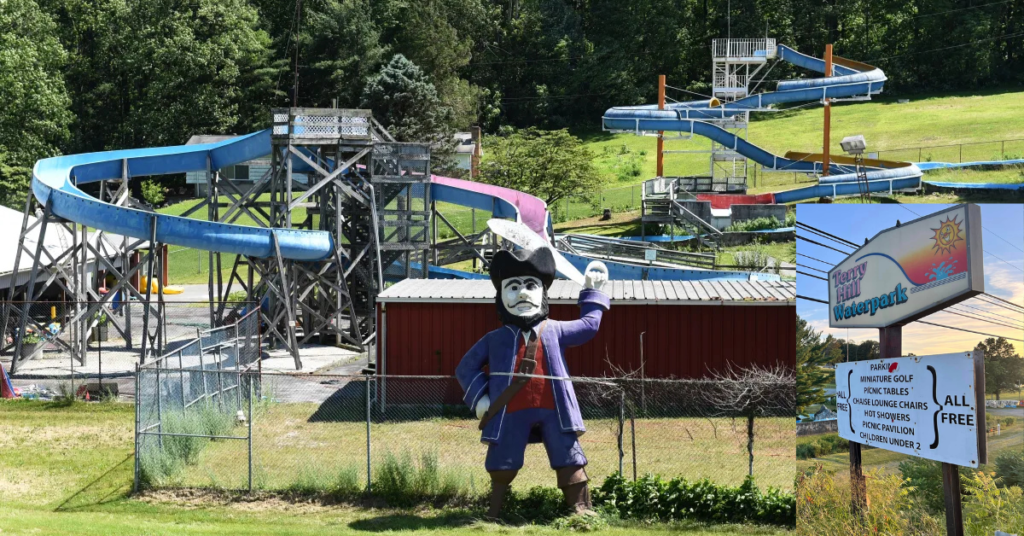
In 1968, a large public pool was built at Terry Hill, originally serving the nearby Terry Hill Estates trailer park. Developed by local entrepreneur Durell Shellhamer and his family, the pool quickly became a central recreational space for the area.
In the years that followed, the site expanded beyond a simple pool. By 1980, water slides were added—well before large-scale water parks became common in the region—transforming Terry Hill into one of the first water-based attractions of its kind in the area.
During the 1970s, the facility supported a competitive swim team and drew families from across Berks County, functioning as both a community gathering space and a growing commercial attraction.
Over time, the park’s role evolved alongside broader changes in regional entertainment. Larger destinations like Dorney Park’s Wildwater Kingdom, which opened in 1986, introduced new competition and shifted visitor patterns. Even so, Terry Hill remained part of the local landscape, adapting through different ownership periods, seasonal events, and renovations.