After World War II, Kutztown and its surrounding region began moving into a new era. Industry expanded, higher education became more central, organic agriculture emerged as a counterpoint to chemical farming, and Pennsylvania Dutch culture began to be formally studied, preserved, and performed.
This period also shows the complexity of postwar life. Local institutions opened new opportunities, but not equally for everyone, as Bessie Reese Crenshaw’s story makes clear.
At the same time, businesses like East Penn, movements like Rodale, and events like the Kutztown Folk Festival helped define the region’s modern identity—rooted in older traditions, but increasingly connected to national audiences and postwar systems of media, industry, and public culture.
1946: Bessie Reese Crenshaw Enrolls at Kutztown State Teacher’s College
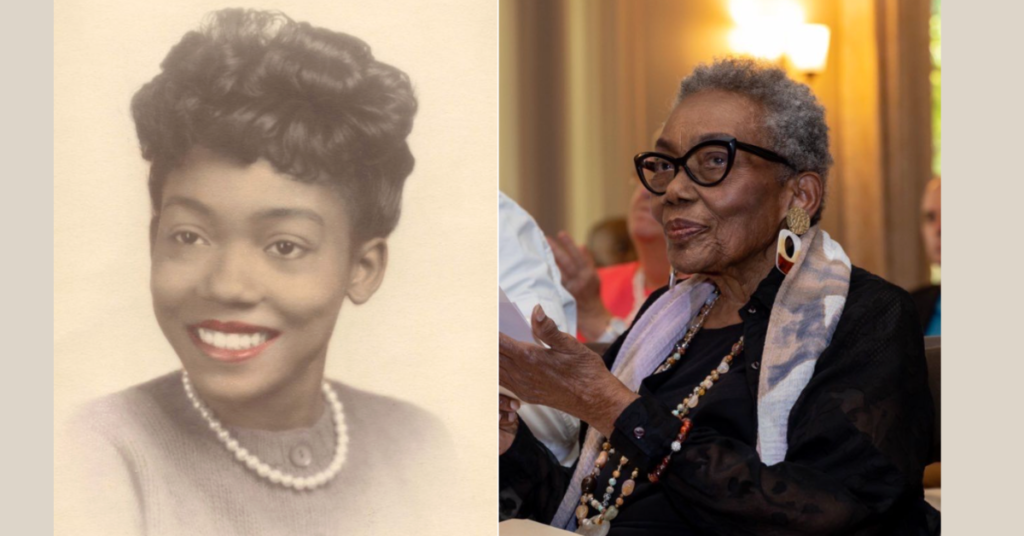
In 1946, Bessie Reese Crenshaw graduated from Reading High School and enrolled at Kutztown State Teacher’s College. At the time, she was the only Black student at the institution.
From a young age, Crenshaw knew she wanted to become a teacher. She helped fund her education through the J.F. Goodwin Scholarship, established in 1936 to support African American students pursuing higher education.
In 1950, she became the first African American to graduate from Kutztown, earning a degree in education. Despite this achievement, schools in Reading and Berks County would not hire her. Instead, she began her teaching career in North Carolina, instructing elementary students near Raleigh.
Crenshaw later earned a master’s degree and, in 1969, returned to Reading, where she taught for two decades. Even after retiring, she remained active in education and community work, supporting literacy programs, scholarships, and youth initiatives throughout Berks County.
1946-47: East Penn Manufacturing and the Rise of DEKA
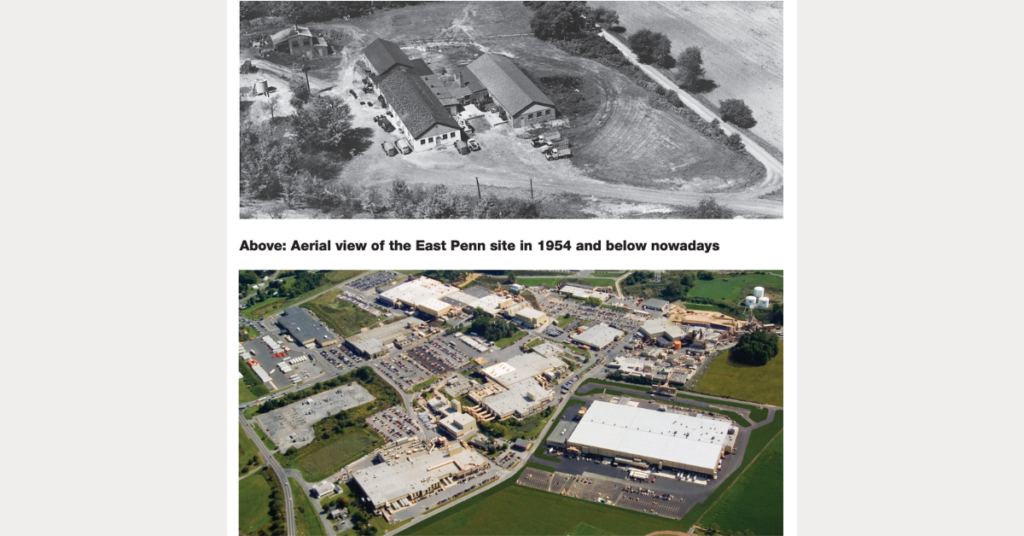
In 1946, just after returning from service in World War II, DeLight Breidegam Jr. co-founded East Penn Manufacturing with his father, DeLight Sr.
The company began modestly in an old creamery rented for $10 a month, where the Breidegams repaired and rebuilt lead-acid batteries at a time when postwar demand was high and new materials were still difficult to obtain. They even used a payphone at the hotel across the road as the company phone.
After Karl Gasche joined the company, East Penn began producing new automobile batteries, and the DEKA name was created from the first letters of DeLight and Karl. The company built an early smelting facility on 11 acres near Lyons.
Over time, the company grew far beyond its original creamery workshop. Their family-centered model would become one of East Penn’s defining features. Later generations continued to emphasize private ownership, employee loyalty, community support, and long-term stewardship rather than short-term corporate gain.
1947: Rodale Institute Founded
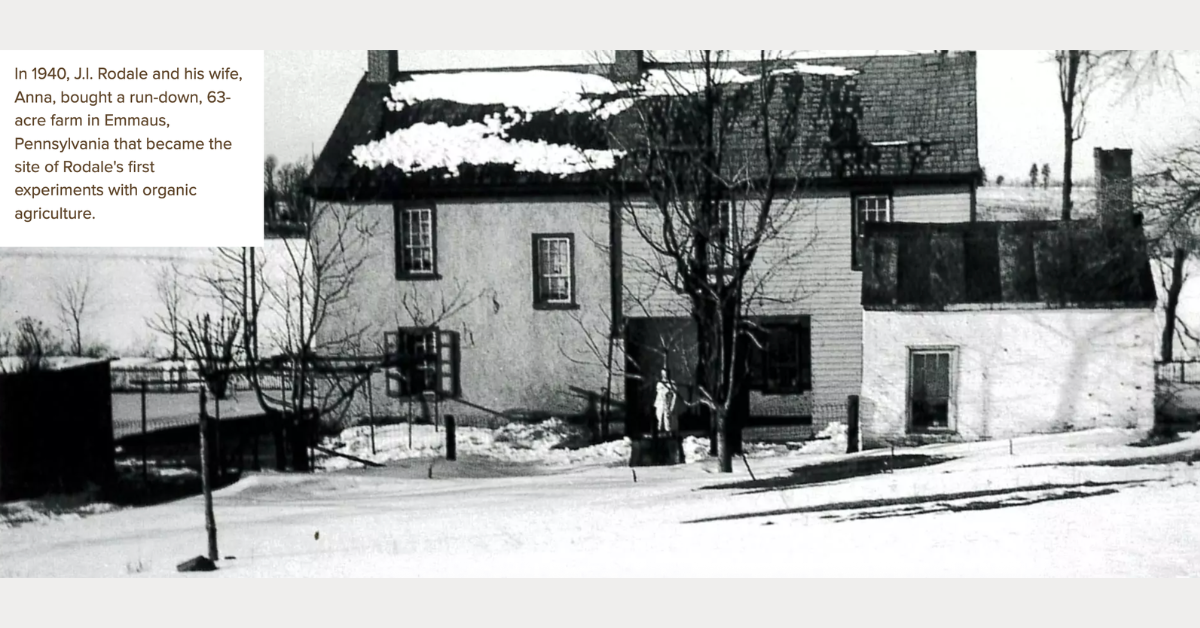
In 1947, J.I. Rodale founded the Soil and Health Foundation in nearby Emmaus, later known as the Rodale Institute. The organization emerged from experiments he had begun earlier in the decade on a small farm, where he explored alternatives to chemical-based agriculture.
At a time when industrial farming was expanding rapidly—relying on synthetic fertilizers, pesticides, and mechanization—Rodale promoted a different approach.
Drawing on ideas from agriculturalist Sir Albert Howard, he focused on soil health, composting, and natural growing methods. What he called “organic” farming centered on the belief that healthy soil produces healthy food, and ultimately healthier people.
Rodale did not limit this work to the farm. Through publishing, he played a major role in spreading these ideas beyond the region. His magazine Organic Gardening and Farming, first issued in the 1940s, introduced a national audience to organic practices, while his 1948 book Pay Dirt argued that chemical agriculture was linked to declining soil and human health.
1950: The Kutzown Folk Festival Launches
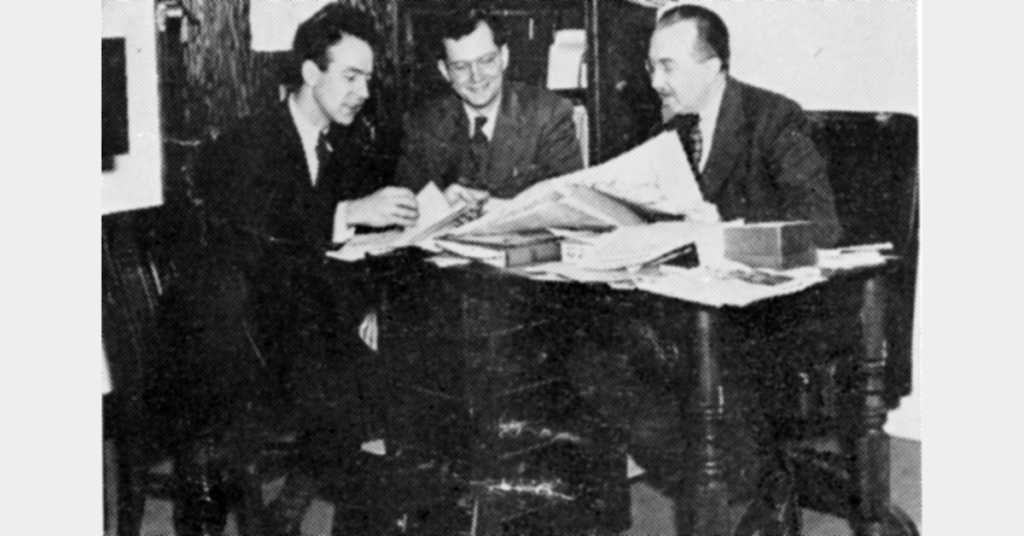
In 1950, the Kutztown Folk Festival was founded by Alfred Shoemaker, William Frey, and Don Yoder, three professors connected to the Pennsylvania Dutch Folklore Center at Franklin & Marshall College. The festival did not emerge in isolation. In 1949, the group had already begun publishing The Pennsylvania Dutchman, a periodical dedicated to documenting and interpreting Pennsylvania Dutch culture. This publication would later evolve into Pennsylvania Folklife, one of the most widely circulated folklife journals in the United States.
What made the Kutztown Folk Festival different from earlier “folk festivals” was its scope. Rather than focusing only on music, crafts, or storytelling, it aimed to present an entire way of life—farming, cooking, religion, language, and daily work. As Yoder later explained:
“What made the festival different from most other events called folk festivals was its rounded approach to an entire culture…. The festival then, has been an experiment in adult education, an adjunct museum program, in a sense a new museum technique—a temporary living demonstration of a culture not possible in the usual museum context, and—for adults and children alike—an adventure in discovering Americana.”
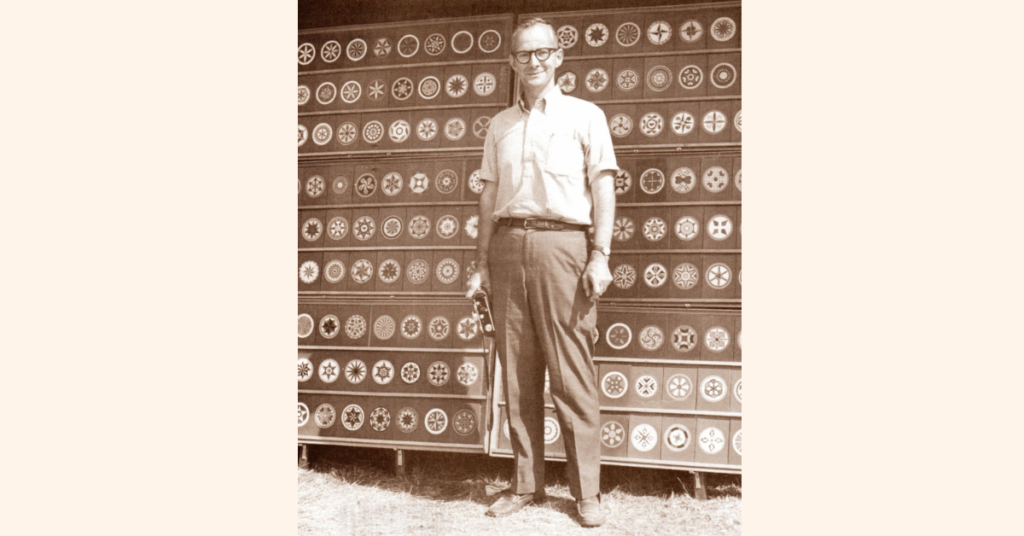
The festival functioned as a kind of open-air, temporary village—part education, part preservation, and part community gathering.
In doing so, the founders helped introduce a new framework: folklife—the idea that culture is not just expressed in isolated traditions, but lived through everyday practices, relationships, and environments.
For Kutztown, the festival marked a turning point. At the very moment when industrialization and Americanization were reshaping the region, the Folk Festival created a space where local culture could be actively practiced, interpreted, and re-presented.
1954: Erna Furst Snyder Wins Mrs. America
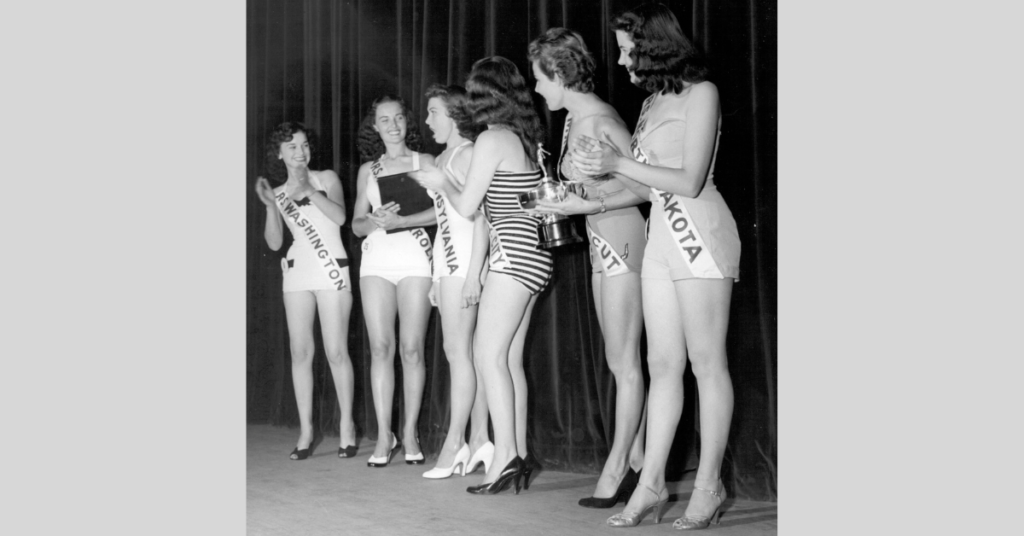
In 1954, Erna Furst Snyder of Kutztown was named Mrs. America, bringing national attention to the small Berks County town. She had first won the title in September 1953 in Asbury Park, New Jersey, during a brief transitional year for the pageant.
At the time, Snyder was in her early 20s, a mother of two, and the wife of a printing apprentice at Kutztown Publishing Company. She later explained that she entered the competition for practical reasons—the prize money offered a meaningful opportunity for a young family just starting out.
The contest reflected the values of the era. Competitors were judged not only on appearance, but also on homemaking skills. Snyder modeled evening wear and a bathing suit, but also sewed her own dress from fabric produced at a local mill and demonstrated cooking as part of the competition.
Her win was celebrated locally with a parade and a large community dinner, while nationally she made television appearances and participated in charitable campaigns, including work with the Red Cross and public health initiatives.
Although some at the time framed her victory as part of a broader “Pennsylvania Dutch” cultural moment, Snyder’s background reflected the region’s more complex identity. She was the daughter of Austrian immigrants and grew up speaking a German dialect before learning English, later living on a farm near Crystal Cave.
In the years that followed, Snyder remained active in the Kutztown community. She operated local businesses, including a clothing boutique and an antique shop, and contributed to civic and cultural institutions such as the Kutztown Area Historical Society and Kutztown University.