After decades of tension between growth, identity, and infrastructure, the 2010’s marks a more intentional approach to building community and revitalizing space.
Through the expansion of the Kutztown Community Partnership, Main Street is no longer just a place of transit or commerce. Events, facade improvements, and coordinated planning transform it into a space for gathering.
At the same time, Kutztown increasingly connects its local identity to broader cultural currents. Rodale links the area to national conversations about agriculture and sustainability. The bicentennial celebration reasserts continuity with the past, while moments like the world’s largest funnel cake turn that same history into spectacle.
Even cultural shifts become more visible. The cannabis festival introduces a new kind of gathering—one that sits at the edge of legality, wellness culture, and changing social norms.
2010: Expansion of Kutztown Community Partnership
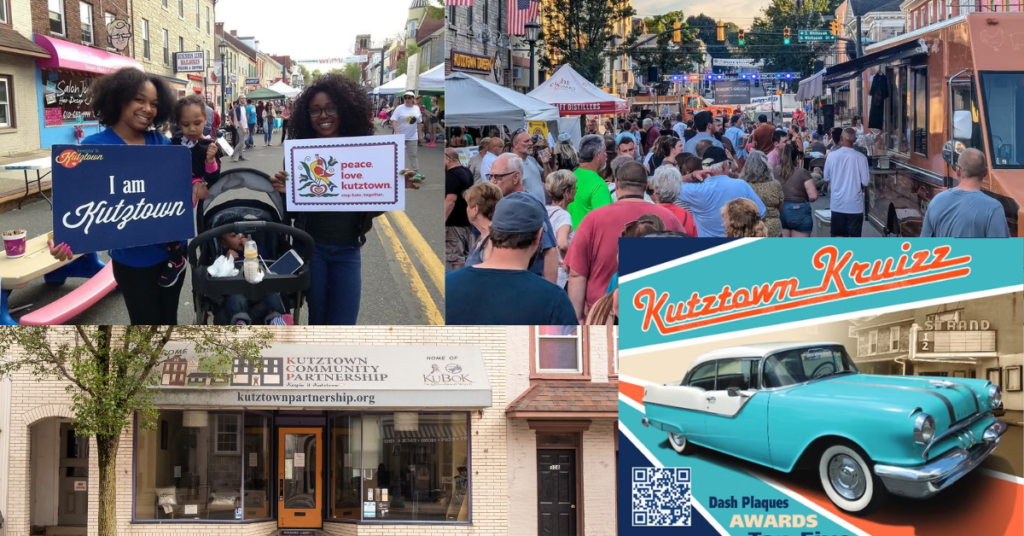
By 2010, the Kutztown Community Partnership (KCP) had grown from a small volunteer effort into one of the driving forces behind the borough’s downtown revitalization. Working closely with Kutztown Borough, Kutztown University, and local businesses, the organization helped reshape Main Street into a more active, community-centered space.
A major catalyst for this shift was the introduction of Muscle on Main in 2009. Unlike traditional car shows held in parking lots or fairgrounds, the event closed down Main Street and brought hundreds of vehicles—and thousands of visitors—directly into the heart of town.
At the same time, KCP expanded its impact beyond events. A facade improvement program offered matching funds to property owners, leading to visible upgrades across storefronts—fresh paint, new awnings, and structural repairs. These changes helped attract new businesses, filling previously vacant spaces and contributing to job growth and increased private investment.
By the end of the 2010, the results were tangible: new businesses opening, dozens of building improvements completed, and a stronger sense of cohesion between the university and the borough.
2012: Rodale Institute Contributes to Farm Aid
In September 2012, Kutztown’s Rodale Institute played a key role in one of the country’s most visible celebrations of sustainable agriculture: Farm Aid 2012, held at Hersheypark Stadium. While more than 30,000 people gathered for the concert—featuring artists like Willie Nelson, Neil Young, and Dave Matthews—the event extended far beyond the stage.
In the days leading up to the concert, farmers, activists, and advocates from across the country traveled to Kutztown to visit Rodale’s Experimental Farm, one of the nation’s leading centers for organic agriculture research.
These tours connected national conversations about farming directly to local soil. Visitors explored sustainable practices, discussed the challenges facing family farmers, and examined issues like genetically engineered crops, food systems, and the future of agriculture.
At the concert itself, that message came to life through Farm Aid’s HOMEGROWN Village, where farmers and organizations (including those connected to Rodale’s work) demonstrated composting, seed saving, and sustainable growing practices.
2015: Bicentennial Celebration
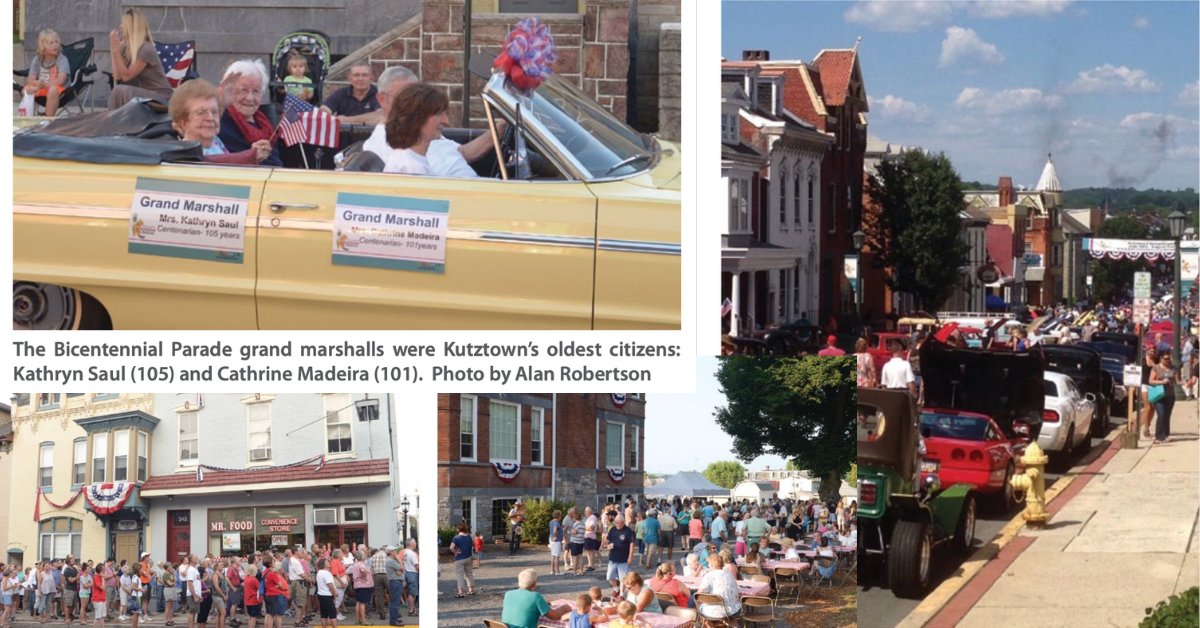
In 2015, Kutztown marked 200 years since its incorporation as a borough with a yearlong bicentennial celebration—culminating in nine days of events that brought the entire community together in a way few moments in the town’s history ever have.
From July 25 through August 2, Main Street and Kutztown Park became the center of a wide-ranging celebration that blended past and present. Events included a classic car cruise, outdoor movie screenings, historical walking tours, church services, train rides through the countryside, and an “Dinner on Main” outdoor café that transformed the street into a communal gathering space.
The celebration built toward a massive bicentennial parade, where thousands lined Main Street to watch floats, bands, local organizations, and multi-generational families take part. For many, the moment carried a deeper sense of continuity—families who had participated in past milestone celebrations returned again, linking the centennial, sesquicentennial, and bicentennial across generations.
The week concluded with Kutztown Day in the park—a tradition stretching back more than a century—featuring concerts, reunions, and fireworks.
2017: The World’s Largest Funnel Cake
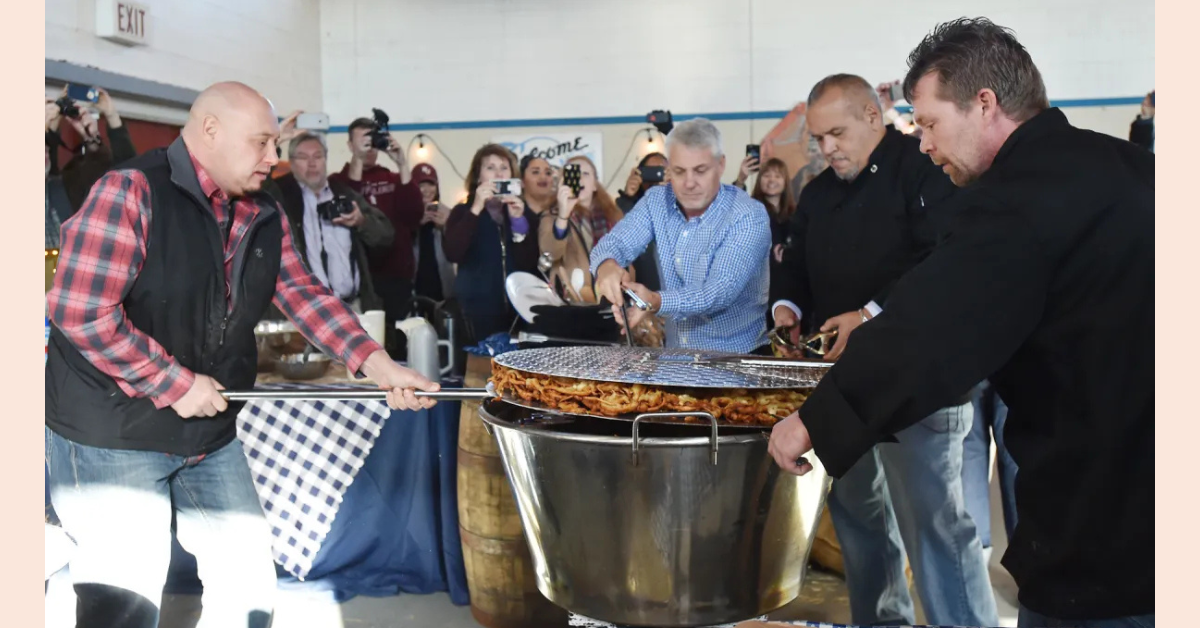
On November 28, at the Kutztown Fairgrounds, celebrity chef Steve Mallie teamed up with local legend Lester Miller to create the world’s largest funnel cake, measuring 30 inches across. The attempt wasn’t random—it was deeply rooted in local history.
Kutztown is widely recognized as the place where funnel cake was first introduced to the public at the Kutztown Folk Festival in 1950, thanks to Emma and Viola Miller. For the record attempt, Mallie used Emma’s original recipe, bringing the dessert full circle—from its origins in Kutztown to a national spectacle.
A film crew from Los Angeles documented the event as locals gathered, many on short notice, to watch the attempt unfold. As batter was poured into an oversized vat of hot oil and carefully flipped, the crowd held its breath. When the final measurement confirmed the record, cheers erupted.
2018: Jim Schlegel Becomes Mayor
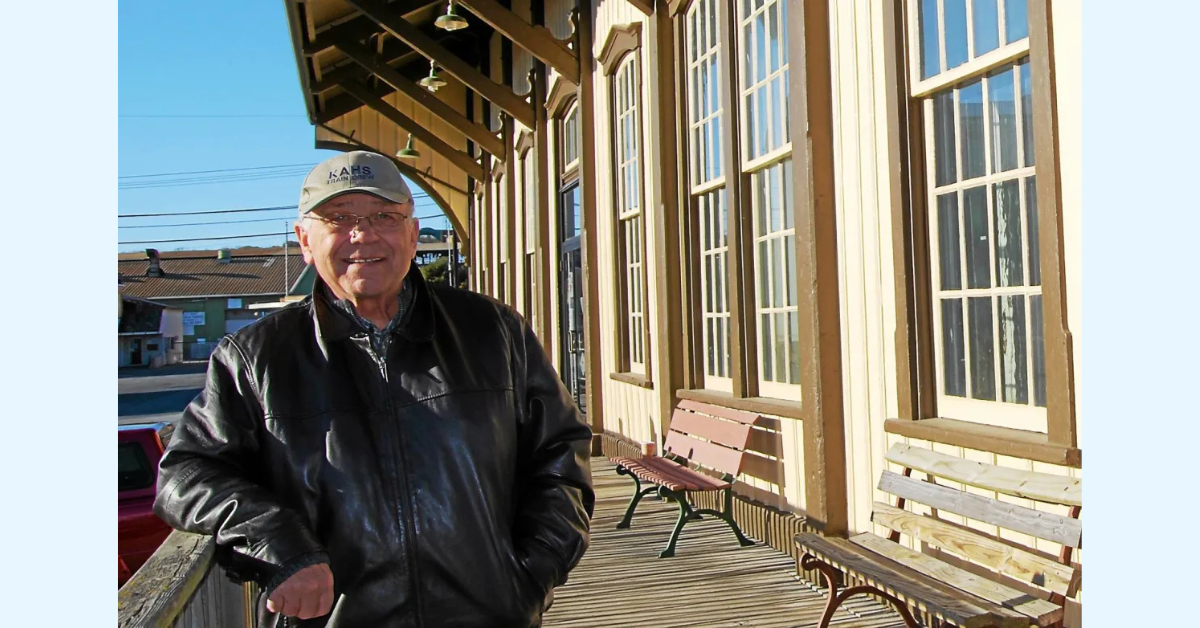
In 2017, lifelong Kutztown resident Jim Schlegel was elected mayor—running uncontested on both Democratic and Republican ballots—and officially sworn in at the start of 2018.
A Kutztown native who had spent a decade on Borough Council, he described becoming mayor as something he had imagined since childhood. His political platform advocated for:
- Maintaining Kutztown’s identity as a “good little town”
- Supporting local organizations like the Lions Club, Optimist Club, and Rotary
- Strengthening ties between the borough and Kutztown University
- Encouraging business growth alongside groups like the Kutztown Community Partnership
- Keeping the town safe through collaboration with police and community programs like KUBoK and Kutztown Strong
2019: Kutztown Skate Park Is Built
Back in 2016, Kutztown had quietly lost one of its longtime recreational landmarks when Borough Council approved the demolition of the roller rink in Kutztown Park.
The decision came after several years of discussion. Borough officials ultimately concluded that the structure was beyond long-term repair, with demolition approved unanimously and carried out at a cost of approximately $12,000.
However, after nearly watching her son get hit by a car while skateboarding in the street, Kutztown resident Deborah Clauss began thinking about the lack of safe spaces for kids engaging in roller sports.
Teaming up with Andrew Kunkel, Clauss helped form the Kutztown Community Skate Park Association, a grassroots effort to bring a dedicated skate space to the borough. Through a mix of local fundraising, grants—including support from the Tony Hawk Foundation—and borough contributions, the project slowly took shape.
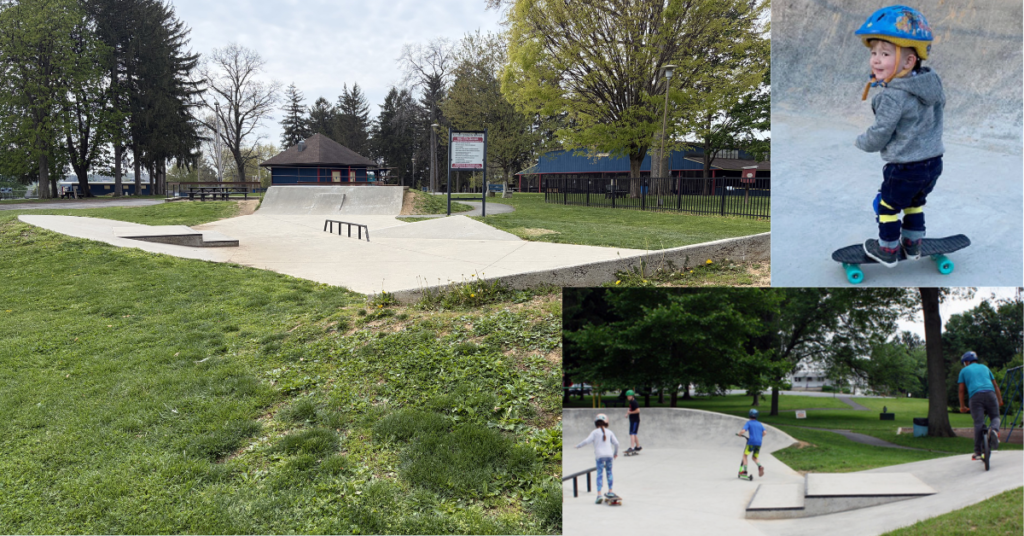
By 2019, the vision became reality. The new 2,000-square-foot skate park was constructed on the former site of the roller rink—a literal transformation of old space into new purpose. When it opened in May, the park drew families, kids, and community members for a full day of contests, music, and celebration.
2019: Bieber Bus Shuts Down
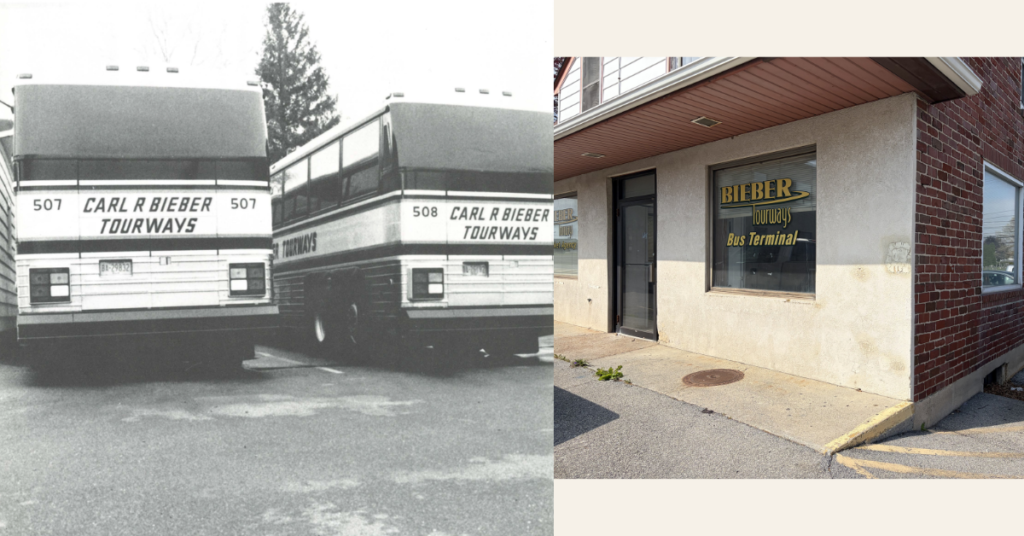
In 2019, Kutztown lost a piece of its everyday infrastructure when the Bieber Transportation Group abruptly shut down after more than 70 years in operation.
The closure came without warning. One day, buses were running their usual routes between Kutztown, New York City, Philadelphia, and the surrounding region. The next, terminals were empty, signs were posted, and passengers—including students and commuters—were left stranded.
The company cited declining ridership and rising operating costs as the reason for the shutdown. But for Kutztown, the impact was immediate and deeply felt. For decades, Bieber wasn’t just a transportation service—it was a lifeline:
- Students relied on it to travel home on weekends.
- Workers commuted to larger cities like New York.
- Local groups used it for trips and events.
When it disappeared overnight, there was no backup. As Mayor Jim Schlegel put it, Kutztown had no alternative public transportation system ready to fill the gap.
Despite its university, history, and regional connections, Kutztown remained dependent on a single private system to link it to the outside world. When that system failed, the isolation became visible almost instantly.
Even longtime residents described the loss in personal terms. The name “Bieber” had become synonymous with travel itself—a familiar, taken-for-granted way to leave and return home.
2019: Kutztown’s First Cannabis Festival
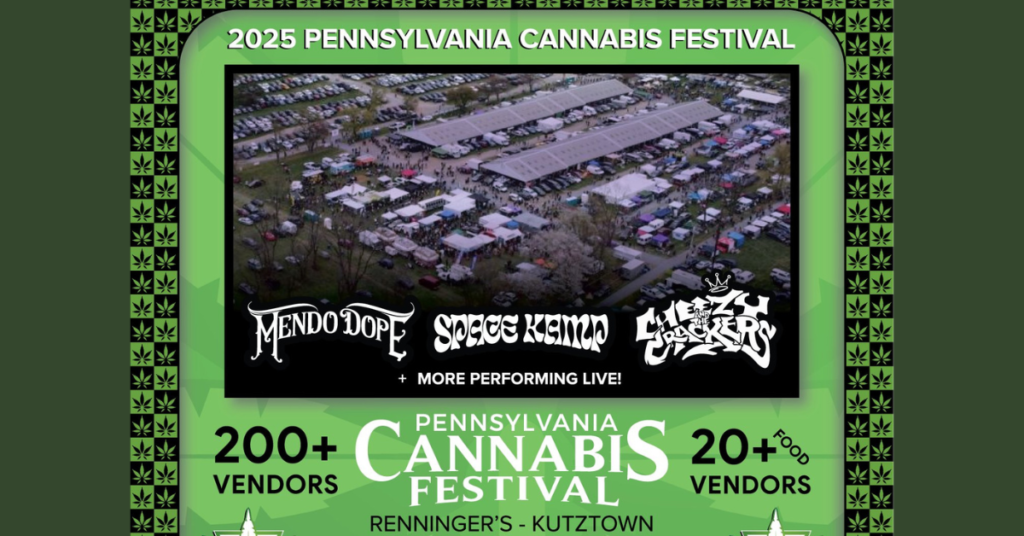
In 2019, Kutztown became the site of a cultural first for Pennsylvania with the launch of the state’s first fall cannabis festival, held at Renninger’s Farmers Market.
The Pennsylvania Cannabis Festival Fall Marketplace brought together more than 100 vendors under the pavilions of Renninger’s, drawing visitors from across the region. With free admission, food, music, and a mix of hemp, CBD, and wellness products, the event was designed to be approachable—family-friendly, pet-friendly, and open to the public.
At the time, recreational marijuana remained illegal in Pennsylvania, which made the festival less about consumption and more about education, culture, and community. Vendors and organizers emphasized topics like alternative medicine, sustainable agriculture, and the evolving legal landscape surrounding cannabis.
In the years that followed, the festival only grew—eventually attracting thousands of attendees and expanding into one of the largest gatherings of its kind in the region.
Its presence in Kutztown is notable. A town long associated with Pennsylvania Dutch traditions, agriculture, and folk culture became, at least for a weekend, a hub for a newer kind of counterculture—one that blends wellness, entrepreneurship, and shifting social norms.