
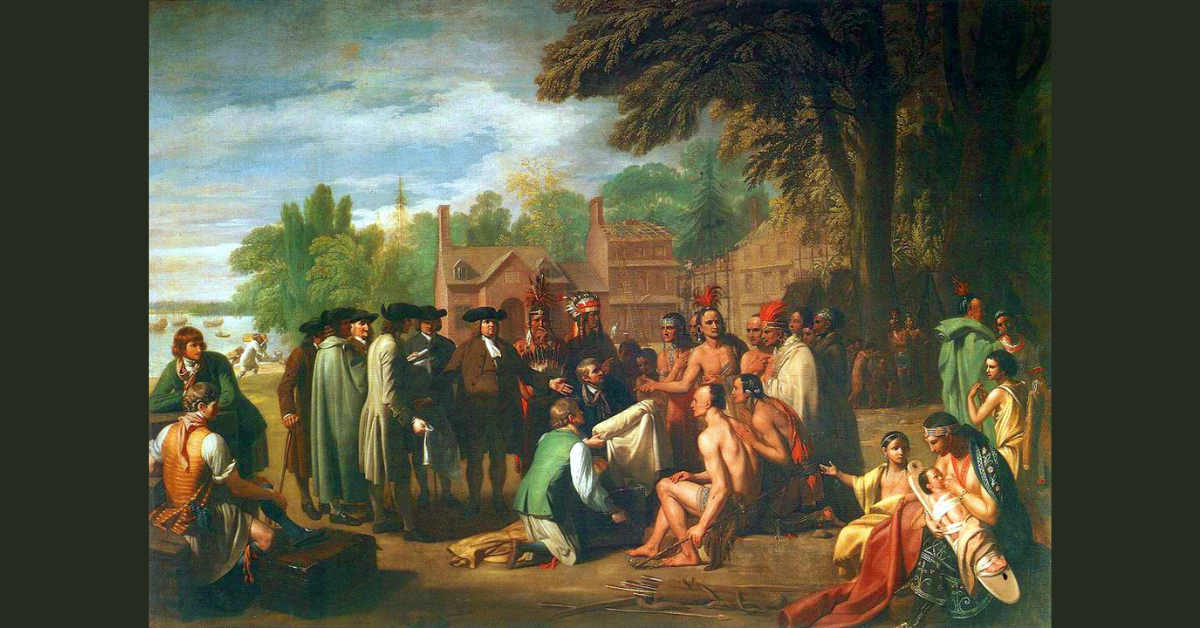
By the late 1600s, the region that will become Kutztown is already in transition. Trade networks have shifted, Native populations have been affected by disease, and European influence is expanding inland. Into this moment steps a key figure: William Penn.
Penn does not enter an empty land. He enters a region already shaped by Native societies and early European contact—but he introduces something new: a formal system of land, governance, and settlement that will define the future of Pennsylvania.
The Founding of Pennsylvania (1681)
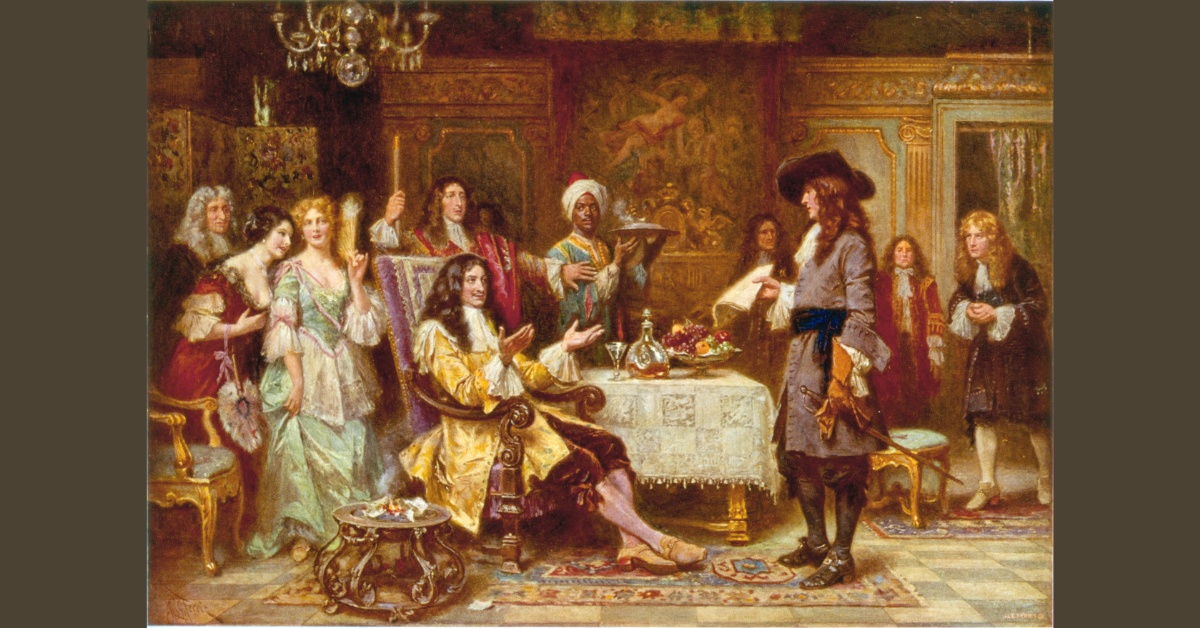

In 1681, Penn is granted a large tract of land by the English crown. This becomes the colony of Pennsylvania. But Penn’s approach is different from many other colonial leaders. He is influenced by his Quaker beliefs, which emphasize:
- Religious tolerance
- Fair dealing
- Opposition to violence
- The idea that all people are spiritually equal
From the beginning, Penn aims to build a colony based not just on control—but on agreement.
Treaties with the Lenape
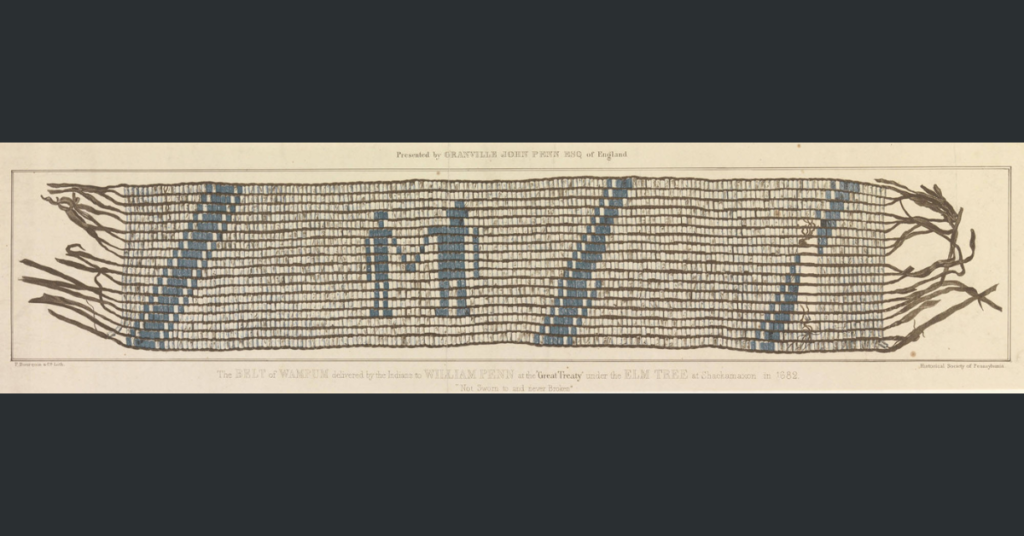
.jpg)
Rather than simply claiming land, Penn establishes a system of negotiated treaties with the Lenape. These agreements are significant because they attempt to bridge two fundamentally different systems: Native understanding of shared land use and European concept of private property. Penn’s treaties are:
- Written and recorded
- Framed as mutual agreements
- Intended to avoid conflict
One of the most well-known symbolic moments is Penn’s treaty at Shackamaxon (near present-day Philadelphia), where agreements are made without military force. At least in this early phase, the transition from Native land to colonial settlement is framed as negotiated, not conquered.
A New System of Land Ownership
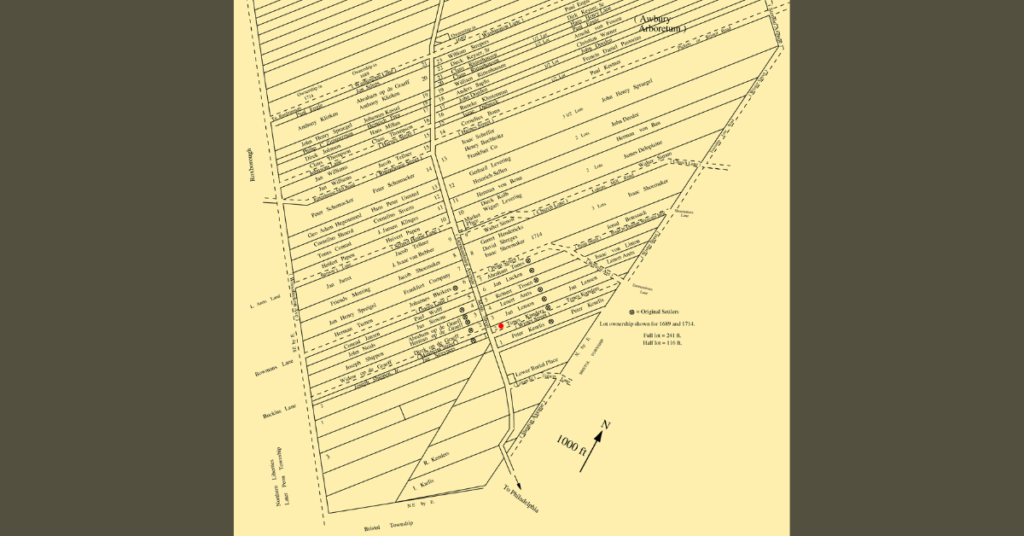

Penn introduces a structured system of land distribution:
- Land is surveyed and divided into parcels
- It is granted or sold to settlers
- Ownership is recorded and legally defined
This transforms the region in a fundamental way. What was once flexible, shared, and seasonal land use becomes:
- Fixed boundaries
- Permanent settlement
- Legal ownership
Where the First Migrants Settle
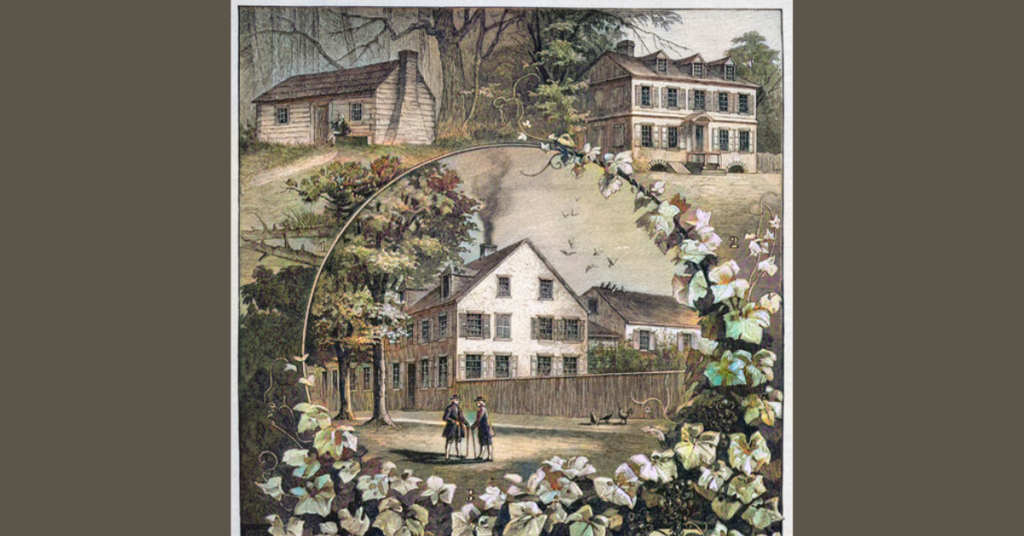

Penn actively promotes Pennsylvania as a place for settlement, especially among groups facing instability in Europe. He offers:
- Religious tolerance
- Available land
- Political stability
This attracts migrants from regions like the Palatinate, who are already experiencing war, destruction, religious conflict, and economic uncertainty.
When migrants from the Palatinate and surrounding regions begin arriving in Pennsylvania in the late 1600s and early 1700s, they do not immediately spread across the entire colony. Instead, they concentrate in the southeastern part of Pennsylvania, near:
- Philadelphia (the main port of entry)
- Germantown (founded 1683, one of the earliest German settlements)
- Chester County and Montgomery County
These areas are:
- Closest to established colonial infrastructure
- Already partially negotiated through treaties with Native groups
- More stable and accessible for new arrivals
The First Arrivals: Anabaptist Communities (late 1600s)
The earliest sustained German-speaking migrants are often Anabaptist groups, including Mennonites (and later Amish). Their priorities are specific:
- Religious independence
- Separation from state-controlled churches
- Tight-knit, community-based living
When they arrive, they settle in small, rural farming communities, avoid political centers, and build self-sufficient agricultural networks. They are not trying to dominate territory—they are trying to withdraw from conflict.
The Larger Waves: Lutherans and Reformed Migrants (early 1700s)
After the devastation of the late 1600s (especially the Nine Years’ War), migration expands dramatically. These later waves include:
- Lutherans
- Reformed (Calvinists)
- Mixed German-speaking populations
Unlike the earlier Anabaptists, these groups are more integrated into structured church systems. They build organized congregations and towns, and they participate more directly in colonial land markets by:
- Purchasing or are granted land through Penn’s system
- Expanding outward from early settlements
- Forming larger, more visible communities
This is the wave that really pushes settlement inland into areas like Berks County.
The Foundations of Kutztown
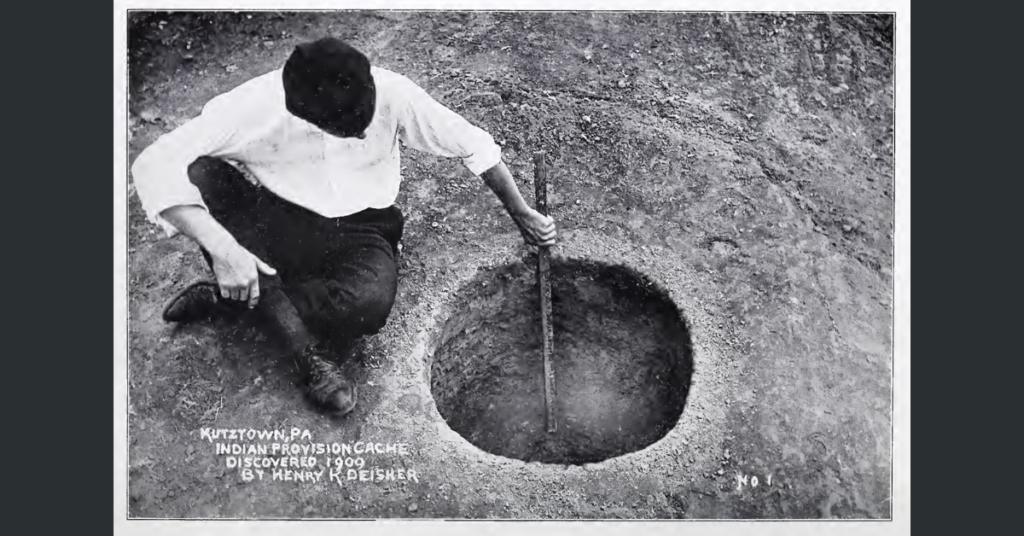
In Penn’s lifetime, relations between settlers and Native groups remain relatively stable compared to other colonies. There is ongoing negotiation and an effort to avoid open conflict. But this system has limits. Even under Penn:
- Land transfers favor colonial expansion
- Population pressure increases over time
- Cultural misunderstandings persist
The system depends heavily on Penn’s personal authority and intentions. By the early 1700s, the land that will become Kutztown is now part of a colonial framework:
- Legally defined land ownership exists
- European settlement is expanding inland
- Native presence is still real—but increasingly pressured
The region is no longer just a zone of overlap. It is becoming a structured colonial landscape shaped by treaties, migration, and land distribution.