By the early 1600s, the empire is legally divided between Catholic and Lutheran territories, Calvinism is spreading without legal recognition, and populations are religiously mixed.
The Palatinate and the Protestant Cause
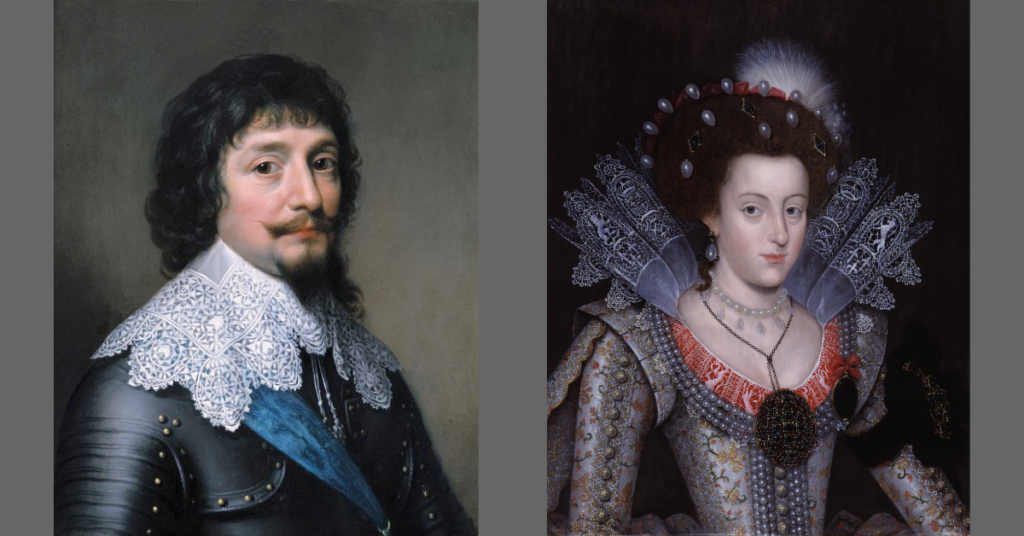


In the early 1600s, the Palatinate becomes one of the most important Protestant states in the empire—not just locally, but internationally. At the center of this is: Frederick V, Elector Palatine.
Frederick V is a Calvinist ruler of the Palatinate and a leading figure among Protestant princes. In 1613, he makes a politically significant marriage: Elizabeth Stuart, daughter of James I of England. This is not just a royal wedding—it is a strategic alliance. It connects the Palatinate to:
- England and Scotland
- The wider Protestant world
- Anti-Habsburg political networks
After this marriage, the Palatinate becomes a symbolic center of Protestant resistance. Heidelberg emerges as an intellectual and political hub, and Frederick is seen as a potential leader of Protestant forces in the empire
At the same time, the Habsburg emperors remain firmly Catholic, and tensions between Protestant and Catholic blocs continue to grow.
The Bohemian Crisis
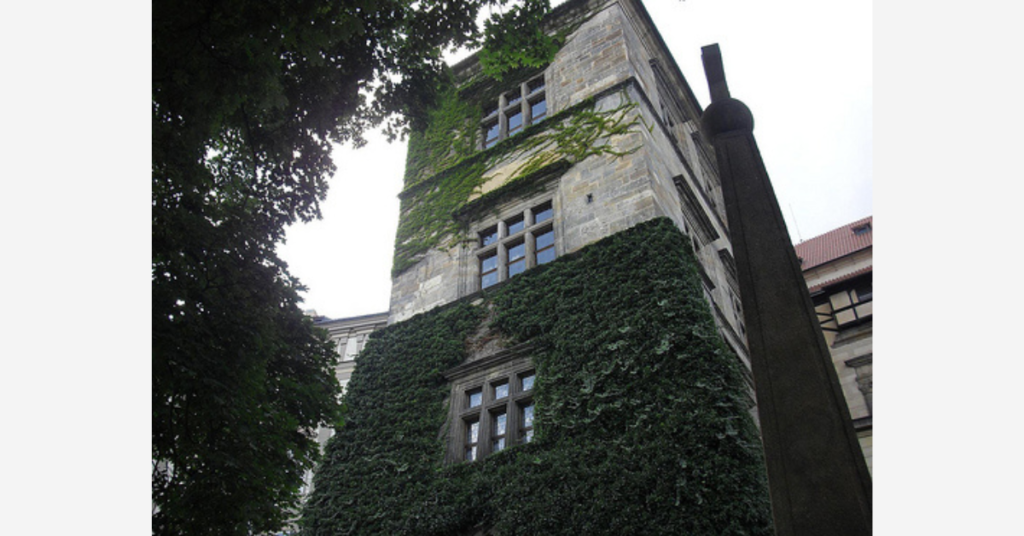

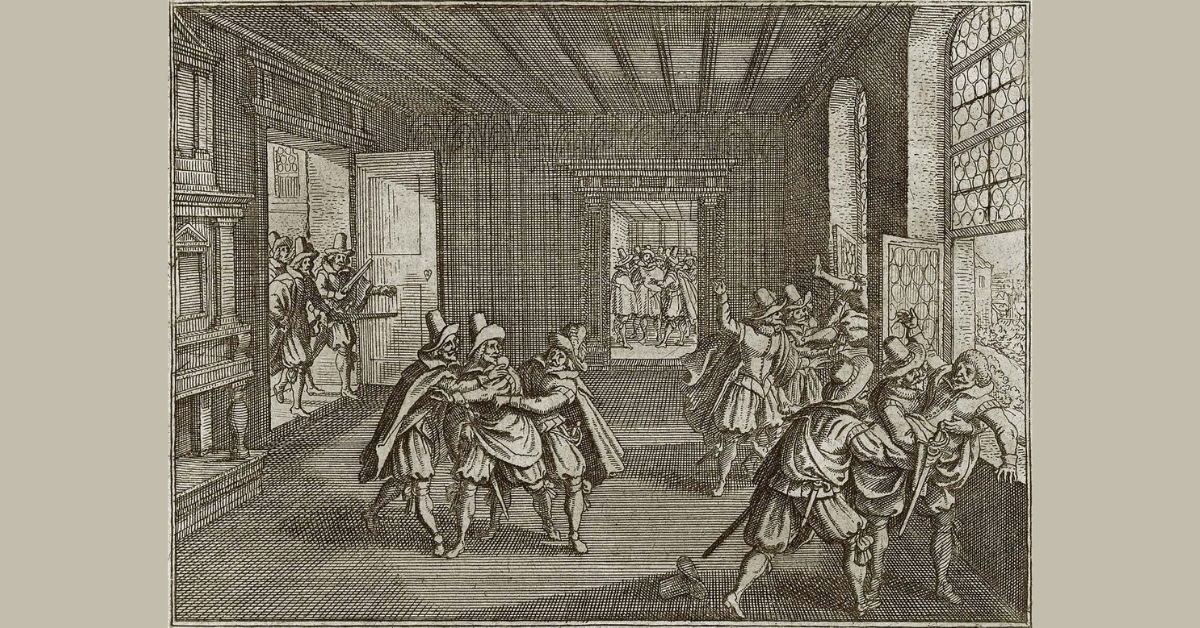
In 1618, the situation explodes with the Defenestration of Prague. Protestant nobles in Bohemia rebel against the Catholic Habsburg ruler. They reject Habsburg authority and look for a new king.
In 1619, the Bohemian nobles offer the crown to Frederick V. He accepts. This is a critical decision:
- A Calvinist ruler takes control of a major kingdom
- A Habsburg territory is openly defied
- The balance of power in the empire is challenged
Frederick and Elizabeth travel to Prague and are crowned King and Queen of Bohemia, leaders of a Protestant resistance movement.
The “Winter King”
.jpg)
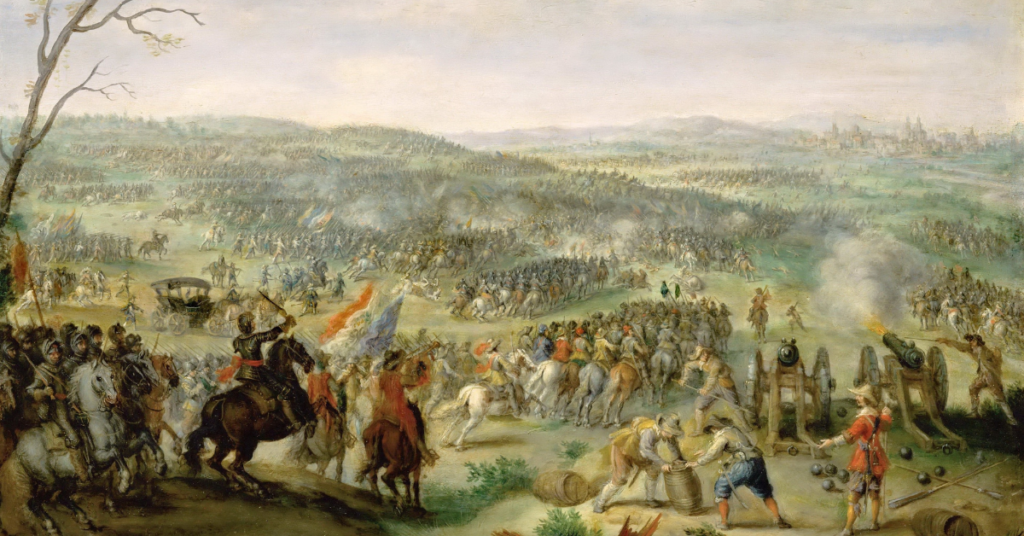
Frederick’s rule, however, is short-lived. In 1620, Habsburg forces defeat him at the Battle of White Mountain. He is forced to flee, along with Elizabeth. Because his reign lasts only a single winter, he becomes known as the “Winter King”.
Frederick’s decision has major consequences. After his defeat:
- He loses both Bohemia and the Palatinate
- His lands are invaded and occupied
- His electoral title is transferred to a rival (Bavarian branch of the Wittelsbachs)
This is a turning point: the Palatinate becomes a primary target in the war What begins as a rebellion in Bohemia now expands into a wider conflict. the Habsburgs move to reassert control, Protestant states rally in response, and foreign powers begin to intervene.
War Comes to the Rhine
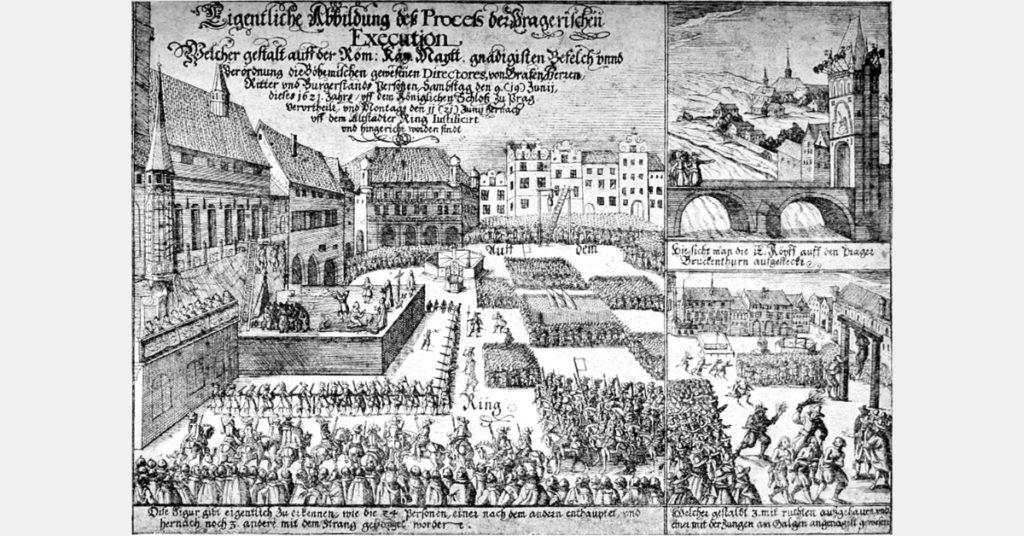

As the conflict expands, the Palatinate becomes one of the first major battle zones of the war. Its position along the Rhine makes it strategically vulnerable:
- Armies can easily move through the region
- It sits between major Catholic and Protestant territories
- It is politically important as an Electorate
In the 1620s, Catholic forces—led by imperial and allied armies—invade and occupy the Palatinate. Over time:
- Cities are captured and looted
- Villages are burned
- Fortifications are destroyed
Heidelberg, once a center of learning and culture, is taken and heavily damaged. The political center of the Palatinate collapses under occupation. As different phases of the war unfold:
- Armies from Spain, Sweden, and France enter the conflict
- Control of territories shifts repeatedly
- The Palatinate is crossed again and again by competing forces
Even when battles move elsewhere, the damage continues.
The War Expands Beyond Religion
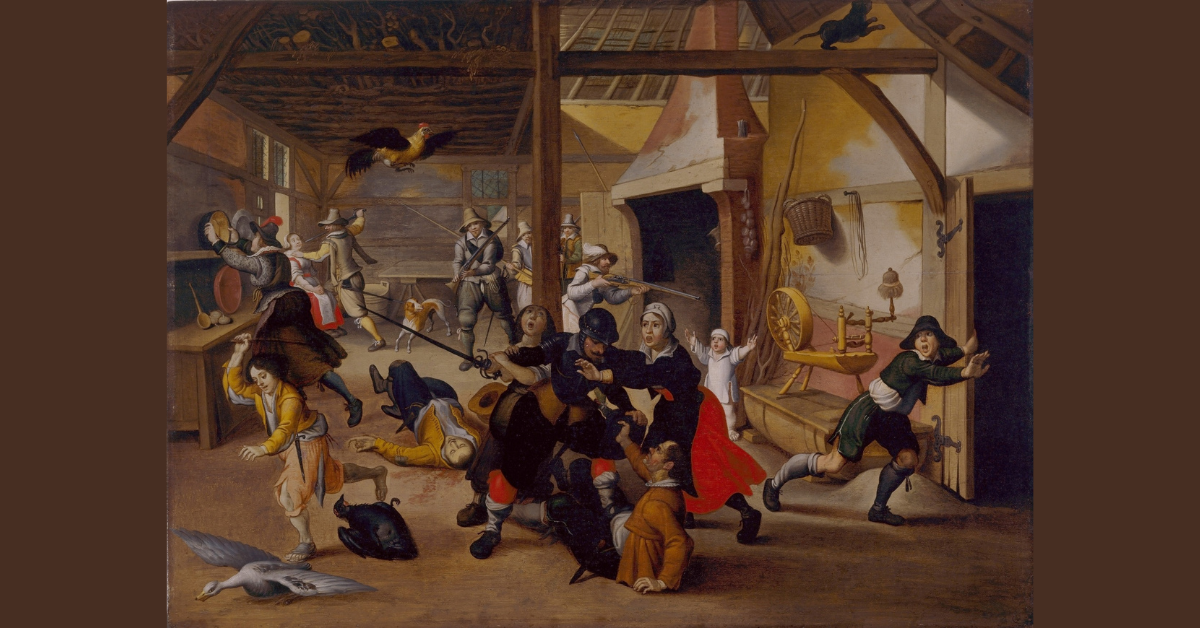

The destruction is not limited to armies and rulers. For ordinary people in the Palatinate:
- Farms are abandoned or destroyed
- Food supplies collapse
- Disease spreads in unstable conditions
The result is severe: population decline and long-term economic collapse. By the later stages of the war:
- The Palatinate is no longer a stable political center
- Its economy is weakened
- Its population is significantly reduced
As the conflict continues, its character changes. Catholic vs. Protestant divisions remain important, but political rivalry begins to dominate. Foreign powers intervene for strategic reasons. By the 1630s–1640s:
- France (a Catholic power) fights against the Habsburgs
- Alliances no longer follow simple religious lines
- The war becomes a broader European struggle
Peace of Westphalia (1648)
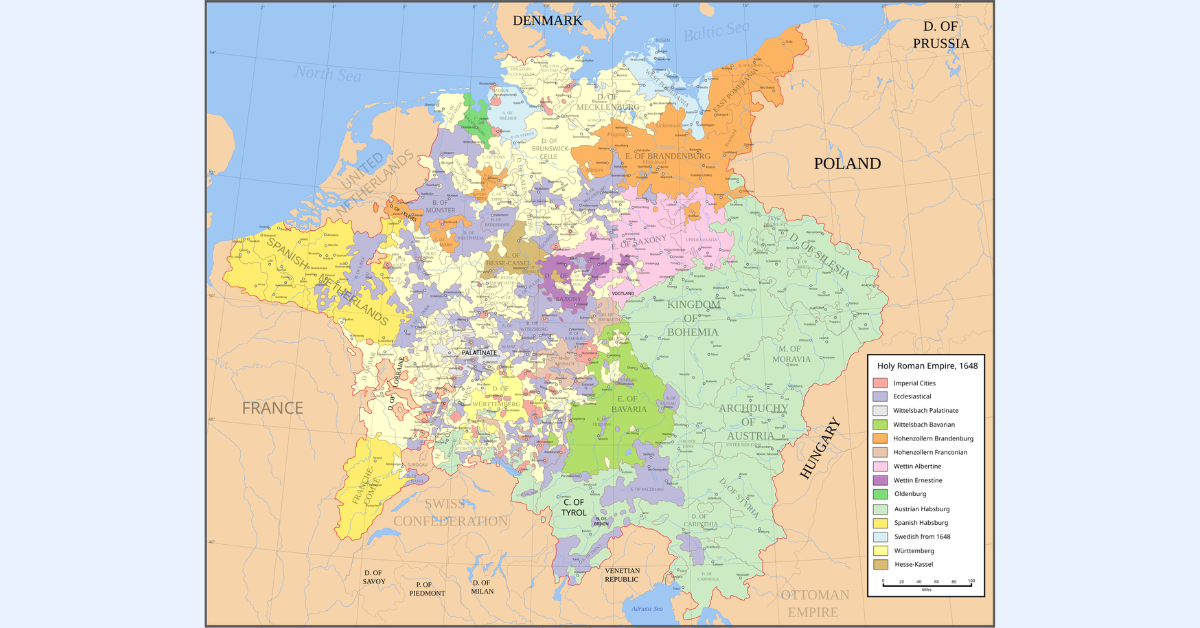

After decades of conflict, the war ends with the Peace of Westphalia. This settlement:
- Recognizes Catholicism, Lutheranism, and Calvinism
- Confirms the rights of rulers to choose religion
- Limits the power of the emperor
- Strengthens the autonomy of regional states
For the Palatinate, the war’s end does not mean recovery—it means rebuilding from devastation. Towns and infrastructure must be reconstructed, populations must recover, and political stability remains fragile
This becomes one of the most important long-term consequences: the region is left weakened, vulnerable, and open to future disruption.