By the late 19th century, Kutztown is no longer just a growing agricultural town—it is becoming part of a broader industrial system. But this transition does not affect all Pennsylvania German communities in the same way.
Among the earliest German-speaking settlers in Pennsylvania were Anabaptist groups—such as Mennonites and later the Amish—who had migrated in search of religious independence. As industrialization expands, many of these communities resist full integration:
- They remain rooted in agriculture
- They limit engagement with industrial labor
- They preserve distinct cultural and religious practices
At the same time, other groups—especially Lutheran and German Reformed descendants of Palatine migrants—move in a different direction. These communities are already more connected to formal institutions:
- Structured churches
- Land ownership within Penn’s system
- Participation in local markets
This creates a divergence within what might otherwise be seen as a single cultural group. Kutztown develops primarily within this second trajectory. By the late 19th and early 20th centuries, this distinction becomes visible in everyday life.
From Farm Economy to Wage Labor
For much of its early history, Kutztown is defined by agriculture. Families live on farms, produce their own goods, and participate in local markets. But by the late 1800s and early 1900s, this begins to change.
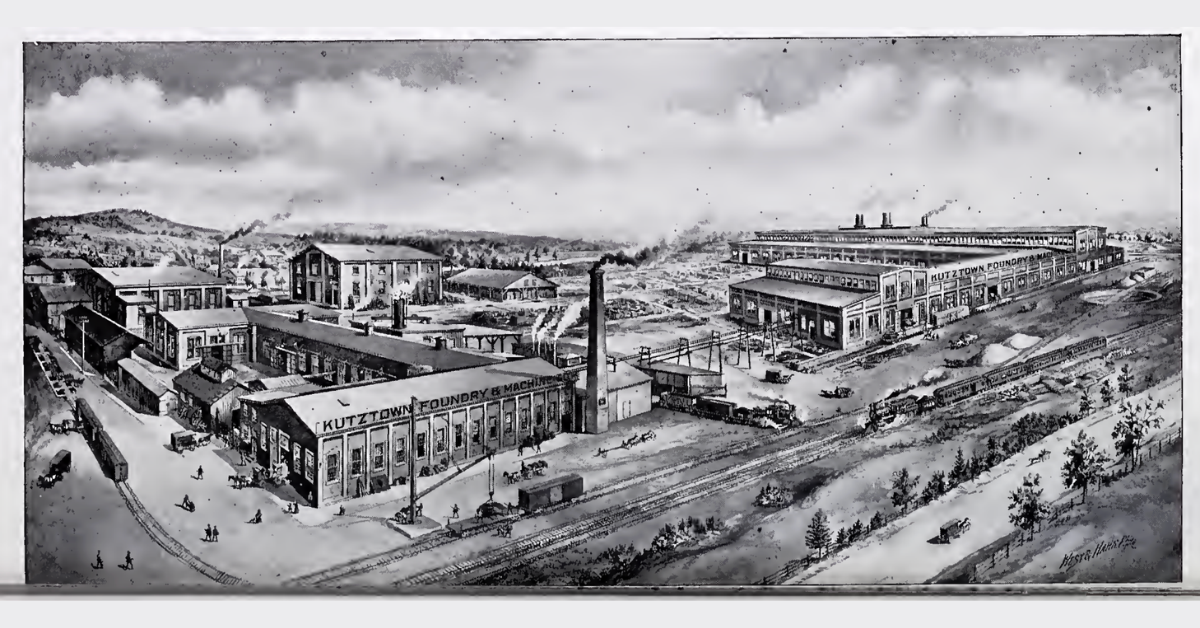
This transition is not immediate or total. Older forms of work—mills, carriage shops, and small trades—continue alongside newer factories. Rather than replacing the earlier economy, industrialization layers on top of it, gradually reshaping how people live and work. Industrial growth creates new kinds of employment:
- Factory jobs
- Foundry and machine labor
- Railroad-related work
- Skilled and semi-skilled trades
Instead of working land they own or manage, more people begin working for wages. This introduces a new structure to daily life—one tied to schedules, employers, and cash income rather than seasonal rhythms.
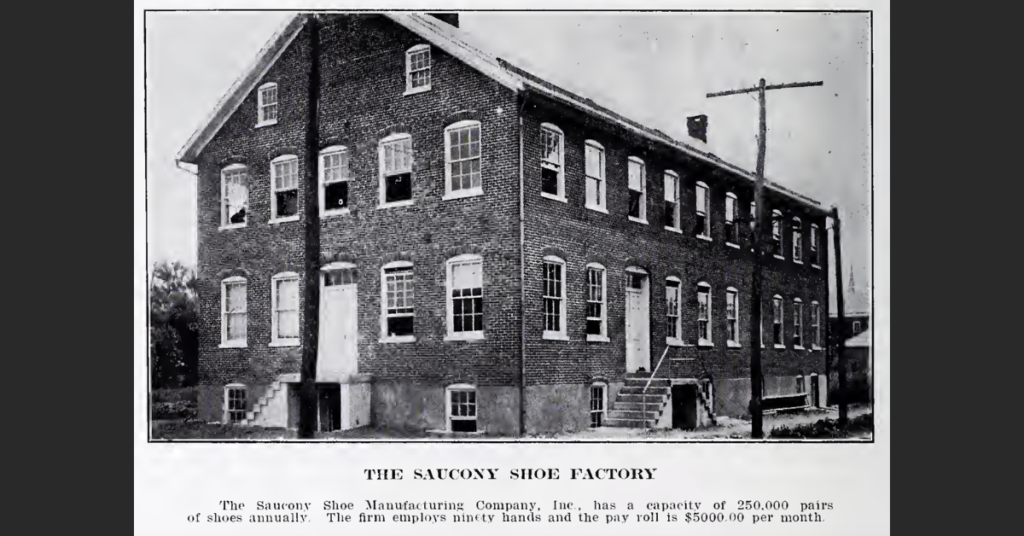
By the early 1900s, this shift is visible in scale. Across Kutztown’s factories, mills, and workshops, roughly 400 workers are employed in 1909, producing goods that are shipped well beyond the local region. Some nearby companies include:
- Bethlehem Steel (founded 1857)
- Kutztown Silk Mill (founded 1895)
- Saucony Shoe Factory in Kutztown (founded 1898)
Basin Street Hotel
Long before railroads and trolleys, the town was already part of a larger network centered on one of the region’s most important early roads. Known variously as the Great Road, Easton Road, High Road, or King’s Highway, this route connected Philadelphia to the interior of Pennsylvania.
Goods moved west from the Delaware River port at Easton through towns like Allentown, Reading, Lancaster, and York. Travelers, merchants, and farmers passed through Kutztown as part of this flow.
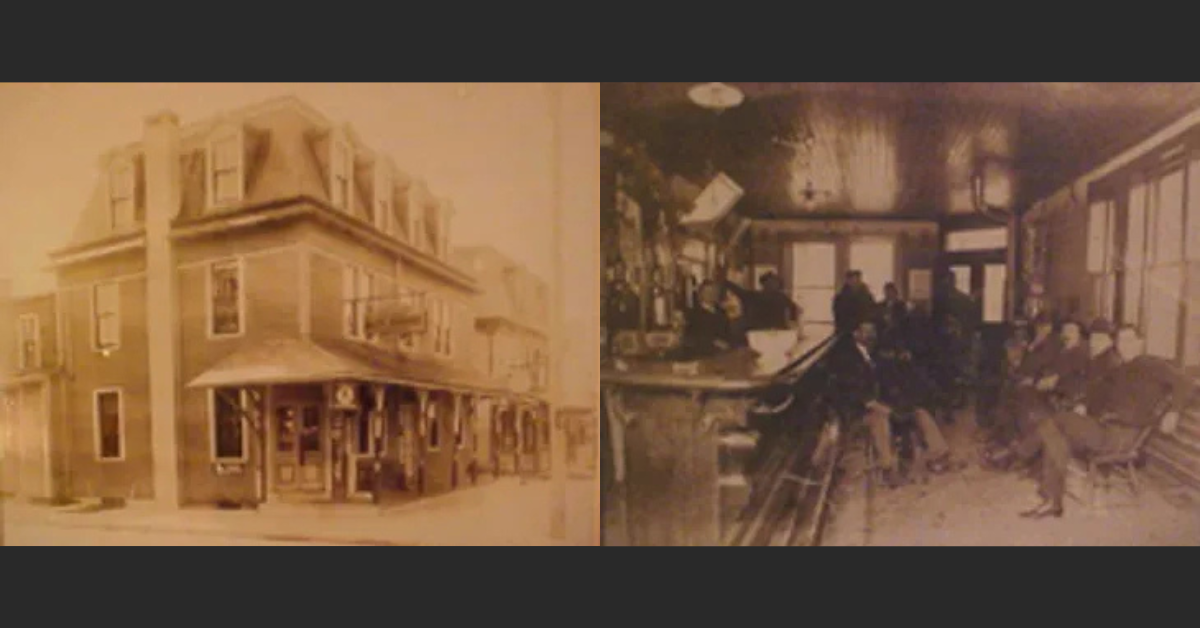
By the late 1800s, this movement supported a new kind of local institution. Around 1876, roughly a decade after the Civil War, the first eatery that would evolve into the Basin Street Hotel was established along this route. It served:
- Local farmers coming into town
- Travelers moving between regional centers
- Workers connected to the growing industrial economy
Like earlier taverns such as Kemp’s Hotel, it functioned as more than a place to eat or stay. As Kutztown became more connected through railroads and industry, the hotel evolved with it.
Originally constructed as the Central Hotel along what would become Main Street, a fire destroyed the building in 1889. However, it was quickly rebuilt. Over time, the hotel passed through several owners and names:
- Central Hotel
- Railroad Hotel
- Central House
Public School
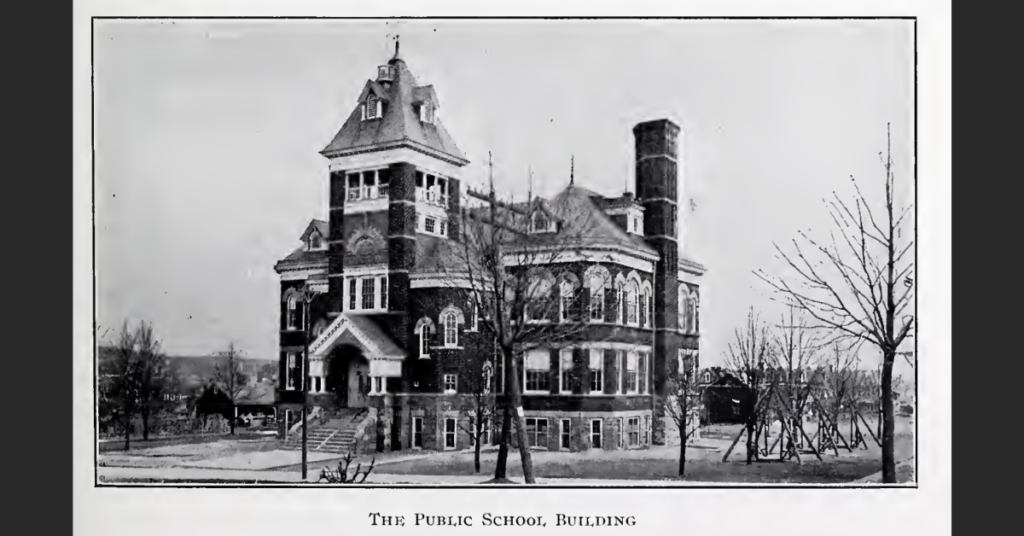
There is a long history of schooling in the Kutztown area, but for much of its early development, education is not centralized or standardized. Many of the earliest schools—including St. John’s Parochial School—are church-based. Instruction is local, religious, and often conducted in German, reflecting the cultural identity of the Pennsylvania Dutch community.
When Pennsylvania passes the Public School Law in 1834, requiring free, tax-supported education, Kutztown does not immediately embrace it. Many Pennsylvania Germans resist the system, fearing that English-language instruction will replace German and erode community identity. For years, parochial schools remain dominant, and public education develops slowly.
Even as the township constructs a four-room public school building in 1862, education in Kutztown remains fragmented. By the 1880s, this model begins to break down. The town is growing, and the demands of a more connected and industrializing world require something different.
In 1892, land is purchased and plans are drawn for a new public school building. Built largely by local labor, the school represents a major civic commitment. Funding is not easy—at times, the town relies on loans from residents to complete construction. When the building opens in 1893, it marks a turning point. For the first time:
- Primary and secondary education are brought under one roof
- Instruction becomes more standardized
- The town invests collectively in education as a public system
At the same time, this shift does not erase the past. Kutztown continues to maintain church-based traditions and one-room schoolhouses in surrounding areas. The 1892 school building remains in use until 1977, and today houses the Kutztown Area Historical Society.
The Dorney Park Line
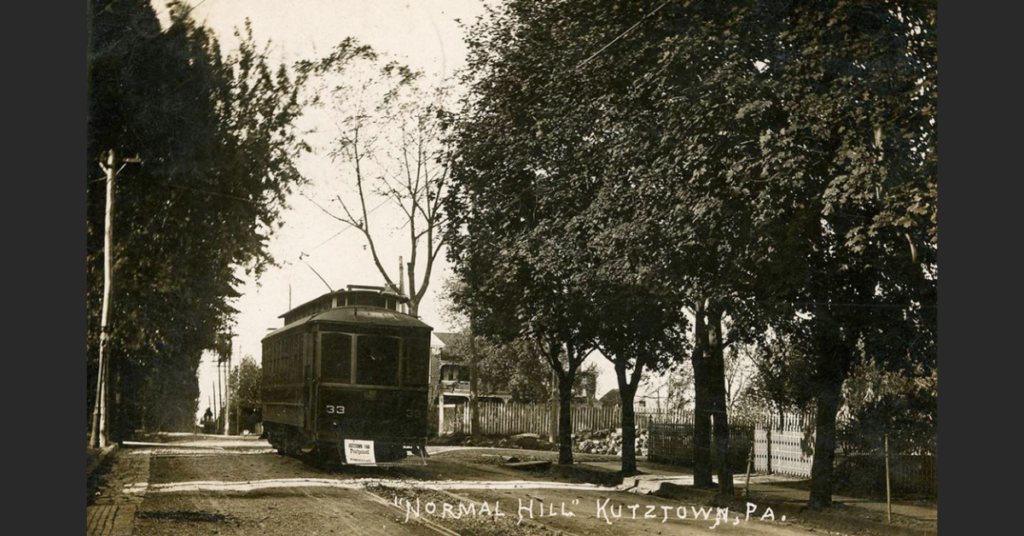
By the end of the 19th century, Kutztown’s connections are no longer limited to roads and railroads. A new form of transportation begins to reshape movement: electric traction.
The idea of a trolley line linking Allentown, Kutztown, and Reading emerges in the 1890s. After years of planning and delay, service finally arrives in 1902 with the formation of the Allentown & Reading Traction Company—often known as the “Dorney Park Line.”
For the first time, regular electric cars connect Kutztown directly to surrounding towns and cities. Passengers can travel between Allentown and Reading, with Kutztown serving as a key stop along the route. The system even requires a transfer in town, reinforcing its role as a point of connection within the network.
Students, workers, and visitors move more easily between places. The town becomes more accessible, more connected, and more closely tied to the rhythms of the surrounding region.
Over time, however, this system fades. As automobiles and buses rise in the early 20th century, trolley lines are gradually abandoned, with service ending by the 1930s.
From Kemp’s Woods to Kutztown Park
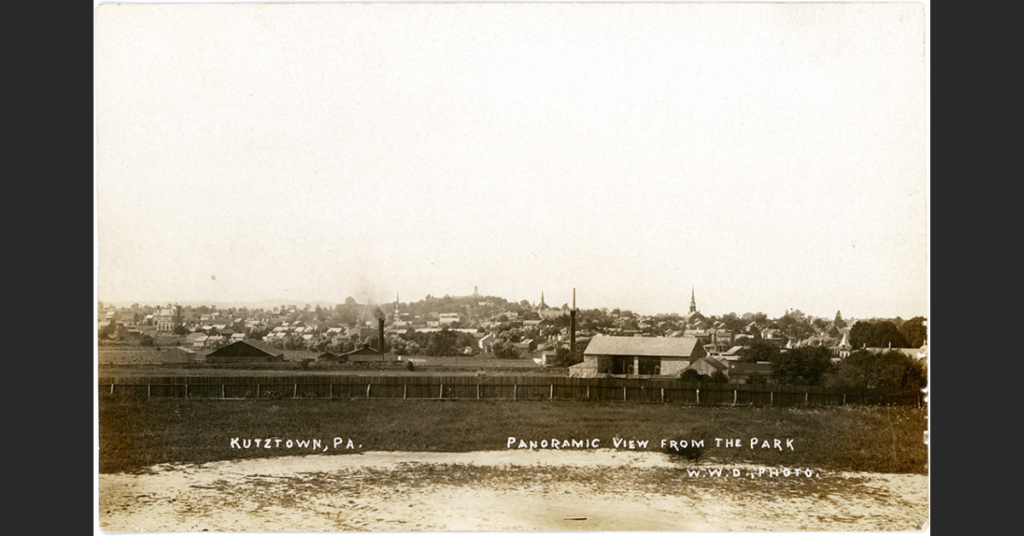
Long before it became a formal park, the area known as Kemp’s Grove—or Kemp’s Woods—was already a gathering place for the Kutztown community. In the 19th century, it stood as one of the last remaining tracts of old-growth hardwood forest in the area. Shaded by large white oaks, the grove hosted family gatherings, church picnics, and seasonal events.
By the early 1900s, however, that space was under pressure. As development expanded across the region, the land was at risk of being sold and cleared. Instead of allowing that to happen, local residents took action.
In 1901, a group of citizens organized the Kutztown Park Association with a clear goal: to purchase and preserve the grove for public use. Funding came not from a single benefactor, but from the community itself. Residents subscribed to shares—often just one dollar each—creating a collective effort to protect the land. By 1903, the land is formally established as Kutztown Park.
The park quickly becomes known as “The Shady Spot,” and its use expands beyond informal gatherings. The introduction of the Allentown & Reading Traction Company trolley line around 1900 accelerates this transformation. With a stop at the park entrance, the grove becomes accessible to the broader region.
This growing role is made visible in 1907, when the town holds its first Kutztown Day in the park. The event includes the rededication of the 1876 Centennial Monument, along with parades, reenactments, and concerts.
Water Systems and Electrification
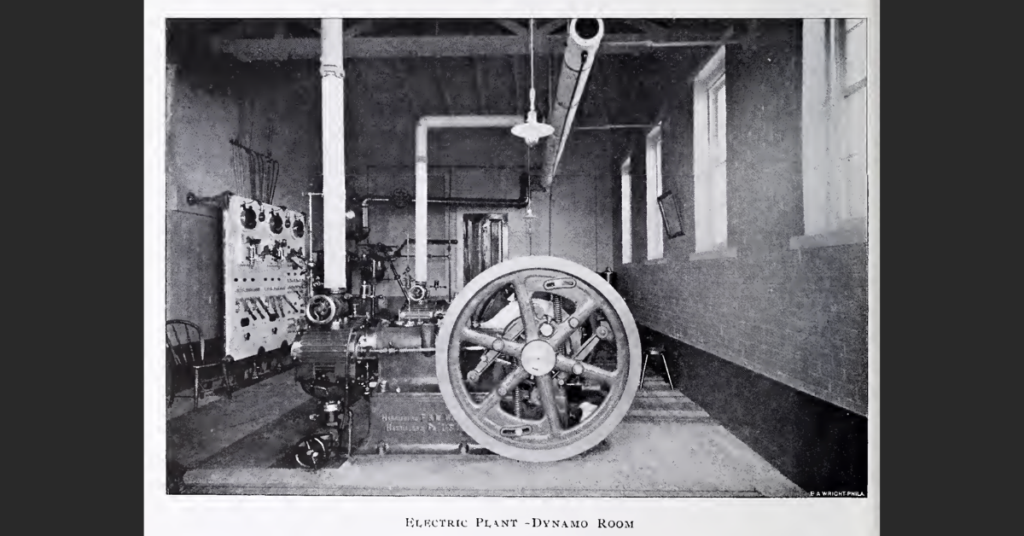
In 1889, a major shift in infrastructure takes place with the creation of the Kutztown Water Company. Water is collected from local springs, nearby streams, and a deep artesian well, then pumped to a reservoir on Kutz’s Hill and distributed throughout the borough.
Before this system, residents relied on individual wells from the earliest days of the town. The new system marks a transition from private, household-level access to shared public infrastructure.
Meanwhile, electricity comes to Kutztown gradually. Before the borough established its own system in 1905, some local industry had already begun generating power.
By 1899, the Saucony Shoe Manufacturing Company was operating its own electric plant, lighting its factory and nearby surroundings. In the early 1900s, private companies—especially those tied to the trolley system—began wiring parts of the town.
When the borough builds its electric plant on Schley Street in 1905, a number of homes, businesses, and public buildings already had access to electricity. However, the 1905 system marks a turning point:
- Street lighting becomes standard
- Electric service expands across the town
- Daily life extends beyond daylight hours
Herman’s Playhouse
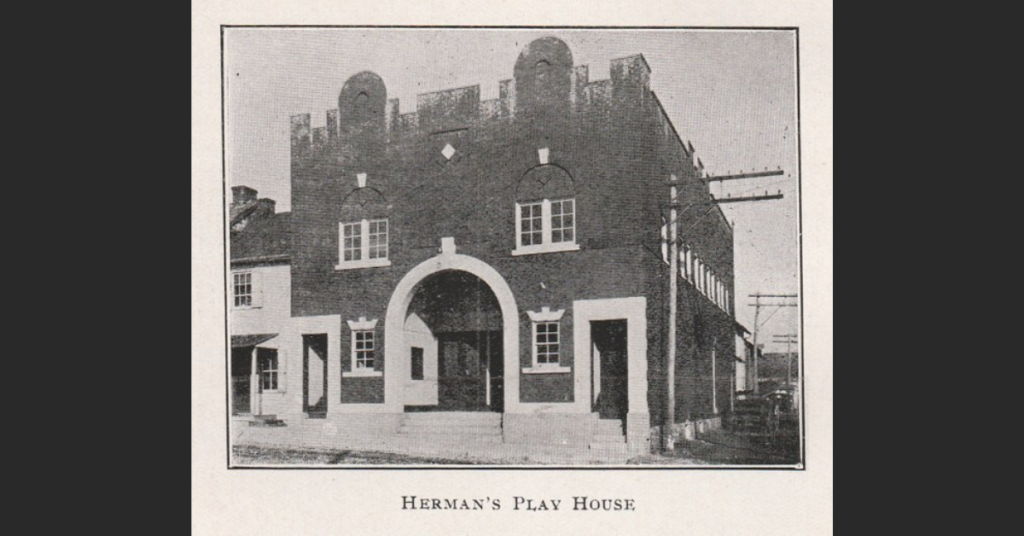
In 1908, Kutztown enters the age of motion pictures when local resident Paul Herman opens a small kinetoscope arcade on Main Street, soon developing it into Herman’s Playhouse. With support from his family, Herman operates the theater as both owner and projectionist, embedding it directly into community life.
In 1912, he constructs a dedicated theater building on Whiteoak Street—the site of today’s Strand Theatre—marking the transition from novelty attraction to permanent institution. Silent films draw local audiences, and the building expands over time to meet growing demand.
By the late 1920s, the theater passes into new hands as leasing arrangements shift ownership. Even through the Great Depression and World War II, it remains a central gathering place—offering not just entertainment, but a shared public experience for the town. Over time, Herman’s Playhouse evolves into The Strand.
World War I and Cultural Tension
While Kutztown was not a site of military conflict, World War I had a direct impact on the town’s cultural and social life. By the 1910s, Kutztown remained deeply connected to its Pennsylvania German roots. German language, customs, and identity were still part of everyday life.
But as the United States entered the conflict in 1917, attitudes toward Germany shifted rapidly. Across the country—and in communities like Kutztown—German identity became politically sensitive. This was not just a local reaction, but part of a broader national backlash against German American culture.
German-language newspapers declined or disappeared, language instruction was reduced or eliminated in schools, and public expressions of German culture were discouraged or, in some cases, openly attacked. As a result:
- Public use of the German language declined
- Schools and institutions emphasized English instruction
- Expressions of German culture became more restrained
What had been a confident and visible cultural identity was pushed toward the margins. Some individuals and families responded by emphasizing their loyalty to the United States—through military service, civic participation, or by downplaying visible ties to German heritage. Residents also participated in war bond drives
Industries in the surrounding region, including places like Bethlehem, expanded production to support the war effort. The Pennsylvania German identity that had defined the community for generations did not disappear, but it became more private, more selective, and more closely negotiated within an increasingly American framework.
The Spanish Flu in Kutztown (1918–1919)
In 1918, Kutztown faced the global influenza pandemic—much like communities today during COVID-19. At first, the town followed state orders to close public spaces, limit gatherings, and restrict travel. Within weeks, cases surged. By late October:
- Over 100 cases were reported
- Schools and churches were closed
- Families were quarantined in their homes
As the situation worsened, the town converted its Town Hall into an emergency hospital, staffed by local doctors, nurses, and volunteers. At its peak, the hospital treated dozens of patients from Kutztown and surrounding areas. The response was not just institutional—it was communal:
- Residents volunteered as nurses and caretakers
- Donations funded operations
- Local organizations, including the Red Cross, supported relief efforts
By February 1919, the hospital closed after treating over 100 patients. While the death toll was significant, the town’s coordinated response became a defining moment of collective action.
Kutztown Park as a Center of Community Life
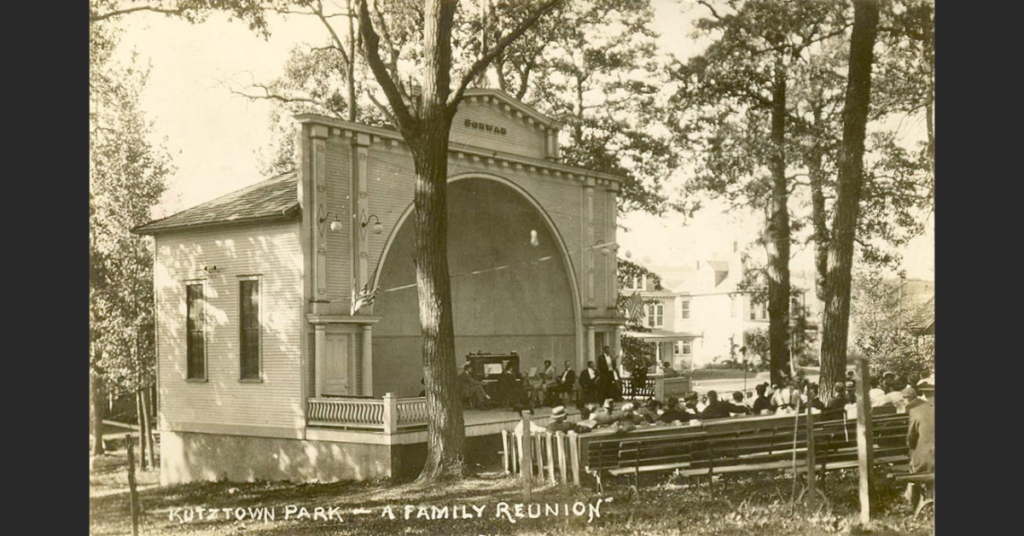
As Kutztown becomes more connected and modern in the early 20th century, the park evolves alongside it. By the 1910s and 1920s, Kutztown Park contains a wide range of attractions:
- A band shell (built in 1914) and pavilion (added in 1922)
- A dance hall and roller skating rink
- A restaurant supplied by an artesian well
- Amusements including a merry-go-round, shooting gallery, penny arcade, and scooter ride
- Two baseball fields and open picnic areas
- A miniature railway (1908–09)
At the center of this development is the band shell. Built as a dedicated performance space, it transforms the park into an open-air auditorium. Early on, figures like Charles M. Schwab attended its dedication, and the Bethlehem Steel Band performed concerts for the community.
By the 1920s and 1930s, the band shell hosts regular concerts, ceremonies, and large public gatherings—often “rain or shine.” With the addition of sound systems by the late 1930s, performances reach across the entire park, drawing larger crowds and more organized events.
Over time, maintaining the park becomes financially difficult for the private association that had created it. In response, the borough takes ownership in 1935, purchasing the park and converting it into a fully public space.
This expansion of public life is happening beyond the park as well. As the region industrializes, the need for education—and especially teacher training—continues to grow.
In 1928, the institution is renamed Kutztown State Teacher’s College and gains the authority to confer bachelor’s degrees, marking a shift from local training school to a more formalized center of higher education.
The Great Depression Begins
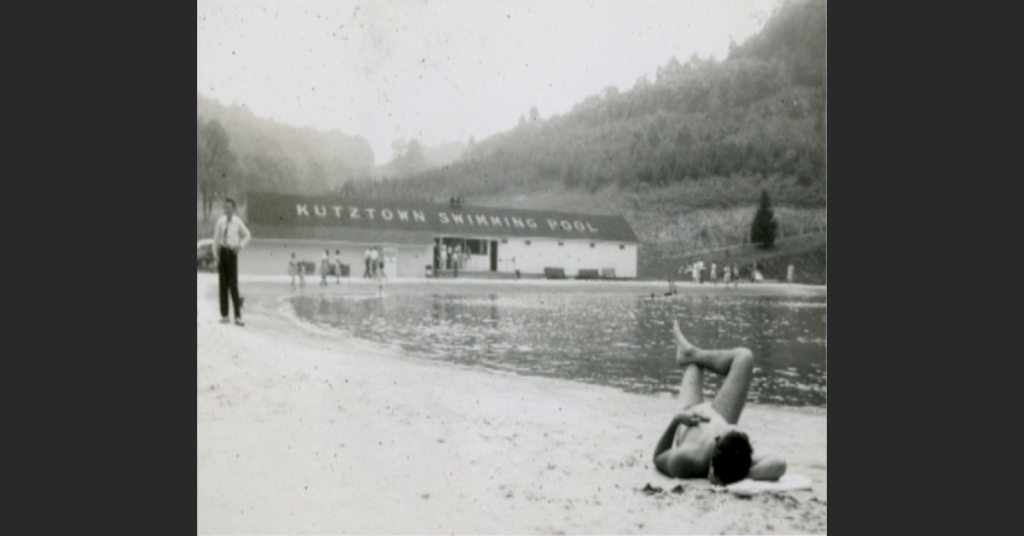
By the 1920s, the trolley system that once defined regional travel around Kutztown was beginning to lose its central role. But this system depended on fixed tracks and centralized routes. As automobiles became more common in the 1920s, travel shifted toward flexibility and individual movement.
The transition became official in 1933. Trolley service ended on October 19 and was replaced the next day by bus service, operated by the successor to the Allentown–Reading Traction Company. Within a decade, even buses began to give way to widespread automobile use.
At the same time, daily life was changing in a deeper way. Earlier, farm life allowed for a degree of independence—families could produce much of what they needed and share surplus within the community. But as work moved beyond the farm, survival became more tied to wages, cash, and obligations like taxes that could not be paid through barter or goods.
This shift is captured in a local memory passed down through generations. In his Life of a Dutchman monologue at the Kutztown Folk Festival, Leroy Brown recalled his father’s decision in the mid-1930s to leave farm life and move into town. Despite Leroy and his mother’s protestations, getting back and forth to work had become too long of a daily hike.
After moving, Leroy recalls enrolling in Kutztown High School, where his track team later won the State Relay Championship. By 1941, his team had to pool gas rations just to travel to the meet.
The New Deal in Kutztown
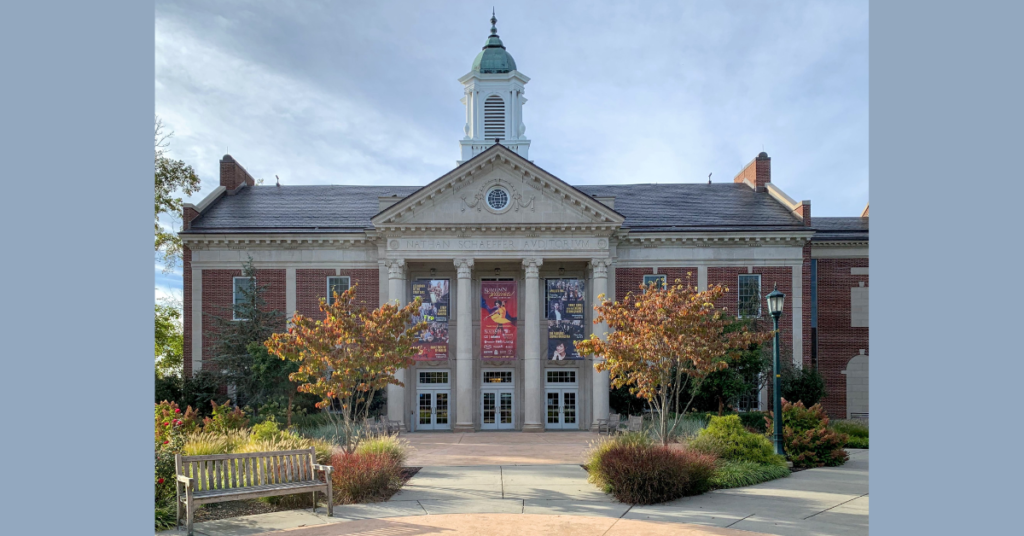
As the Great Depression reshaped daily life, the federal government began to play a more direct role in local development. Through New Deal programs, national resources were directed into towns like Kutztown—funding construction, creating jobs, and expanding public infrastructure.
One of the most visible impacts came through the expansion of what was then Kutztown State Teachers College. With support from the Public Works Administration (PWA), a large-scale building program took place between 1938 and 1939.
Nine buildings were constructed on campus, including new academic and support facilities. Among them was Schaeffer Auditorium, which became a central space for campus and community events.
At the same time, New Deal investment reached into the town itself. In 1935, a new post office was constructed on Main Street using federal funds. The building included a mural, Rural Route #1, painted in 1937 by Judson Smith as part of a national effort to bring public art into everyday civic spaces.
These projects reflect a broader shift. During the Depression, Kutztown was no longer relying only on local resources or regional industry. It was now directly connected to federal programs designed to stabilize the economy and reshape public life.
What had once been a town built through private initiative, local labor, and community subscription was increasingly shaped by national policy and investment.
WWII Impacts Kutztown
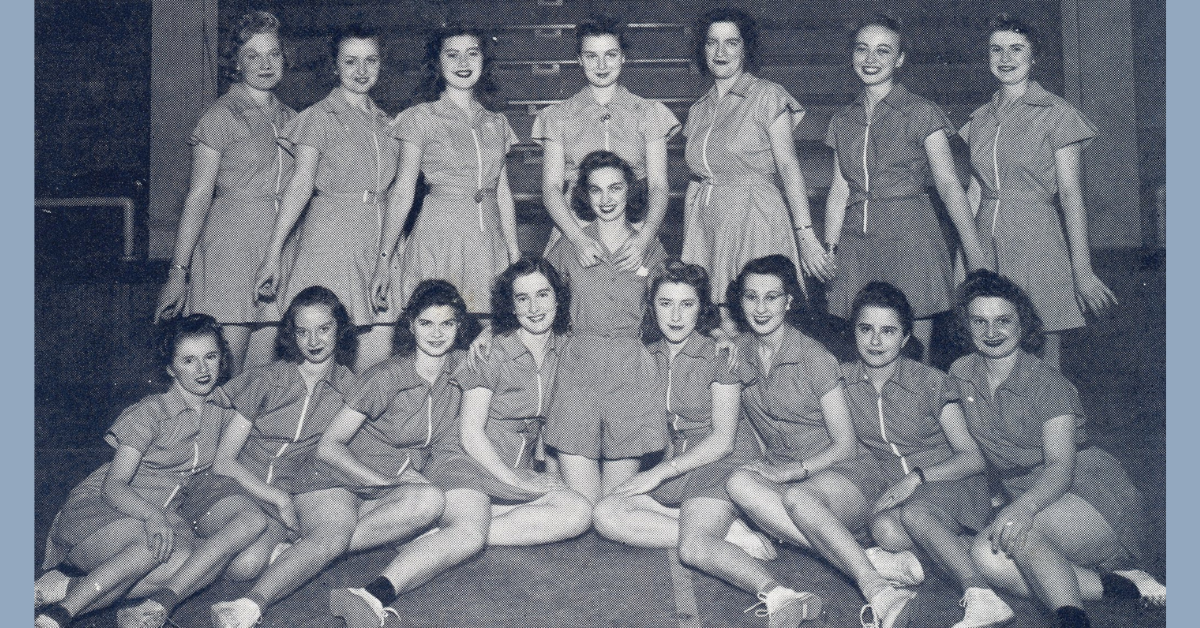
The war reshaped everyday activity in the town. At Kutztown State Teachers College (now Kutztown University of Pennsylvania), athletics were significantly disrupted. By 1943, varsity competition was largely suspended as students entered military service or participated in training programs on campus. Baseball shut down entirely from 1942 to 1945.
The impact was also personal. Former students and athletes left for service, and not all returned. In 1944, Hank Trenchard—a 1941 graduate and standout multi-sport athlete—was killed in a fighter plane accident during the war.Even long-standing community traditions were affected. Kutztown Day, which had become a central civic event, was canceled for three years during the war as a gesture of respect for those serving overseas.
Even long-standing community traditions were affected. Kutztown Day, which had become a central civic event, was canceled for three years during the war as a gesture of respect for those serving overseas.