
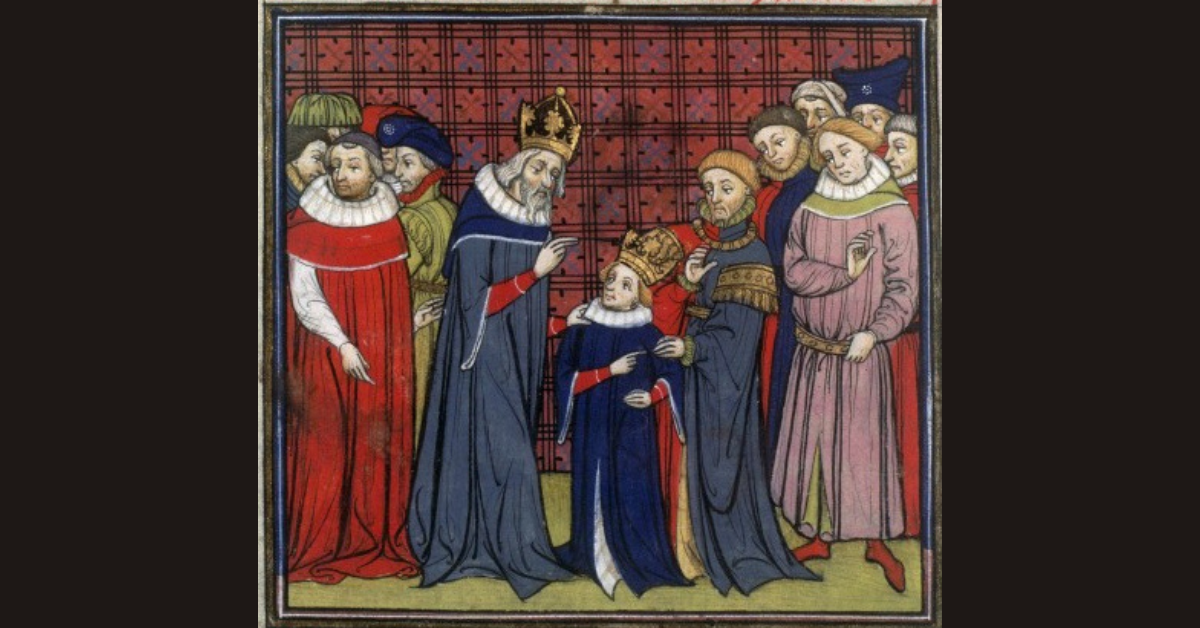
By the late 700s, the Frankish world reaches its peak under one ruler: Charlemagne.
The Reign of Charlemagne (768–814 CE)
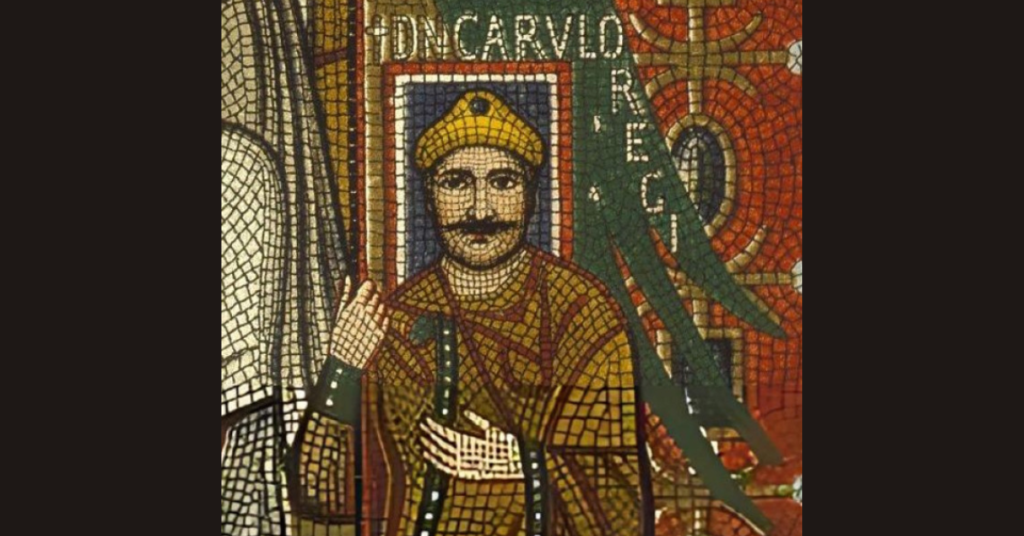

After the rise of his father, Pepin the Short, Charlemagne inherits and expands the Frankish kingdom. Between 768 and 814 CE, he:
- Conquers large parts of Western and Central Europe
- Extends control into modern France, Germany, and northern Italy
- Strengthens centralized rule
For the first time since Rome, a single ruler controls much of Western Europe. His empire includes:
- Former Roman territories
- Germanic lands east of the Rhine
- Key trade and political centers across Europe
Charlemagne Protects the Pope (772 CE)
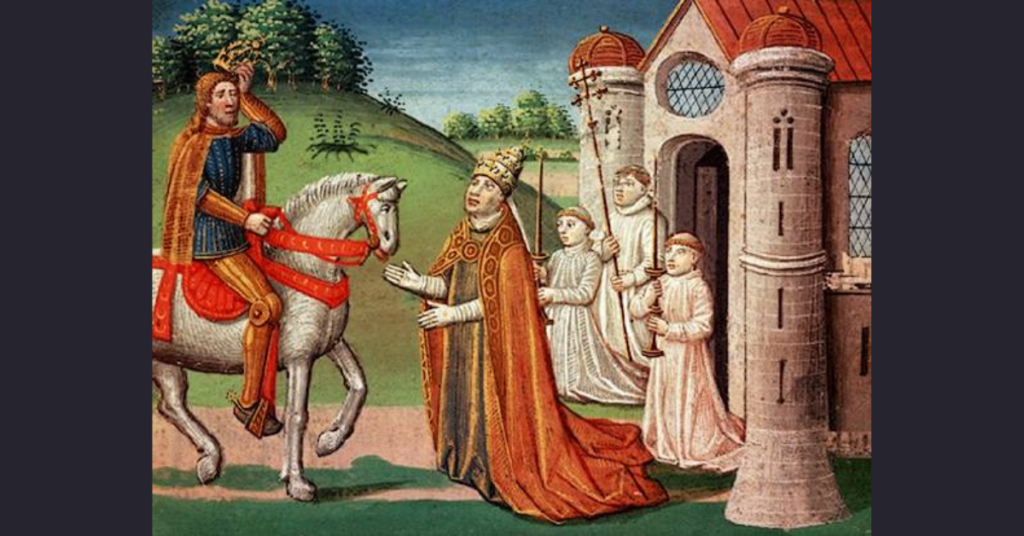

In 772, the relationship between the Frankish king Charlemagne and the papacy deepened as he took on the role of protector of the Church. When Pope Adrian I faced threats from the Lombards in Italy, he appealed to Charlemagne for military support.
Charlemagne responded by leading a campaign into northern Italy, defeating the Lombards and removing their pressure on Rome.
By doing so, he effectively secured the papacy’s independence and reinforced an emerging alliance: the Franks would provide military protection, and in return, the pope would grant religious legitimacy to Frankish rule.
Emperor of the Romans (800 CE)
.jpg)
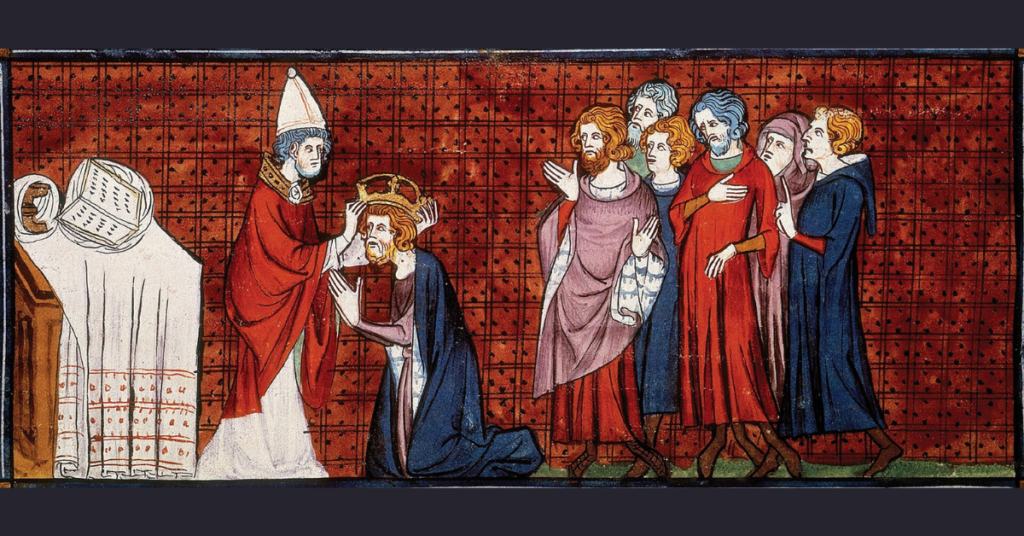
In 800 CE, Charlemagne is crowned Emperor by the Pope in Rome. This moment is symbolic and political: the idea of a Western Roman Empire is revived—now under a Frankish (Germanic) ruler. This creates a new model of power:
- Germanic kingship
- Roman imperial legacy
- Christian religious authority
Despite its size and strength, Charlemagne plays a big role in holding the empire together:
- It relies heavily on personal loyalty
- Authority is tied to the ruler himself
- There is no strong system for long-term centralized control
After Charlemagne dies in 814 CE, his son Louis the Pious inherits the empire. But after Louis’s death, the empire is divided among his sons. This follows an older Frankish tradition:
- Land is split between heirs
- Each son rules a portion
The Treaty of Verdun (843 CE)
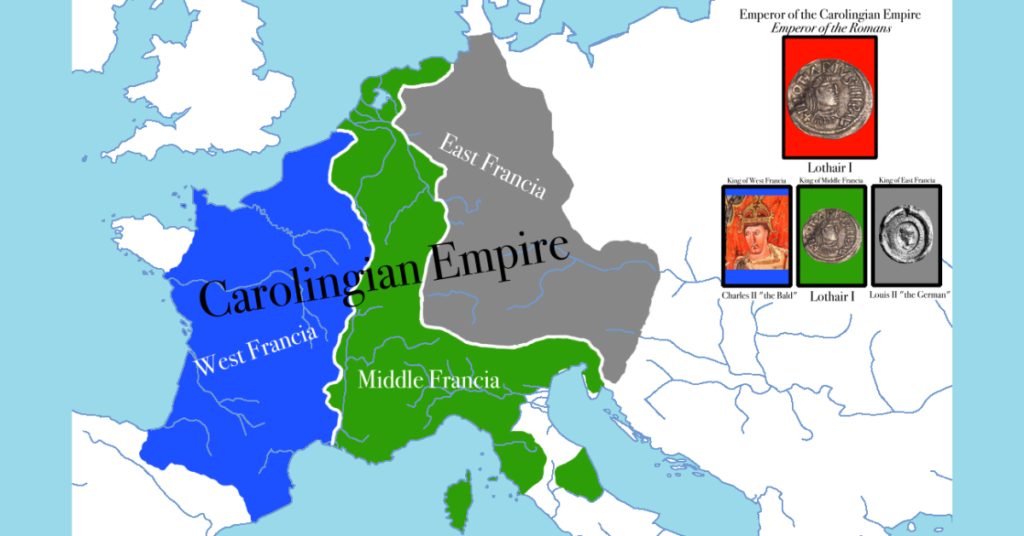

In 843 CE, the empire is formally divided in the Treaty of Verdun. It is split into three parts:
- West Francia (roughly modern France)
- East Francia (Roughly early Germany)
- Middle Francia (A long, narrow strip between them, stretching from the North Sea down into Italy and including the Rhine region
The Palatinate sits within this middle zone, placing it directly between the emerging French and German worlds.