
By 1648, the Thirty Years’ War has ended—but for the Palatinate, the crisis is far from over.
A Fragile Recovery
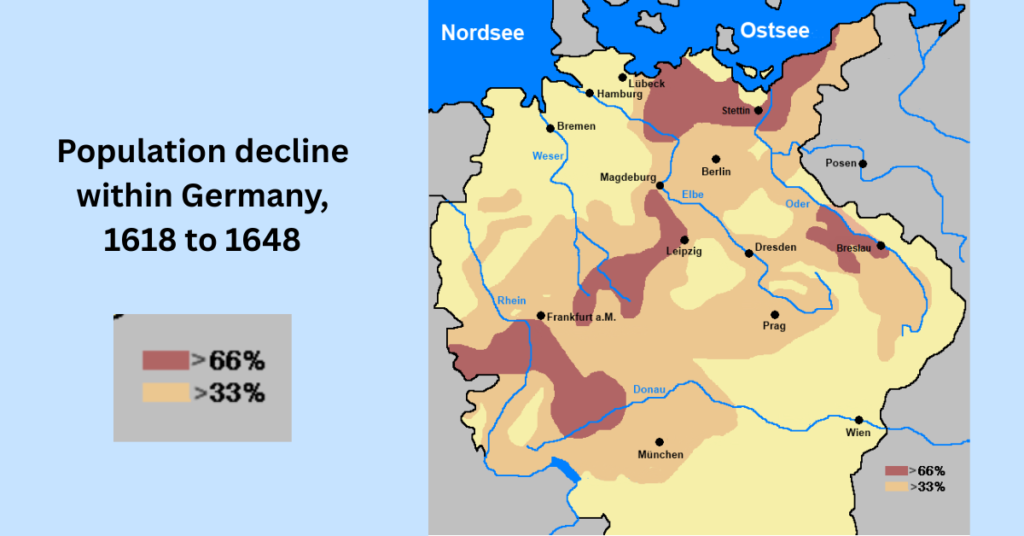

After the Peace of Westphalia, the region begins a slow and difficult recovery. Towns are rebuilt, farms are reestablished, and populations begin to grow again. But recovery is uneven:
- Many areas remain depopulated
- Infrastructure is damaged or gone
- Political stability is fragile
But even after the war, the Palatinate remains vulnerable because of its location along the Rhine.
The Nine Years’ War (1688–1697)
.jpg)
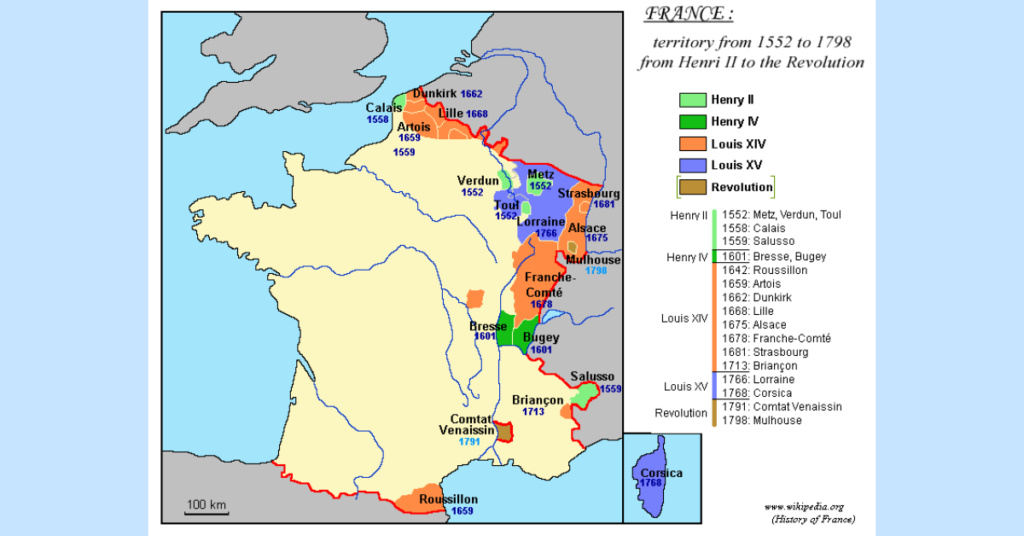
In the late 1600s, a new phase of conflict begins—this time driven by the expansion of France under Louis XIV. He seeks to extend French influence to the Rhine, viewing it as a natural eastern boundary of France.
This brings the Palatinate directly into the path of French expansion. The region is no longer just caught between internal conflicts, it becomes a target of a powerful neighboring state.
In 1688, conflict breaks out in the Nine Years’ War, a major European war involving France and a coalition of opposing powers. As part of this war, French forces invade the Rhineland, including the Palatinate.
But this invasion is different from earlier wars. Rather than simply occupying territory, French strategy involves systematic destruction. French commanders are ordered to:
- Burn towns and villages
- Destroy castles and fortifications
- Ruin farmland and resources
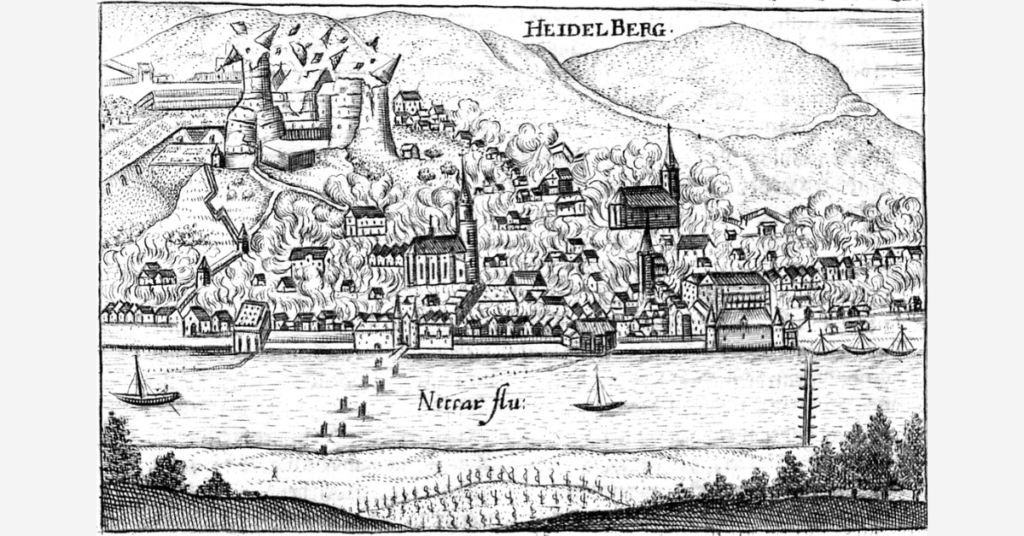
Between 1688 and the early 1690s, much of the Palatinate is devastated. Heidelberg is heavily damaged again, Mannheim and other towns are destroyed, and entire rural areas are left in ruins. This is not incidental damage; it is deliberate, repeated, and widespread.
Long-Term Impact

For the people of the Palatinate, this is a second major catastrophe within a single lifetime. By the end of the 1600s:
- The region is economically weakened
- Populations are unstable and mobile
- Confidence in long-term stability is gone
After decades of repeated conflict, many people no longer see a future in the region. The risks of staying outweigh the uncertainty of leaving, and migration becomes a rational choice. The decision to leave is shaped not by one war—but by a cycle of destruction.