By the mid-1500s, the Reformation has transformed the Holy Roman Empire. What began as a theological dispute under Martin Luther has become a political and military conflict between Catholic and Lutheran territories.
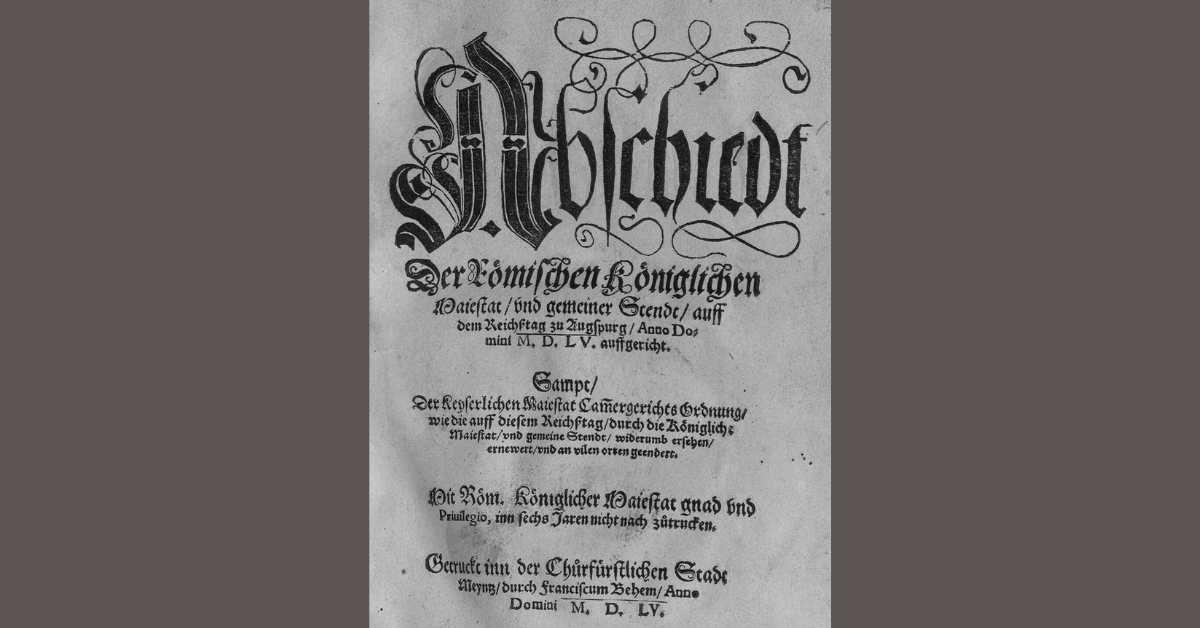
The Peace of Augsburg (1555)
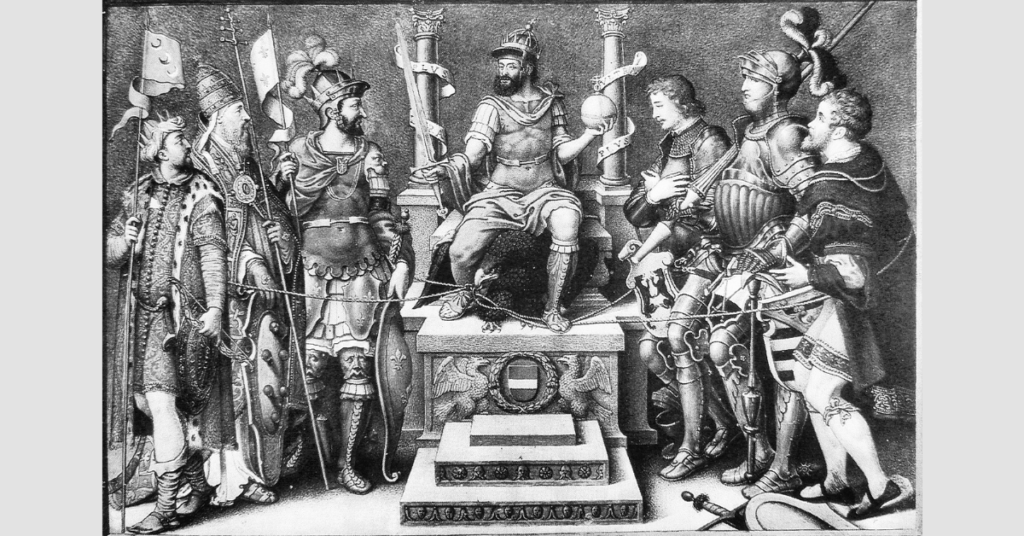

After the Augsburg Confession:
- The empire is divided between Catholic and Lutheran rulers
- Alliances form along religious lines
- The emperor attempts to maintain unity, but faces resistance
One major flashpoint is the Schmalkaldic War, a conflict between Catholic forces led by the emperor and Protestant territories defending their autonomy. However, either side achieves lasting dominance, and the empire remains divided.
In 1555, the empire reaches a compromise with the Peace of Augsburg. Its central principle is: “Cuius regio, eius religio” — “Whose realm, his religion.” This means:
- Each ruler chooses the religion of their territory
- Subjects are expected to follow that religion
- Only two options are recognized: Catholicism or Lutheranism
The Rise of Calvinism
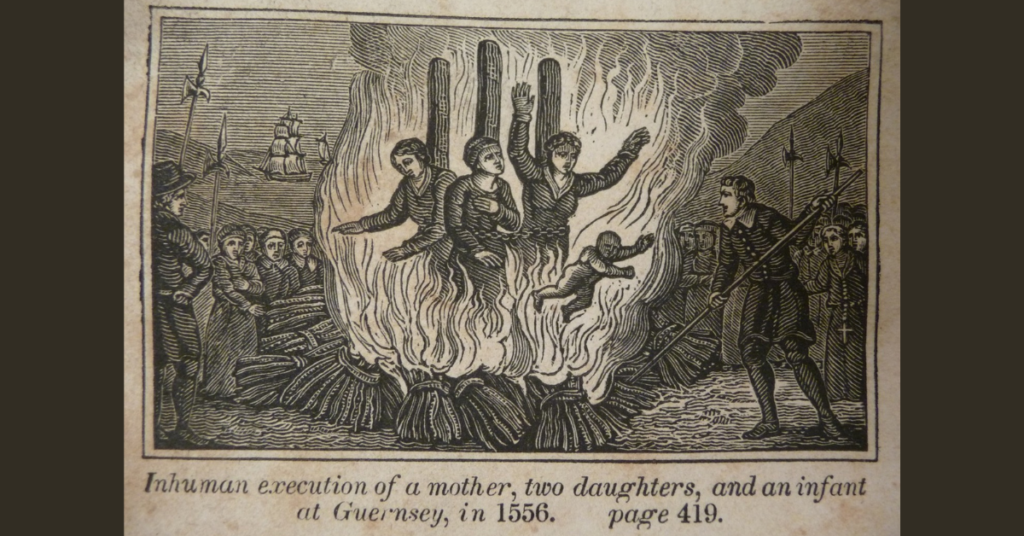

The Peace of Augsburg stabilizes the empire—but only partially. It reduces immediate conflict, and allows rulers to enforce religious unity within their territories. But it also creates new problems:
- It forces populations to conform or relocate
- It deepens divisions between regions
- It ties faith directly to political power
Most importantly, it does not recognize all forms of Protestantism. While the Peace of Augsburg recognizes Lutheranism, another movement is spreading. Calvinism develops separately from Luther’s teachings and emphasizes:
- Predestination (God has already determined salvation)
- A more disciplined, structured church
- Stronger moral regulation of society
It spreads rapidly across parts of Europe—including regions like the Palatinate.
Frederick III and Heidelberg Catechism

.jpg)

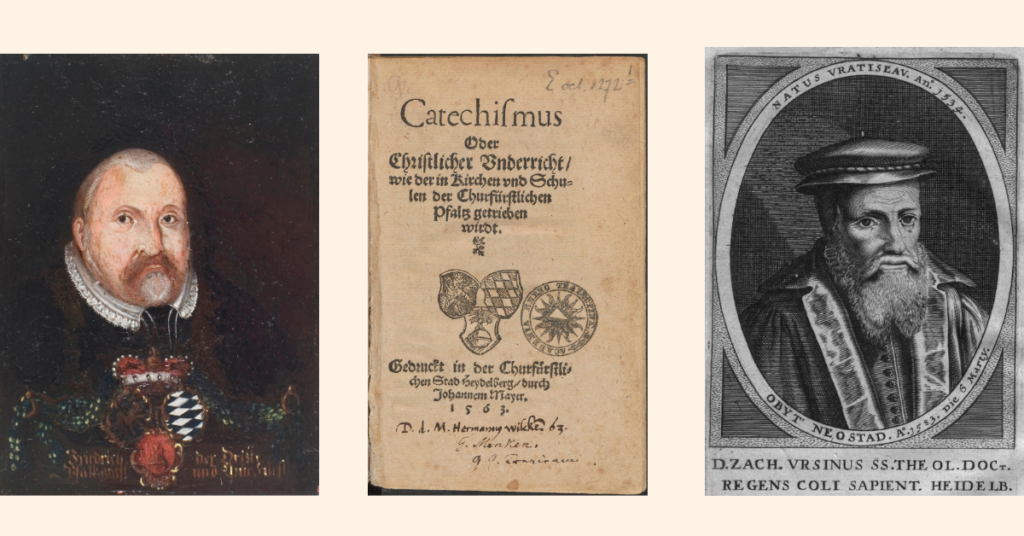
In 1559, a major turning point occurs in the Palatinate with the rise of Frederick III, Elector Palatine. Frederick III inherits a territory that is officially Lutheran under the Peace of Augsburg. However, like many rulers of the time, he is exposed to a wide range of theological ideas.
Over time, he becomes convinced by Reformed (Calvinist) teachings. This leads to a decisive shift: The Palatinate moves from Lutheranism to Calvinism.
This is not just a religious decision—it is political. Under the Peace of Augsburg, only Catholicism and Lutheranism are legally recognized. Calvinism has no official status. To formalize this new religious identity, Frederick III commissions a clear statement of faith. Published in 1563, the Heidelberg Catechism:
- Defines the beliefs of the Reformed (Calvinist) tradition in the Palatinate
- Is written in a clear, accessible question-and-answer format
- Is intended for teaching both clergy and ordinary people
A Mixed Religious Landscape
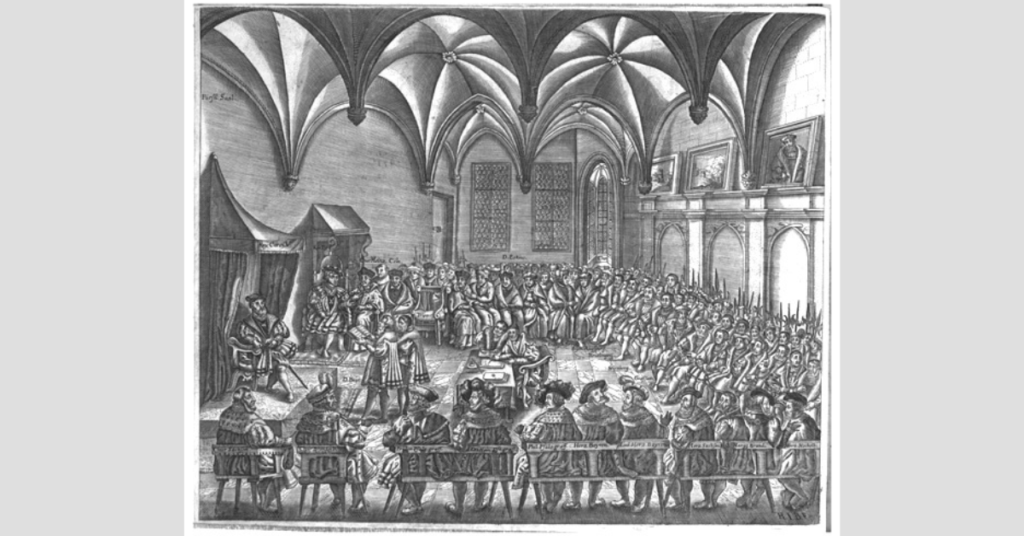

Despite the principle of “cuius regio, eius religio,” the reality across the empire is far more complex. In practice:
- Catholic, Lutheran, and increasingly Calvinist communities exist side by side
- Cities, towns, and even villages can contain multiple religious groups
- Not everyone converts when their ruler changes religion
This creates a contradiction: the law says one religion per territory—but real life doesn’t follow clean lines. The Palatinate is particularly affected by this mix. Because of its location along the Rhine, it is:
- Connected to major cities like Mainz, Worms, and Heidelberg
- Exposed to multiple religious influences
- Part of a broader intellectual and economic network
This makes it less stable religiously. The Palatinate is not isolated—it is constantly absorbing new ideas. By the late 1500s, the region contains:
- Catholics maintaining traditional practices
- Lutherans following the reforms of Martin Luther
- Calvinists introducing new interpretations of Protestantism
These groups are not separated cleanly. Instead, they live near each other and shape local culture in different ways. The result: a layered religious landscape rather than a uniform one.