
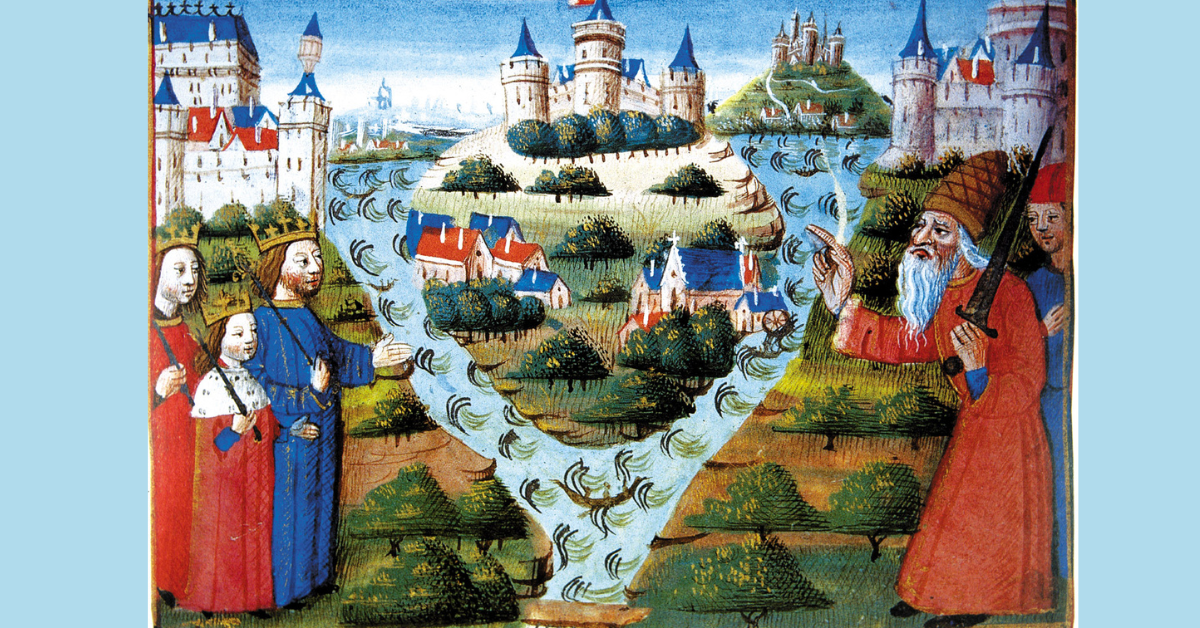
After the Treaty of Verdun in 843 CE, the middle kingdom—Middle Francia—proves to be the most unstable of the three divisions.
Stretching from the North Sea to northern Italy, it includes the Rhine corridor and the future Palatinate. But unlike East and West Francia, it lacks cohesion and long-term stability.
Lothair I and the Middle Kingdom
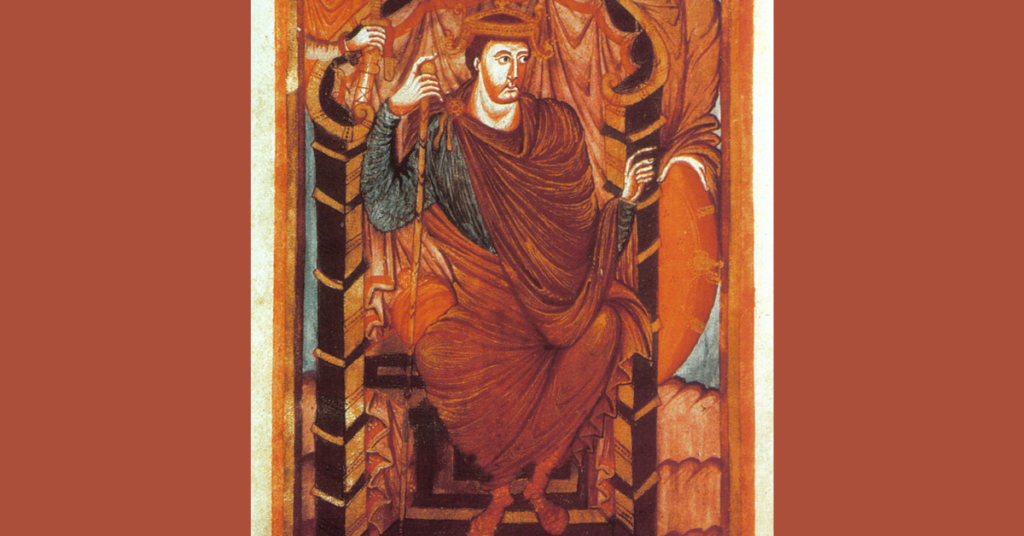

Middle Francia is ruled by Lothair I, one of Charlemagne’s grandsons. As emperor, Lothair holds a unique position:
- He controls the central portion of the former empire
- He retains the imperial title
- His territory includes key political and economic regions
But despite this status, his kingdom is geographically stretched and difficult to govern as a single unit.
The Death of Lothair I (855 CE)
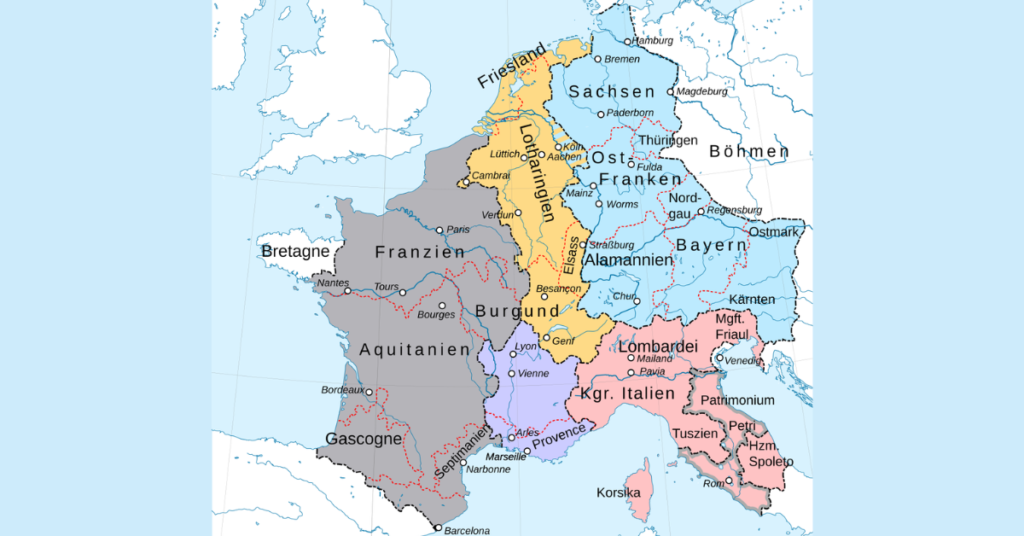

When Lothair dies in 855 CE, his kingdom is divided among his sons. This follows the same inheritance pattern seen after Clovis and Louis the Pious. His lands are divided into:
- Italy (to the south)
- Burgundy (central regions)
- A northern kingdom that becomes known as Lotharingia (the Rhine region, including the Palatinate, falls within this northern zone)
The Kingdom of Lotharingia
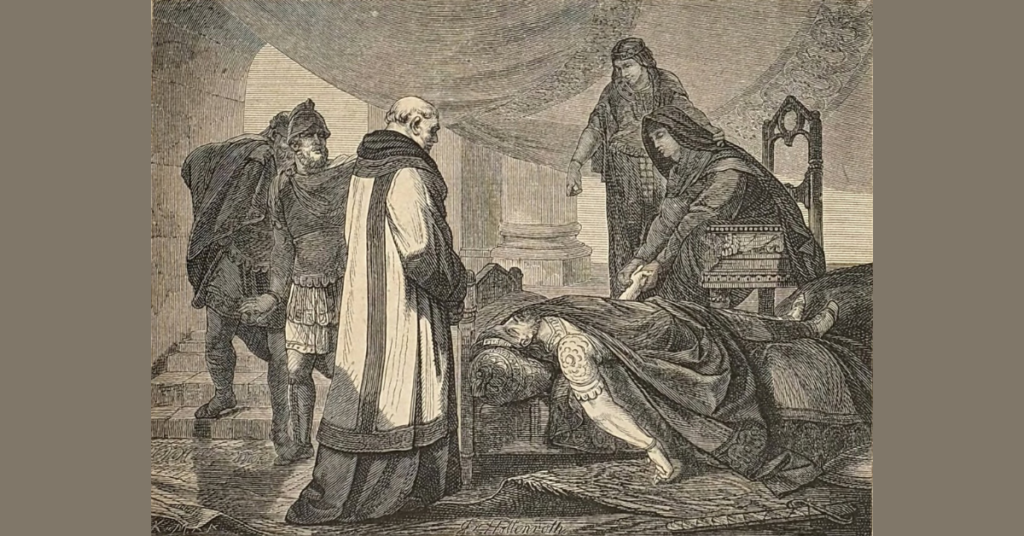

After its formation, Lotharingia does not remain intact for long. Rather than becoming a stable kingdom, it becomes a contested middle ground between emerging powers. Lothair II dies in 869, leading to the Treaty of Meerssen in 870. This formally divides Lotharingia between its neighbors:
- East Francia takes the eastern portion
- West Francia takes the western portion
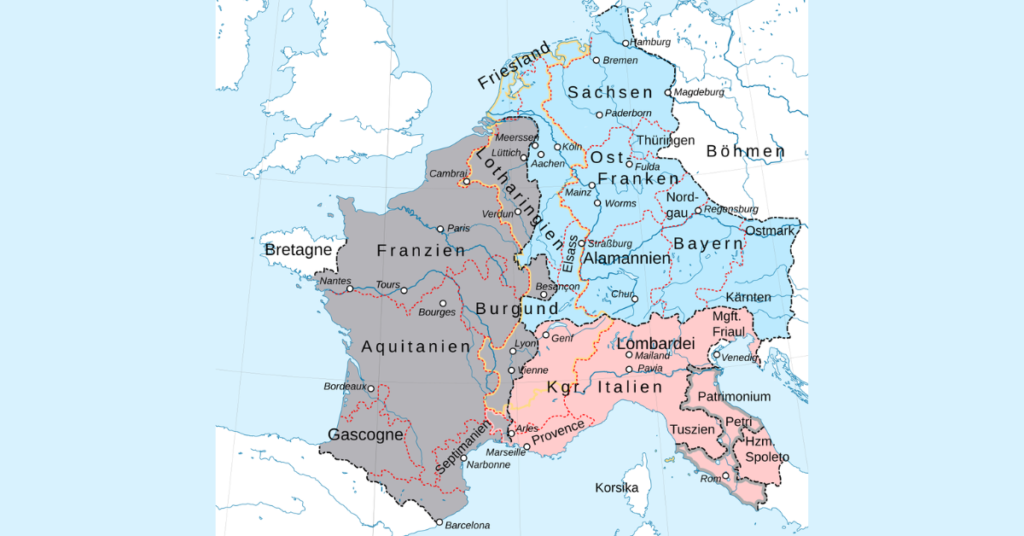

The Palatinate—located along the middle Rhine—ends up on the eastern side of this division. This is a critical turning point: the Palatinate is no longer part of a “middle kingdom”—it is now aligned with East Francia.
This shift is not just political—it begins to shape the region’s long-term identity:
- Stronger ties to eastern rulers
- Integration into the emerging German political sphere
- Gradual separation from the western (French) world
By the late 800s, Middle Francia no longer exists as a meaningful political entity. Lotharingia has been absorbed and divided, and the idea of a unified central kingdom disappears.