After the reign of Clovis I, the Frankish world does not immediately become a stable empire. Instead, it enters a long period of fragmentation, internal competition, and gradual reorganization.
The Merovingian Kings and Fragmentation (c. 500–700 CE)
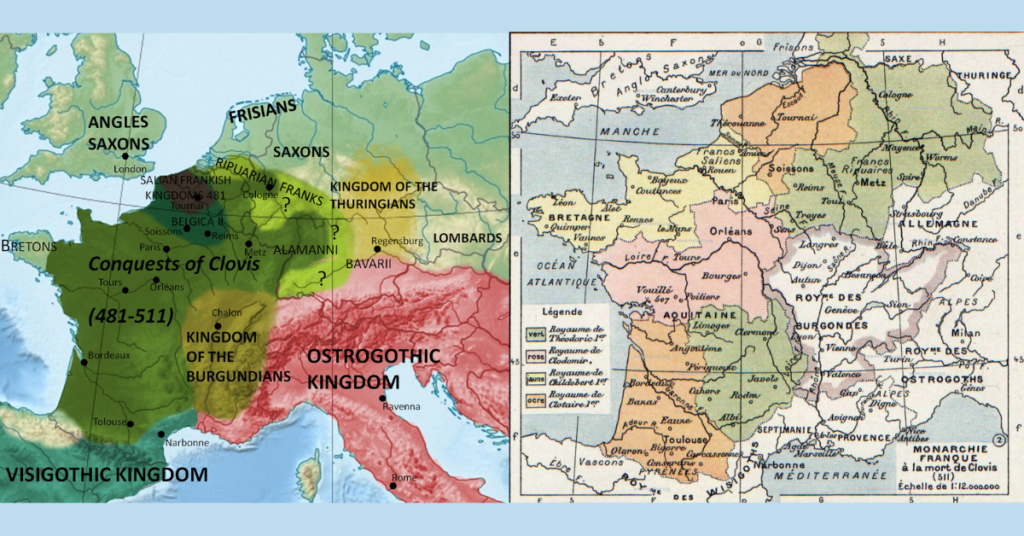


After Clovis dies in 511 CE, his kingdom is divided among his sons. This becomes the pattern:
- Frankish rulers split territory between heirs
- Kingdoms are repeatedly divided and recombined
- Power shifts between different regional centers
Rather than one unified state, the Frankish world becomes a network of competing kingdoms ruled by the same dynasty. These early rulers are known as the Merovingians. But over time:
- Kings become less powerful in practice
- Local elites and administrators gain influence
- Political unity weakens
The Carolingians Take Over
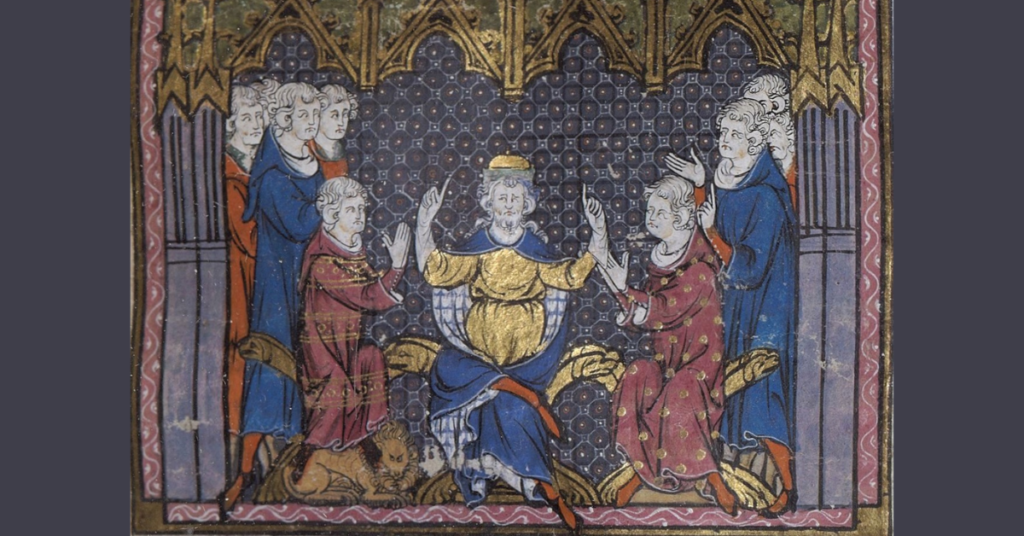

As Merovingian kings lose direct control, real power begins to shift to a new role: The “Mayor of the Palace.” Originally, this is an administrative position—managing the royal household and government. But by the 600s–700s:
- Mayors begin commanding armies
- Controlling policy
- Acting as the true rulers behind the throne
One family rises within this system: The Carolingians. The most important early figure is Charles Martel (c. 688–741). He never becomes king—but he holds real authority:
- Consolidates military power
- Defeats invading forces (including at the Battle of Tours, 732)
- Strengthens Frankish control across the region
Pepin the Short Becomes King (751 CE)
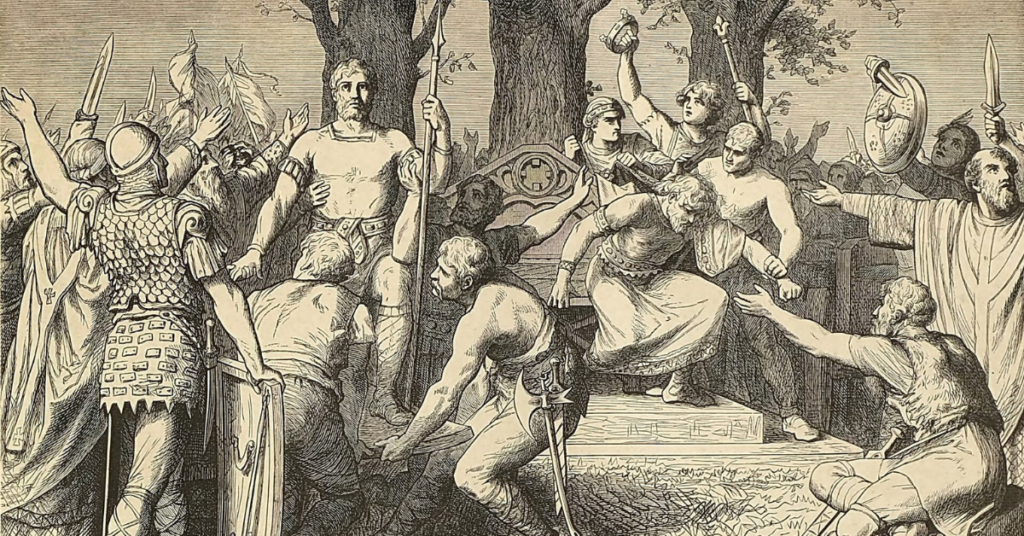

Charles Martel’s son, Pepin the Short, makes a decisive move. In 751 CE, with the support of the Pope:
- He removes the last Merovingian king
- Has himself crowned King of the Franks
This creates a new model: a ruler backed not just by force, but by religious authority.
The Rise of Charlemagne (768–800 CE)


Pepin’s son, Charlemagne, takes this further. Ruling from 768 to 814 CE, he:
- Expands Frankish territory across much of Western and Central Europe
- Consolidates political control
- Strengthens ties between monarchy and the Church
In 800 CE, he is crowned Emperor by the Pope. The old Roman imperial idea returns—but now under a Germanic ruler.